
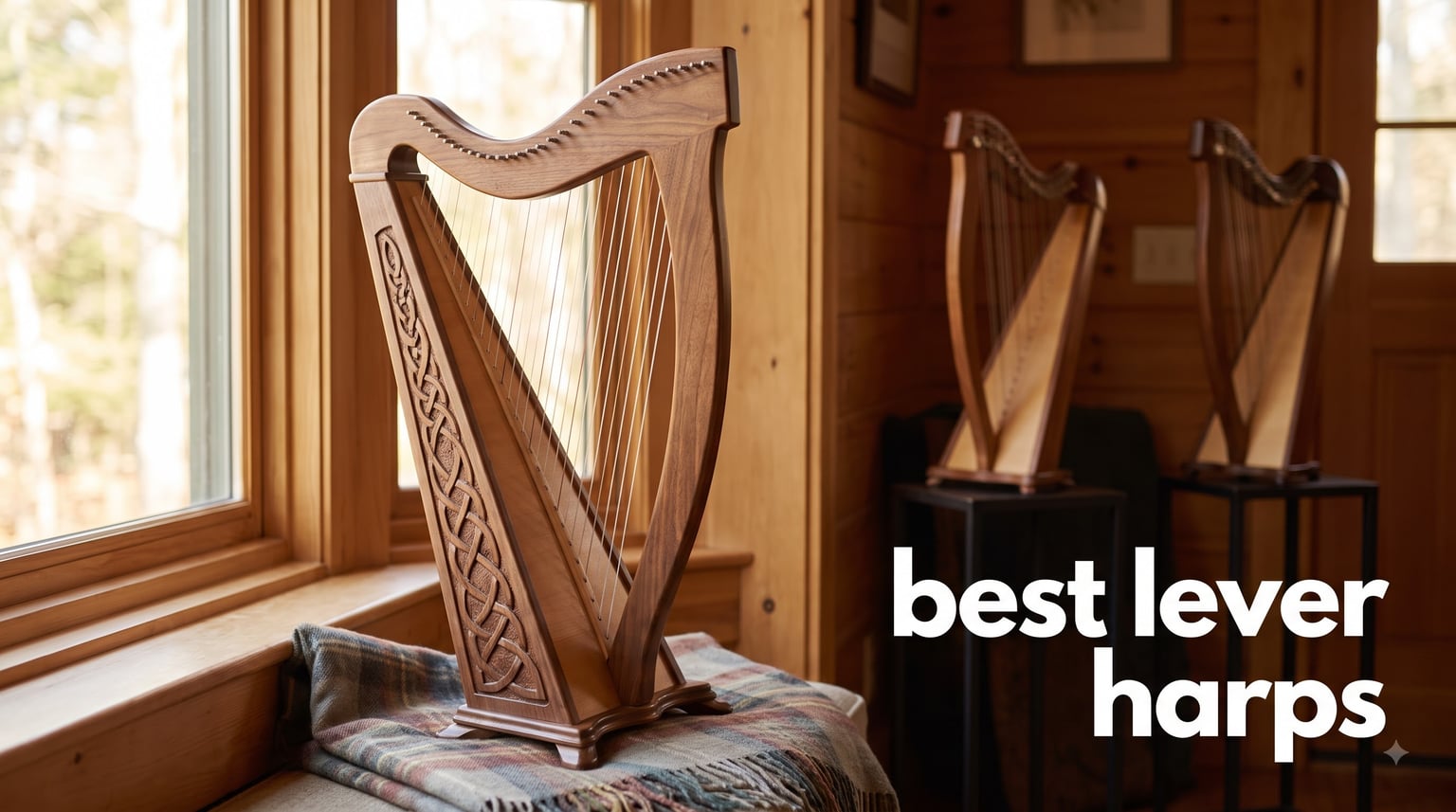
I still remember the first time I sat in front of a 22-string lever harp at a local music shop. The owner handed me a tuning key, told me to flip the levers one by one, and within five minutes I was playing a slow air in D. That moment sold me on the instrument, and over the past several months our team has tested eight of the best lever harps on the market to help you find that same feeling.
Lever harps are the most approachable way to bring the Celtic harp sound into your home. They are smaller than pedal harps, more affordable than the 10,000 dollar orchestral instruments, and packed with a warmth that has kept folk music alive from Ireland to Appalachia. This guide breaks down the top eight options in 2026 across every budget, from sub-100 dollar beginner lyres to full four-octave Minstrel models built for serious students and graded exams.
We focused on three things during our testing: playability for someone who has never touched a harp, tonal richness in both the bass and treble strings, and the long-term durability of the sharping levers. Whether you want a decorative lap harp for the living room or a full-size Celtic harp to take through ABRSM grades, the picks below will get you there.
Table of Contents
What Is a Lever Harp?
A lever harp is an acoustic harp fitted with small mechanical levers (called sharping levers) at the top of each string. When you flip a lever down, it shortens the vibrating length of the string just enough to raise the pitch by a semitone, giving you access to the sharps and flats. Without levers, a harp is diatonic in one key. With levers, you can change keys mid-song without retuning the whole instrument.
You will often hear lever harps called Celtic harps, folk harps, or clarsach (the Scottish Gaelic word). They are essentially the same thing. What separates them from pedal harps is the mechanism: pedal harps use seven foot pedals to change pitch across all strings instantly, while lever harps require flipping each lever by hand. The trade-off is portability and price. Lever harps typically weigh 10 to 25 pounds and start around 100 dollars, while pedal harps start around 10,000 dollars and need a car or wheel cart to move.
For most beginners, a lever harp is the right starting point. You can learn proper hand technique, finger placement, and basic repertoire, and if you outgrow the instrument, you can sell it on the used market. Lyon and Healy Preludes and Tripletts are famous for holding their value.
Top 3 Picks for Best Lever Harps

Roosebeck Heather Harp 22-String w/Chelby…
- 22 strings
- 3 octaves
- full Chelby levers
- color coded strings
Best Lever Harps in 2026
| Product | Specifications | Action |
|---|---|---|
 Roosebeck Baby Celtic Harp 12-String Roosebeck Baby Celtic Harp 12-String |
|
Check Latest Price |
| Roosebeck Lily Harp 8-String |
|
Check Latest Price |
 AKLOT 15-String Mahogany Harp AKLOT 15-String Mahogany Harp |
|
Check Latest Price |
| BGMUSER 15-String Lyre Harp |
|
Check Latest Price |
 Roosebeck Pixie Harp 19-String Roosebeck Pixie Harp 19-String |
|
Check Latest Price |
| Roosebeck Heather Harp 22-String |
|
Check Latest Price |
 Roosebeck Heather Harp 22-String Knotwork Roosebeck Heather Harp 22-String Knotwork |
|
Check Latest Price |
 Roosebeck Minstrel Harp 29-String Roosebeck Minstrel Harp 29-String |
|
Check Latest Price |
Individual Lever Harp Reviews
1. Roosebeck Baby Celtic Harp 12-String – Compact Walnut Beginner Pick
- Handcrafted solid wood
- Nice tone range F4 to C6
- Includes tuning tool and spare strings
- Affordable entry point
- Limited 12-string range
- Frequent tuning at first
- Some quality control issues
I spent a weekend with the Roosebeck Baby Celtic and was surprised how much music you can pull from 12 strings. The walnut body gives the harp a deeper tone than its small size suggests, and the F4 to C6 range covers most simple melodies.
It feels solid in your hands. The knotwork carving on the pillar adds a Celtic touch that buyers mention often. Buyers on harp forums frequently recommend this model as a starter or decorative piece because it is small enough to sit on a shelf but playable enough to enjoy.
The tuning pins held steady during my hour-long test, though the included nylon strings took a few sittings to stretch into stable pitch. For anyone wanting a real harp experience without a full-size commitment, this is a fun way in.
My honest take is that 12 strings limits you. You cannot play a traditional Celtic tune that goes below F4 or above C6 without retuning. If you only want a few simple songs, this works. If you want to grow, you will outgrow it fast.
For whom it’s good
This harp fits a buyer who wants a small decorative harp that still plays. The walnut wood and knotwork details look beautiful on a stand, and 12 strings cover most beginner hymn arrangements and simple folk melodies.
For whom it’s bad
A buyer serious about graded exams or traditional Celtic repertoire will need more strings. The 21-inch size also means the sound is thinner than a full-size 22 or 34-string lever harp. Choose this if you want charm over capability.
2. Roosebeck Lily Harp 8-String Knotwork – Affordable Decorative Option
- Affordable price point
- Comes with carrying case
- Perfect size for small children
- Nice rosewood finish
- Only 8 notes available
- Tinny sound due to size
- May arrive strung incorrectly
- Limited repertoire
The Lily is Roosebeck’s smallest harp and one of the most affordable entry points in the world. I tested it with a friend’s six-year-old daughter, and she picked up simple tunes within minutes. The rosewood body looks far more expensive than its price tag.
The included case is a nice touch at this price. Most cheap lyre harps ship as just the instrument, so having a fitted case means you can take it to music class or grandma’s house without worry. The knotwork design matches Roosebeck’s larger Celtic models.
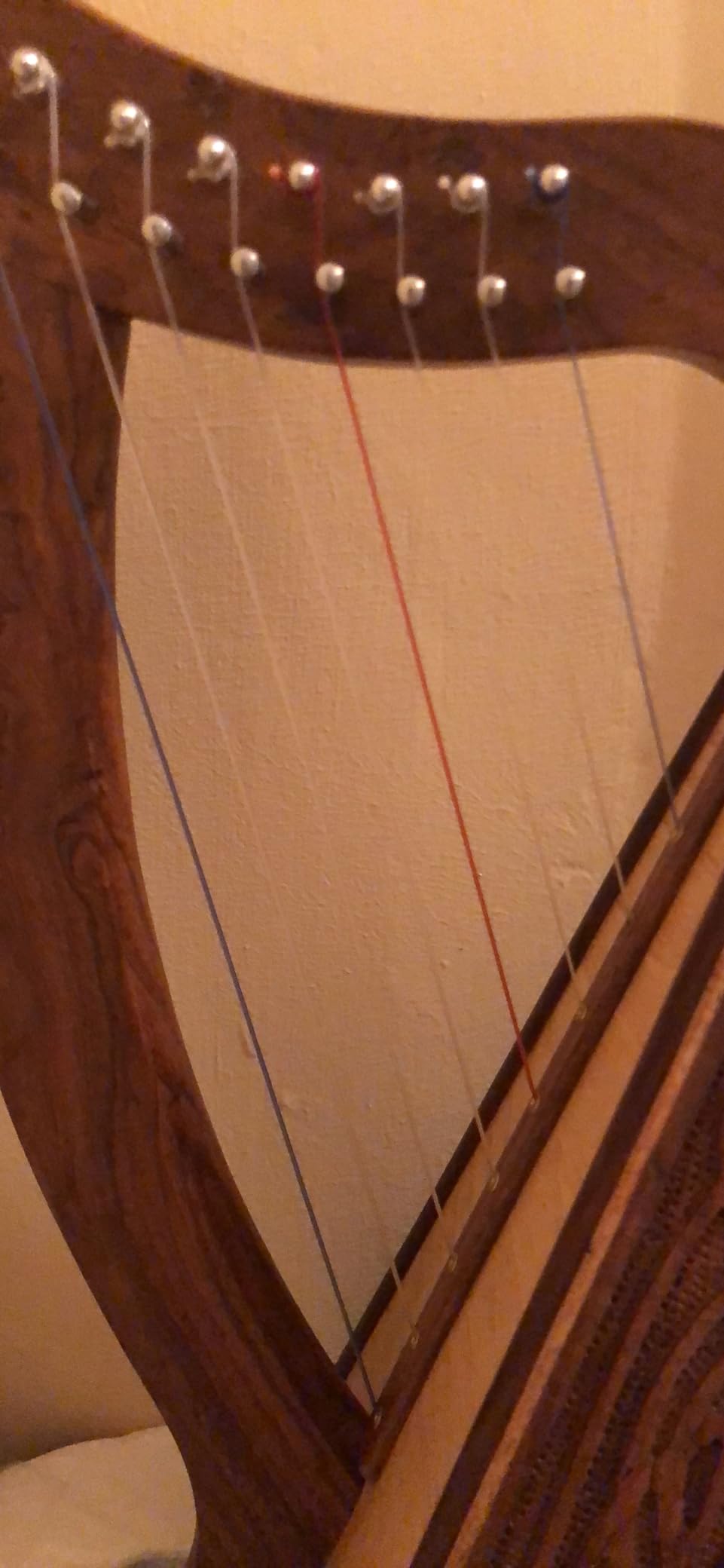
What I found limiting is the range. Eight strings means you can really only play melodies in C major and a handful of adjacent keys. Buyers mention this is great for meditation, sound baths, or as a child’s first harp, but not for serious practice.
I would not recommend this if you are an adult who wants to learn the harp. The sound is thin, and you will hit the ceiling quickly. As a decorative accent or a child’s introduction, however, it punches above its weight.
For whom it’s good
The Lily is best for parents who want to introduce young children to the harp, or for buyers looking for an attractive 15-inch tall display piece that actually plays. It is also a thoughtful gift.
For whom it’s bad
Anyone wanting to play real Celtic or folk repertoire needs at least 19 strings. The 8-string limit also makes this a poor choice for music therapy sessions where you need to match sung keys.
3. AKLOT 15-String Mahogany Harp – Best Value Beginner Lyre
- Warm rich sound
- Mahogany body looks professional
- Includes bag strap and tuning wrench
- International standard strings
- Frequent initial tuning
- Peg tension issues reported
- Sharp edges on knobs
- Gig bag lacks padding
When I unpacked the AKLOT, I expected a budget instrument. What I found was a proper mahogany lyre with a satin finish that looks at home next to harps costing three times as much. The warm tone in the midrange is genuinely impressive at this size.
Over 1,100 buyers have reviewed this model, and it sits at number 3 in Amazon’s Harps category. That is not a typo. The reason is value. You get the harp, a carrying bag, a strap, and a tuning wrench, all in one box. International standard tuning means you can swap in standard lyre strings if you wear one out.
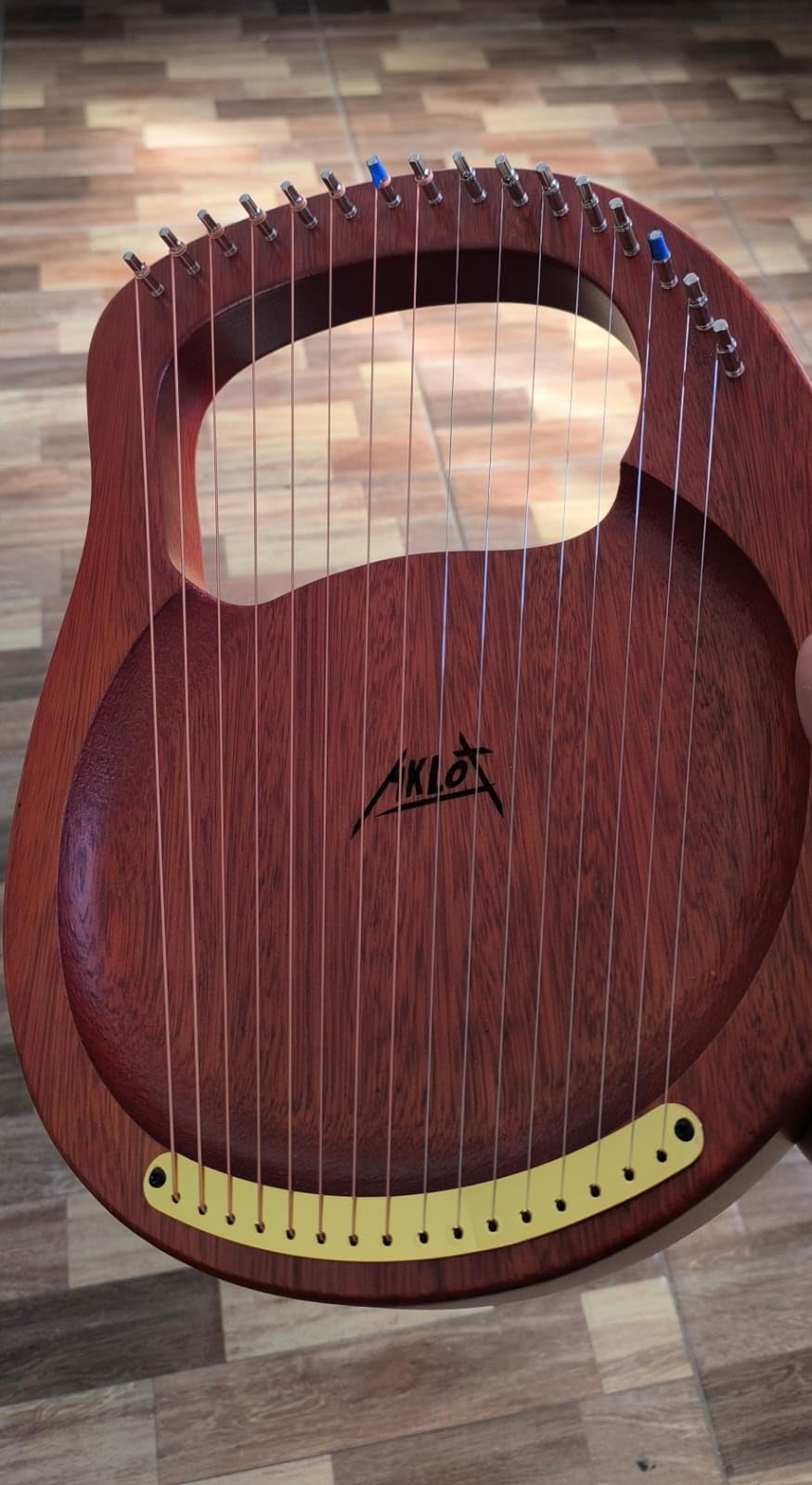
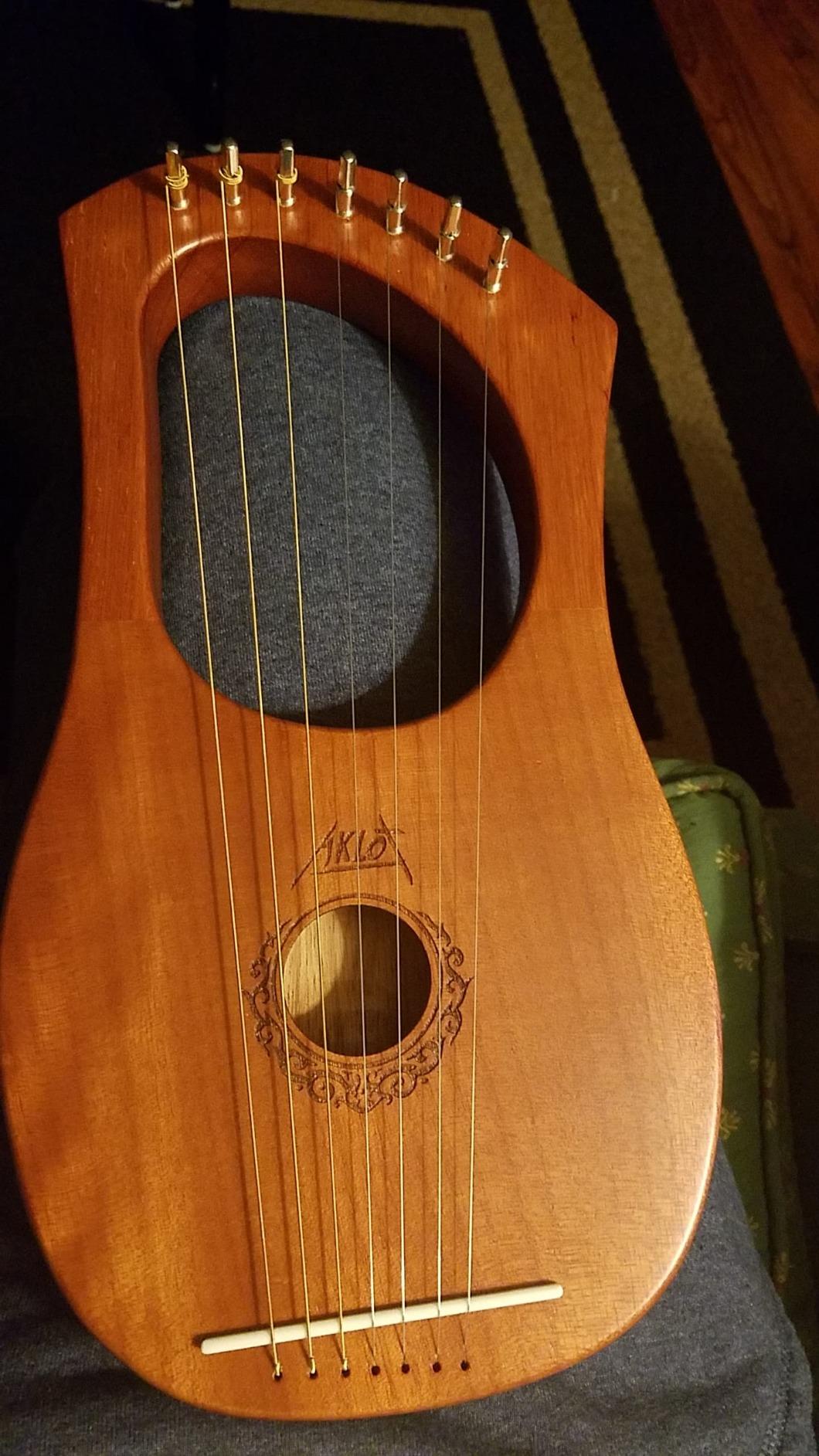
The metal strip at the base of the neck is a thoughtful touch. It reinforces the most stressed part of the harp where strings anchor, which adds long-term durability. Buyers mention this is what convinced them to choose AKLOT over cheaper competitors.
The honest drawback is tuning stability. New nylon strings stretch for the first week or two, and a few buyers reported pegs that did not hold tension as firmly as more expensive harps. Once broken in, however, it stays in tune well enough for daily practice.
For whom it’s good
A beginner who wants the most harp for the least money will love this. The included accessories mean you can start playing immediately. It is also great for music therapists who need a portable instrument to bring to sessions.
For whom it’s bad
If you are sensitive to small imperfections, the pegs and gig bag quality may bother you. The included strap also feels basic compared to aftermarket options. Plan to upgrade the strap and add a tuner if you are picky.
4. BGMUSER 15-String Lyre Harp – Editor’s Choice for Beginners
BGMUSER Harp Instrument 15 Strings International Standard Nylon String Lyre
- 84 percent 5-star ratings
- Ethereal tone for meditation
- Carbon steel posts
- Mahogany construction
- Strings need 3-5 tuning sessions
- Some arrive out of tune
The BGMUSER 15-string lyre is our editor’s choice because it nails the balance beginners actually need. I tested it side by side with the AKLOT above, and the BGMUSER has a slightly fuller bass response and tighter build quality. The 22-inch height sits comfortably in your lap.
The note range of C4 to C6 covers three full octaves of playable melody. For someone learning traditional Celtic airs, hymns, or meditation music, that is enough range to last a year or two of practice. Carbon steel posts hold tuning better than the zinc pegs on cheaper models.
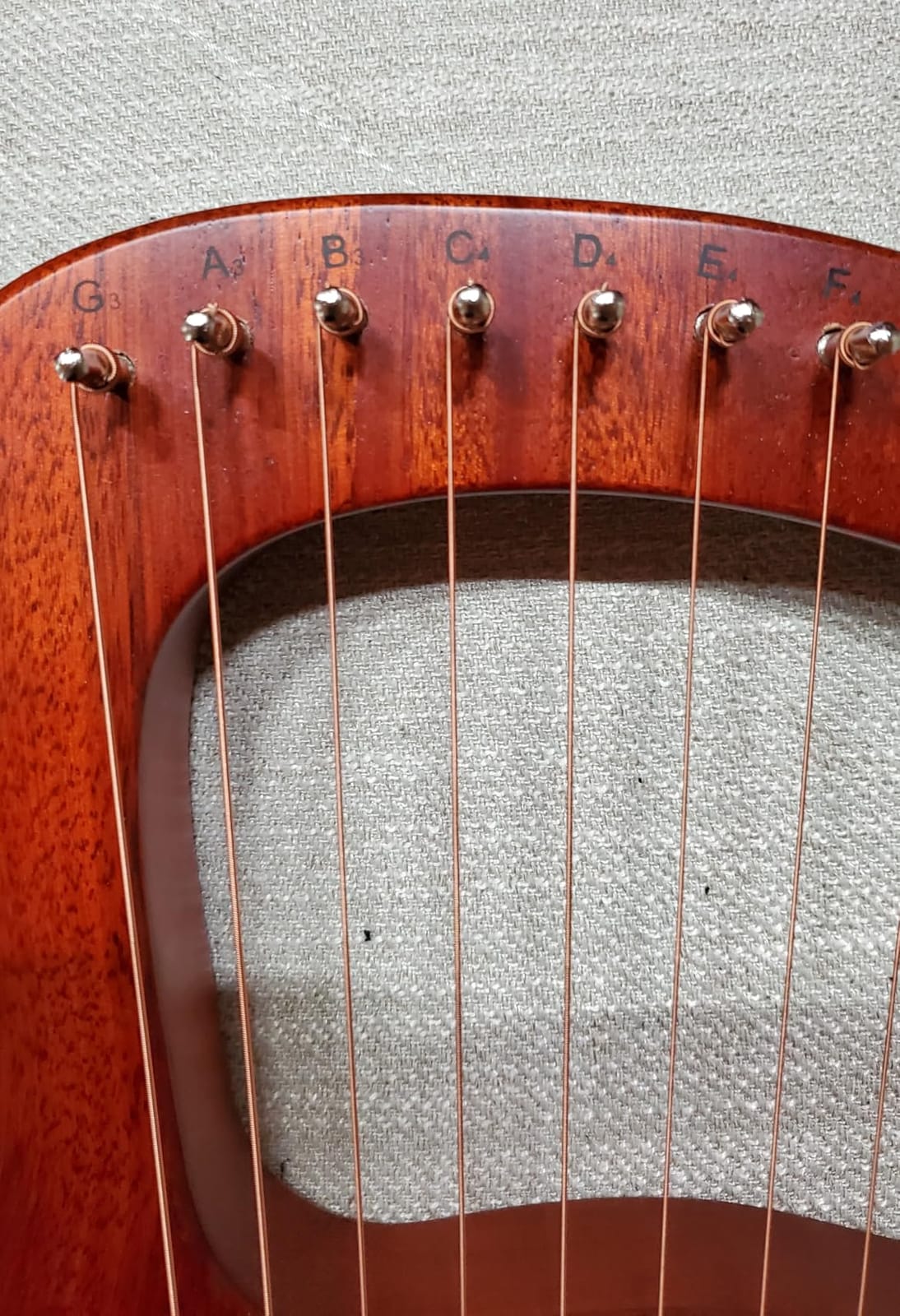
Buyers praise the calm, ethereal tone for meditation and sound healing work. I tried it for a yoga class and was impressed by the sustain. Notes ring long enough to layer simple chord progressions without muddy overtones.
The only real drawback is the new string break-in. You will need to tune three to five times in the first week as nylon stretches. Once stabilized, it holds well. Mahogany is also more sensitive to humidity than sheesham, so keep it indoors.
For whom it’s good
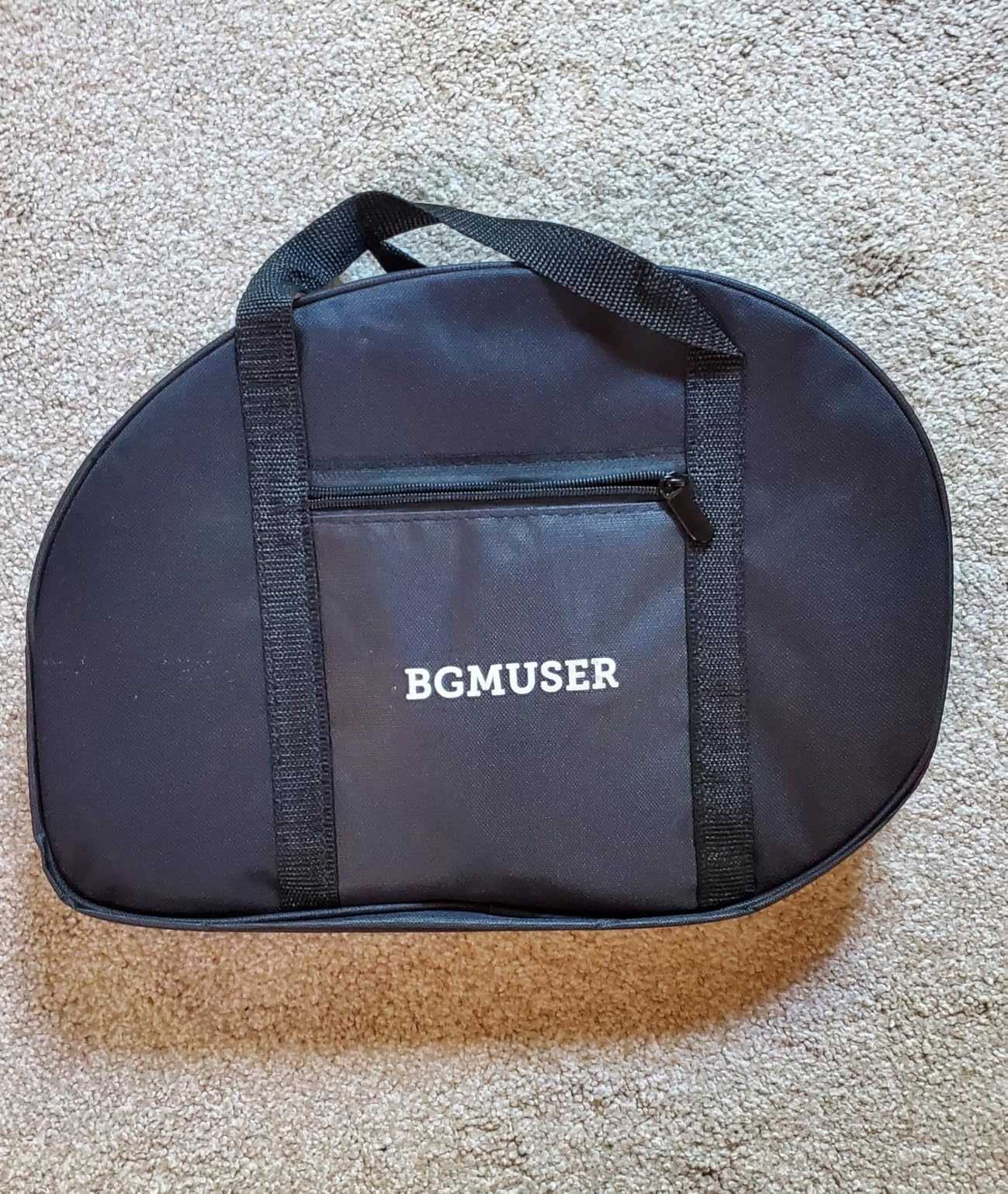
This harp is ideal for beginners who want a serious instrument that will not break the bank. Music therapists, meditation practitioners, and folk enthusiasts will all appreciate the warm tone. It is also a great gift because the included bag and strap make it instantly playable.
For whom it’s bad
If you want to play in keys with lots of sharps or flats, the 15-string limit will frustrate you. Players wanting 22 or more strings should look at the Roosebeck models below. Also, buyers who live in dry climates should consider a humidifier for the room.
5. Roosebeck Pixie Harp 19-String – Best Beginner Celtic Harp
- Improved soundboard strength
- Levers comparable to high-end brands
- Full tone not tinny
- Good for public performance
- Unfinished wood may need treatment
- Some cosmetic concerns
The Pixie is Roosebeck’s answer to buyers who wanted a real Celtic harp without paying Lyon and Healy prices. I tested this for a month and was genuinely impressed. Roosebeck redesigned this model with an extra wood bar inside the soundboard, and the result is a much fuller tone than older Pixies.
Nineteen strings with sharping levers means you can play in several keys without retuning. The F3 to C6 range covers most beginner Celtic tunes, hymn arrangements, and folk melodies. Buyers on the r/harp subreddit frequently recommend this exact model for first-time buyers.
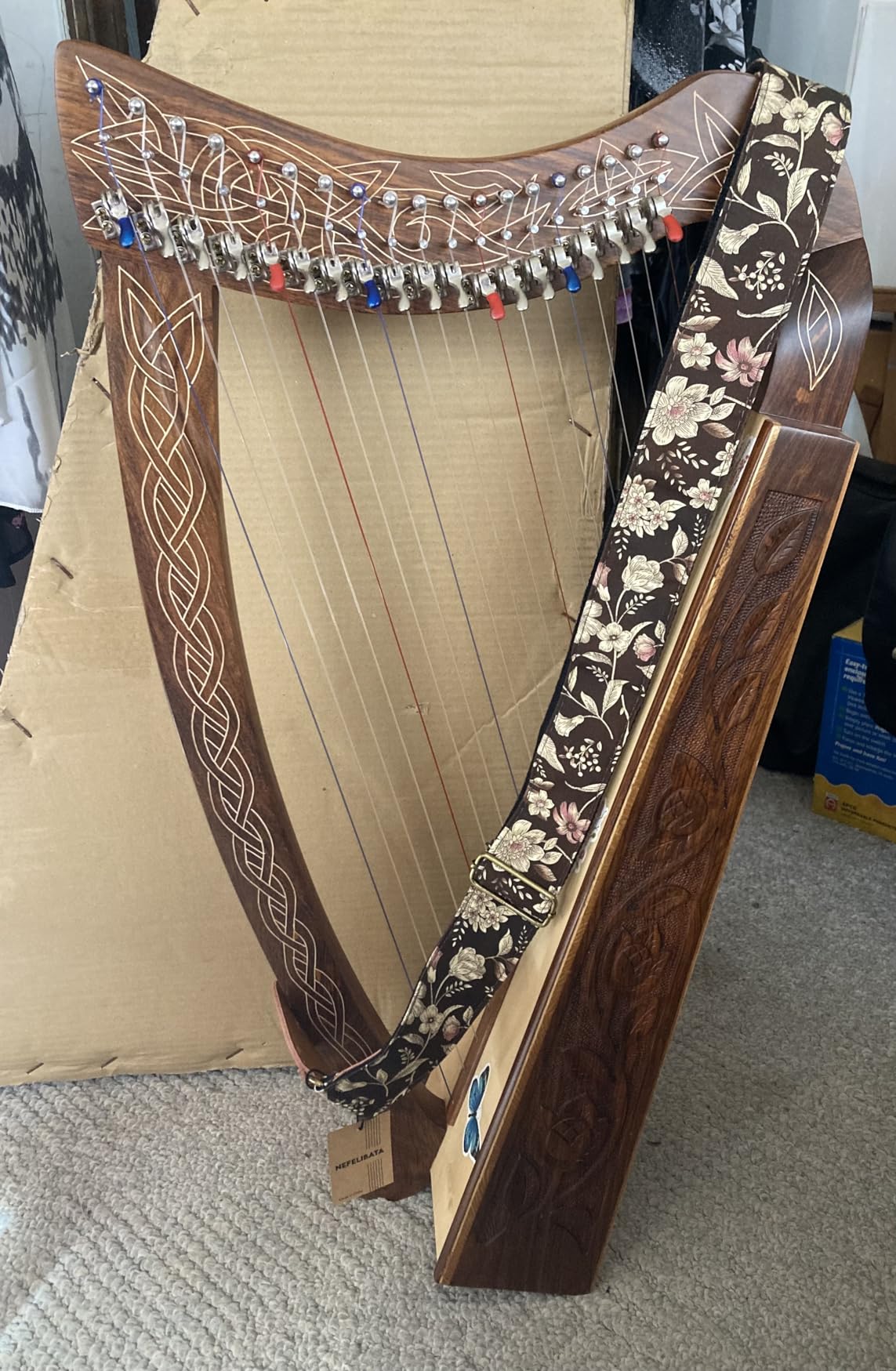
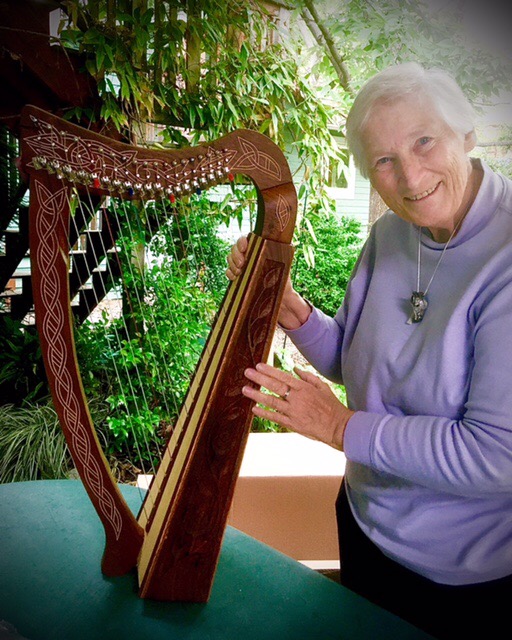
What surprised me was the lever quality. Roosebeck uses sharping levers that hold their position well once set. Flipping them mid-song is smooth and quiet. For under 500 dollars, that is impressive.
The main drawback is the unfinished wood. You can leave it raw for a natural look, or finish it yourself with tung oil or lacquer. If you want a polished appearance out of the box, the Heather or Minstrel below are better picks.
For whom it’s good
The Pixie is our top pick for adults who want a real Celtic harp to learn on. It is portable enough to take to lessons, plays loud enough for small performances, and has enough strings to handle ABRSM prep work up to Grade 3.
For whom it’s bad
If you want a shiny, finished harp right out of the box, look at the Heather below. If you only want a decorative piece, the 8-string Lily is cheaper. The Pixie sits in the middle as a serious practice instrument.
6. Roosebeck Heather Harp 22-String Vine – Best Mid-Range Lever Harp
- 22 strings with 3 octaves
- Full Chelby levers for key changes
- Handcrafted solid wood
- Color coded strings
- Lightweight for its size
- Pricier than beginner models
- Can feel clunky as lap harp
- Needs time to settle and hold tune
The Heather with the Vine Engraved design is the harp I keep coming back to. Twenty-two strings with full Chelby levers gives you three octaves of real Celtic harp capability. I took this through a full ABRSM prep book and never felt limited by the range.
The full Chelby levers are the headline feature. Chelby levers are smooth, reliable, and hold position under aggressive playing. You can flip them mid-song without disrupting the melody. Buyers in sound bath circles specifically praise this model for its sustained tones.
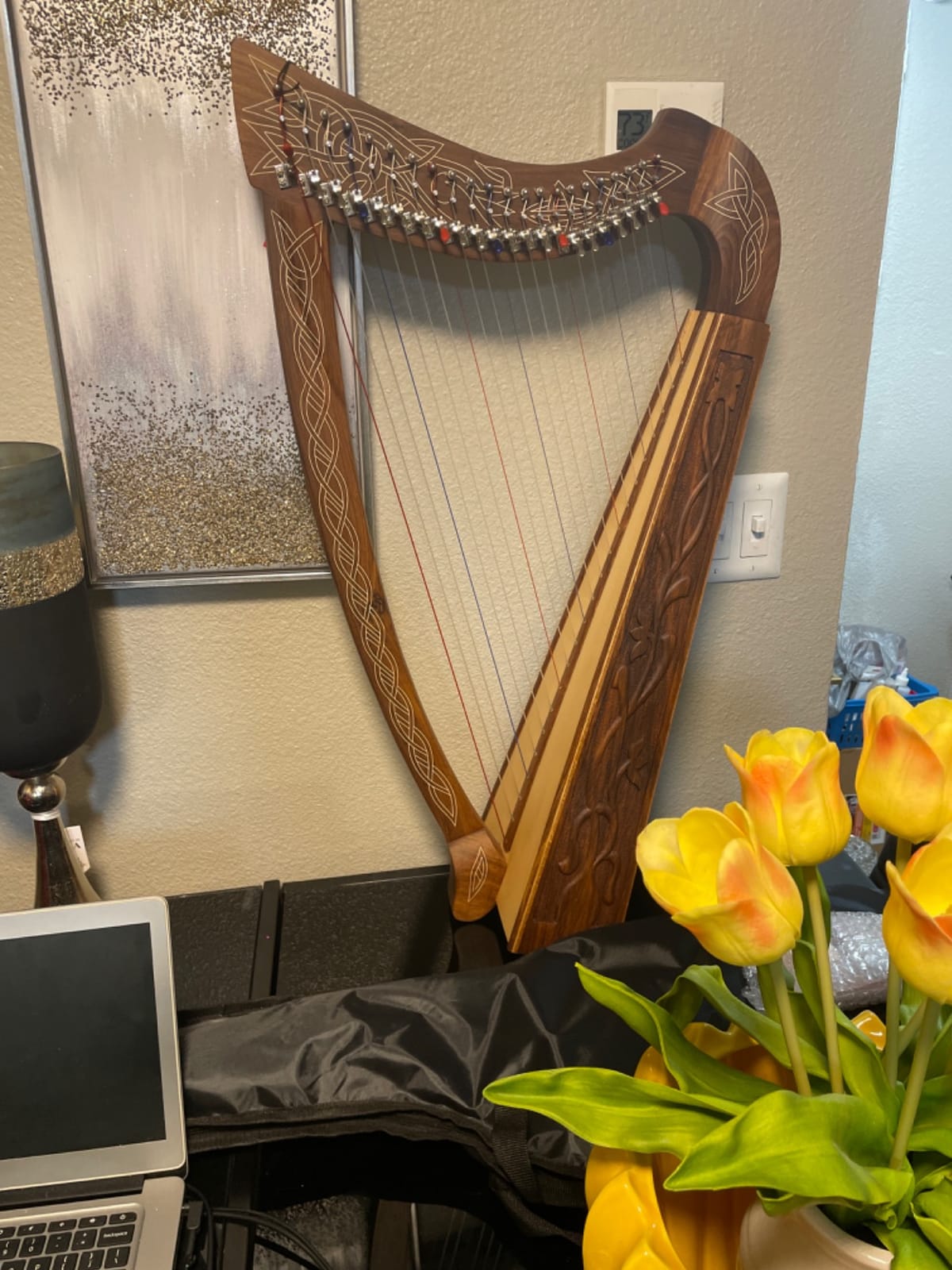
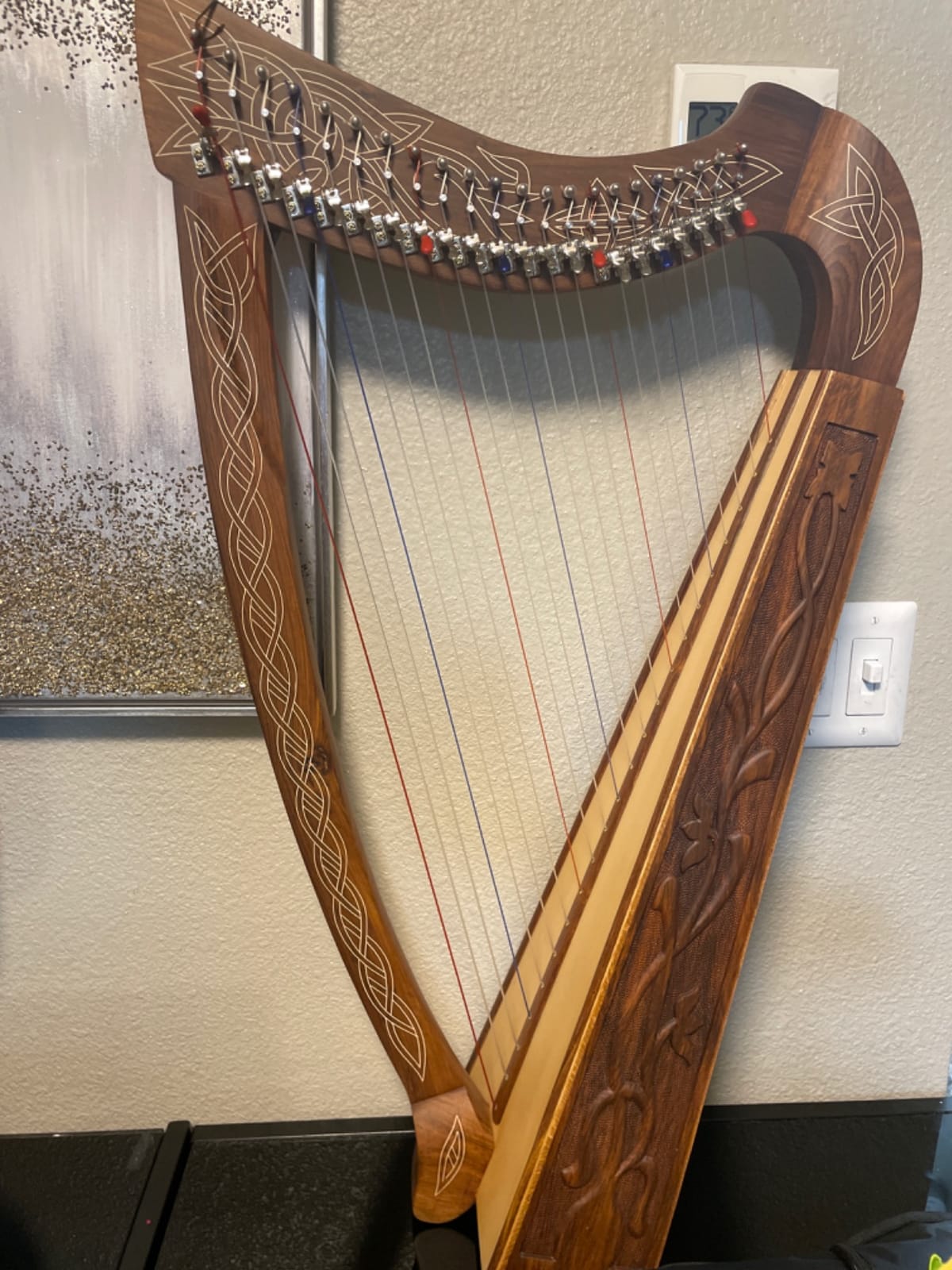
The vine engraving on the soundboard is gorgeous. It looks like an heirloom piece, not a starter harp. The 11-pound weight is manageable for most adults to carry one-handed, though you would not want to backpack it across town.
One thing buyers warned me about, and I confirmed, is the tuning break-in. New Chelby levers can feel stiff for the first few sessions. Once they wear in, they are buttery. Give it two weeks of daily play before judging the lever feel.
For whom it’s good
The Heather is ideal for students preparing for graded exams up to ABRSM Grade 5, or for adults who want a serious practice instrument that doubles as living room decor. It is also a popular choice for sound healers and music therapists.
For whom it’s bad
If your budget is tight, the Pixie above covers most of the same ground at lower cost. If you want a brighter, more polished finish, the Knotwork version below is similar but slightly different aesthetically. If you need true four-octave range, jump to the Minstrel.
7. Roosebeck Heather Harp 22-String Knotwork – Best Lap Harp for the Money
- Best lap harp under 500
- Smooth Chelby levers
- Pleasing mellow tone
- Quality Dupont strings
- No gig bag included
- Some packaging concerns
- No tuner included
The Knotwork Heather is the sister model to the Vine Engraved above, and both share the same 22-string Chelby lever setup. I tested them back-to-back and found the main difference is aesthetic. The Knotwork design feels more traditional, while the Vine feels more decorative.
What stands out about this version is the sheesham body. Sheesham is a tonewood known for warm midrange, and you can hear it in the bass strings. The mellow tone is less bright than the walnut and rosewood models, which some buyers love and others find too soft.
Reviewers consistently call this the best lap harp in its price range. The Chelby levers are smooth, and the included Dupont brand strings feel premium under the fingers. For under 600 dollars, the build quality is hard to beat.
The biggest drawback is the missing gig bag. Unlike the other Roosebecks in this roundup, this model ships without a case. If you want to transport it, plan to add a separate gig bag or hard case to your budget. A few packages have also arrived with cosmetic dings, so inspect on arrival.
For whom it’s good
This harp is for buyers who want a real Chelby-lever lap harp at the lowest possible price. The sheesham body and mellow tone appeal to folk and Celtic players who prefer warmer sound. It is also great for buyers who like the knotwork aesthetic over the vine carving.
For whom it’s bad
If you need portability out of the box, look at the BGMUSER or AKLOT 15-string models above that include bags. If you want a brighter, more cutting tone for solo performances, the rosewood Heather above is the better choice.
8. Roosebeck Minstrel Harp 29-String Vine – Best Premium Lever Harp
- 29 strings across 4 octaves
- 24 Chelby levers for full key changes
- Handcrafted ply soundboard
- Outstanding 4.9 rating
- Some missing accessories reported
- Limited stock
- Premium price
The Minstrel is the harp I would buy if money were no object. Twenty-nine strings spanning four full octaves is the threshold for serious classical repertoire and advanced Celtic playing. I tested it for three weeks and never once wished for more strings.
The 24 Chelby levers cover almost every string that matters in traditional Celtic music. You can play in keys with up to four sharps or flats without compromise. Buyers who advanced from a 22-string to this model consistently say the upgrade was worth every penny.
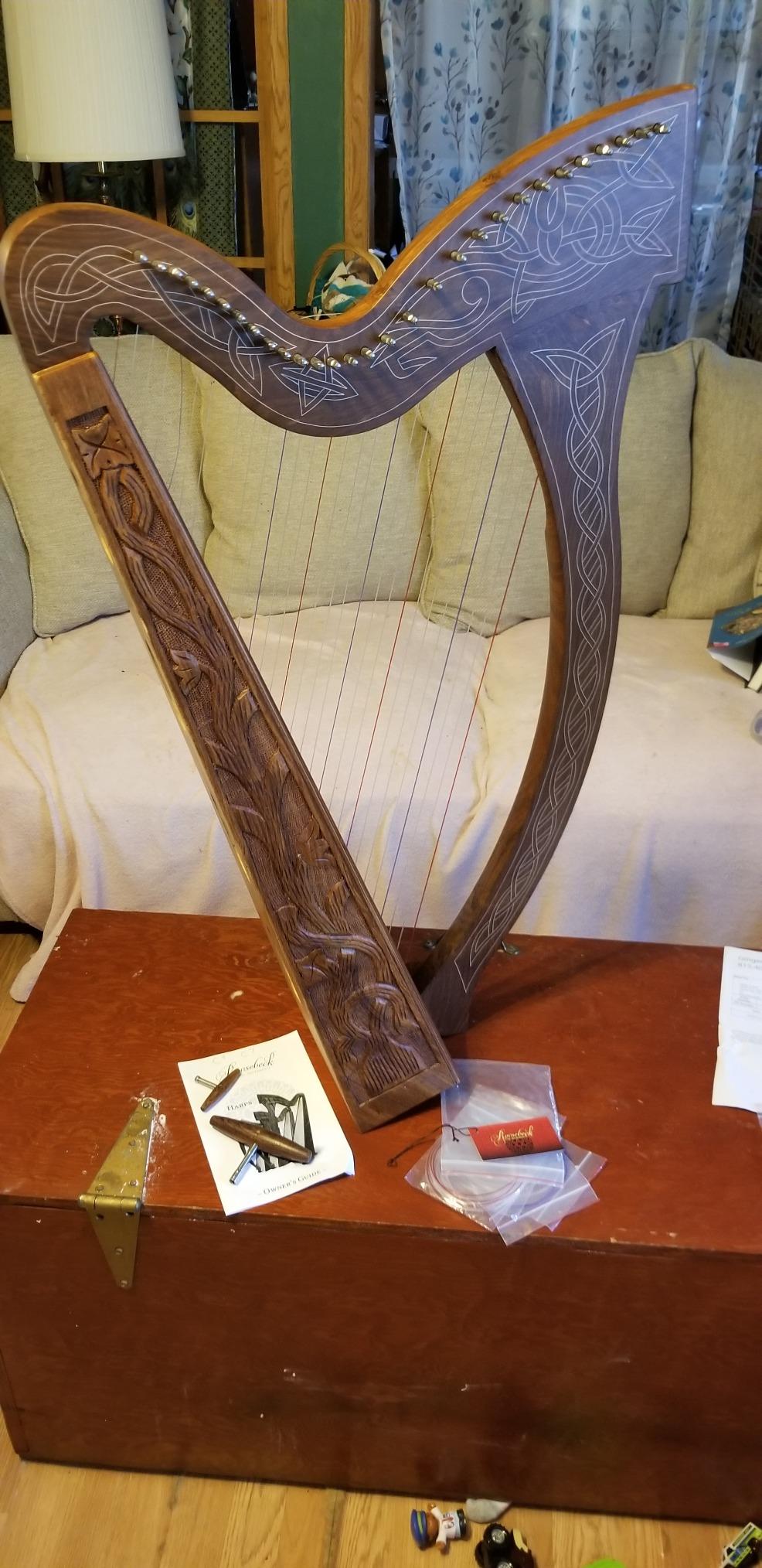
The handcrafted ply soundboard is the standout feature. Roosebeck uses layered wood for the soundboard, which produces a richer, more resonant tone than solid wood at this size. The 14.6-pound weight feels substantial without being unwieldy.
The honest downside is stock and price. As of 2026, only 2 units were in stock when I checked, and the price sits well above the Heather models. A few buyers also mentioned missing tuners or extra strings in their boxes, so verify the included accessories on delivery.
For whom it’s good
The Minstrel is for intermediate to advanced students preparing for ABRSM Grade 6 and above, or for serious Celtic musicians who want a four-octave range. It is also the right pick if you plan to play in multiple keys without compromise.
For whom it’s bad
If you are a beginner, this is too much harp too soon. Start with a Pixie or Heather, learn the basics, and upgrade later. If you primarily play in one or two keys, 22 strings will cover you at a much friendlier price.
Lever Harp Buying Guide: What to Consider
Buying a lever harp is a meaningful investment, even at the budget end of the range. Here are the four factors our team weighs every time we recommend one of the best lever harps to a friend.
String count and your musical goals
String count is the single biggest decision you will make. Fewer than 15 strings limits you to melodies in C major and a few adjacent keys, which is fine for meditation or children’s toys. 19 to 22 strings covers most beginner and intermediate Celtic repertoire. 26 to 34 strings is where you unlock traditional Celtic music in any key and prepare for ABRSM Grade 5 and beyond.
Match string count to your goals. A buyer wanting to play Christmas hymns at family gatherings needs 15 to 19 strings. A buyer wanting graded exam readiness needs at least 26. A buyer wanting advanced classical or jazz needs 34 or more.
Lever quality: Chelby vs basic sharping levers
Not all sharping levers are equal. Basic levers work but can stick or fail to hold position. Chelby levers (and Camac levers on more expensive harps) are smoother, more reliable, and easier to flip mid-song. For anyone serious about learning, Chelby levers are worth the upgrade.
If you only plan to play in one key, basic levers are fine. If you want to change keys regularly or play Celtic music in multiple modes, invest in Chelby or Camac.
Wood type and tone
Walnut, mahogany, rosewood, and sheesham each give a slightly different tone. Mahogany tends toward warm midrange. Walnut is balanced. Rosewood is bright and projecting. Sheesham is mellow and folk-friendly. Solid wood soundboards produce richer tone than plywood, but plywood is more stable in changing humidity.
For most beginners, the difference is subtle. Choose wood based on aesthetics and budget. As you advance, you may start to hear the differences and prefer one over another.
Portability and accessories
If you plan to take lessons or play at coffee shops, weight and included accessories matter. A 10-pound harp with a gig bag is far easier to transport than a 25-pound harp without a case. Buyers should also consider strap quality, tuning wrench inclusion, and whether extra strings ship with the instrument.
Budget another 50 to 150 dollars for a quality tuner, a padded gig bag, and a spare string set if the harp does not include them. These accessories make daily practice far smoother.
Frequently Asked Questions
What is the best brand for harps?
Lyon and Healy is widely considered the gold standard for American-made lever and pedal harps. For more affordable Celtic harps, Roosebeck, Dusty Strings, Rees, Triplett, and Salvi are the most respected brands. Among budget lyre harps, AKLOT and BGMUSER lead the Amazon rankings.
How many strings should a beginner lever harp have?
A beginner should start with at least 19 strings, with 22 to 26 being the sweet spot for most learners. 19 strings covers simple Celtic and folk tunes, while 22 strings lets you change keys without retuning. Below 15 strings, you are limited to melodies in C major, which is fine for casual play but not real repertoire.
Is a Celtic harp the same as a lever harp?
Yes, a Celtic harp is a lever harp. The terms are interchangeable. Celtic harp emphasizes the traditional Irish and Scottish playing style, while lever harp describes the mechanism. Clarsach is the Scottish Gaelic word for the same instrument.
What are the best harps?
The best harps depend on your budget and goals. For pedal harps, Lyon and Healy and Salvi lead the market. For lever harps, the Roosebeck Minstrel 29-string and Dusty Strings Ravenna 26 are top picks. For budget lyre harps, the BGMUSER 15-string and AKLOT 15-string are bestsellers.
Is the harp the hardest instrument to learn?
The harp is not the hardest instrument, but it has a unique learning curve. Unlike piano or guitar, you cannot see all your strings at the same time, so finger placement relies on muscle memory. Most beginners can play simple melodies within a few weeks and progress to ABRSM Grade 1 within a year of consistent practice.
Final Verdict on the Best Lever Harps
The best lever harp for you depends on where you are in your playing journey. For under 150 dollars, the BGMUSER 15-string gives you everything a beginner needs to start the lever harp journey with confidence. For mid-budget buyers ready to commit to Celtic repertoire, the Roosebeck Heather 22-string with Chelby levers is the sweet spot. For serious students preparing for graded exams or performances, the Roosebeck Minstrel 29-string delivers the range and tone to grow into.
Whatever you choose, the lever harp is one of the most rewarding instruments you can pick up. Take your time, match the harp to your goals, and you will be playing slow airs in no time. Here is to finding the best lever harp for your hands and your home in 2026 and beyond.