
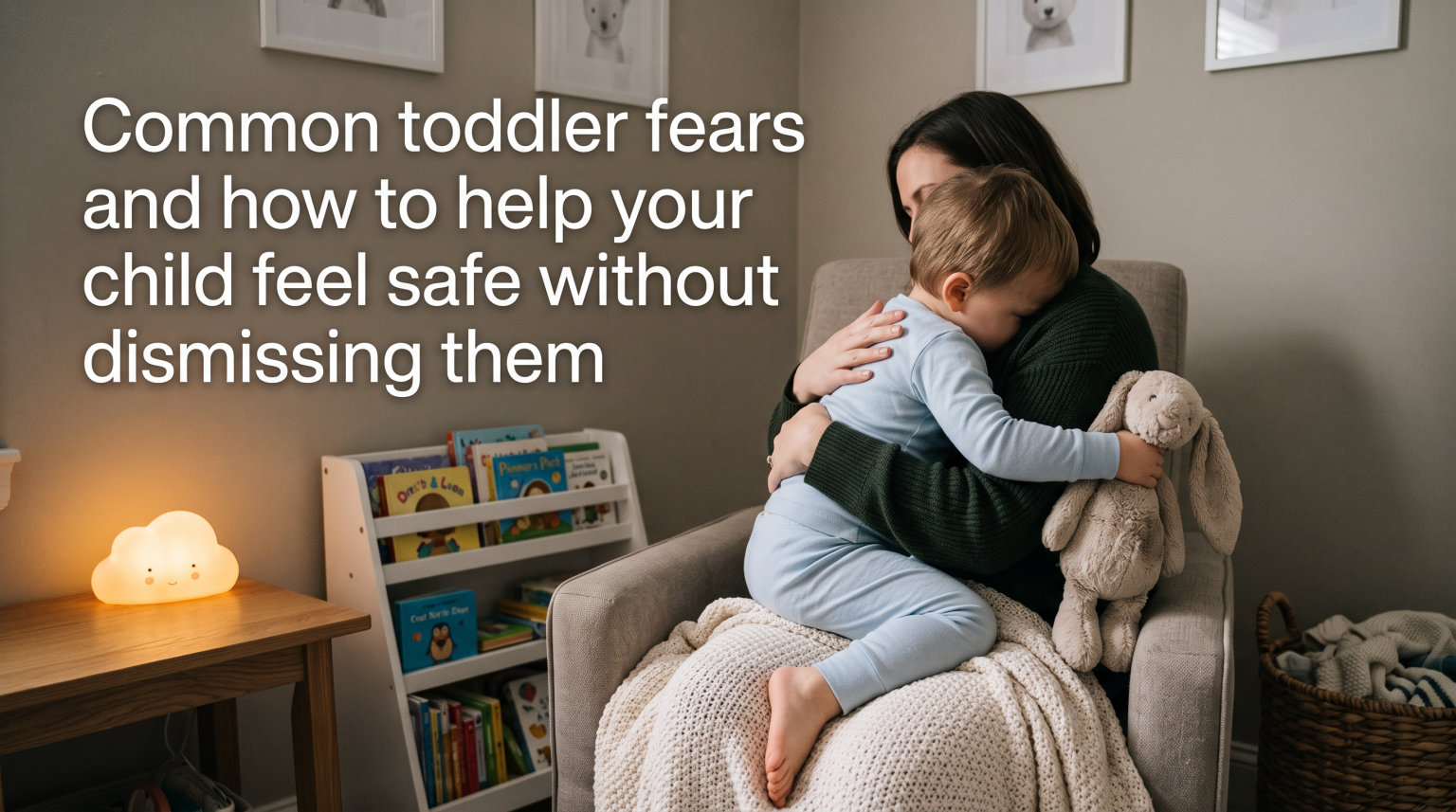
Normal toddler fears include darkness, separation from parents, strangers, loud noises, animals, monsters, doctor visits, and costumed characters. These fears typically emerge between ages 2 and 3 as your child’s imagination develops faster than their ability to reason logically. Understanding that fear is a healthy part of emotional development helps you respond with empathy rather than frustration.
When my youngest suddenly refused to enter her bedroom at age two and a half, I felt completely unprepared. She had been sleeping peacefully for months, and then one evening, she stood frozen in the doorway insisting there was something in her closet. I tried every logical explanation I could think of, but nothing worked until I stopped trying to fix it and simply held her instead.
That moment taught me what years of parenting research now confirms: validating a child’s fear builds more confidence than dismissing it ever could. In 2026, parents have access to more parenting information than ever before, yet many still struggle with this simple but profound shift in approach. This guide will show you exactly how to help your toddler feel safe while honoring their emotional experience.
Table of Contents
What Are Common Toddler Fears
The most common toddler fears include darkness, monsters or imaginary creatures, separation from parents, strangers, loud noises, animals, doctor visits, and costumed characters. These fears reflect normal developmental stages rather than any trauma or parenting failure. Most toddlers cycle through several of these fears between ages 2 and 4 as their cognitive abilities expand.
Here are the fears we see most often at this age:
1. Darkness and nighttime fears top the list for most families. The absence of light removes a toddler’s ability to see and understand their environment, triggering their imagination to fill the gaps with scary possibilities.
2. Monsters and imaginary creatures under beds or in closets emerge as imagination develops. Your child cannot yet distinguish between fantasy and reality, making these fears completely genuine.
3. Separation from parents often peaks around 18 months and again at age 2-3. This reflects healthy attachment and the growing awareness that you are a separate person who could leave.
4. Strangers and unfamiliar people trigger caution that is actually developmentally appropriate. Your child is learning to distinguish safe people from unknown ones.
5. Loud noises like thunder, vacuum cleaners, or hand dryers overwhelm sensitive young ears. The unpredictability amplifies the fear response.
6. Animals, even familiar pets, can suddenly trigger fear when a child realizes animals have their own intentions and movements.
7. Doctor visits and medical procedures create anticipatory anxiety, especially after one difficult experience teaches them what to expect.
8. Costumed characters at parties or theme parks disguise human faces, which toddlers rely on heavily for emotional safety and recognition.
These fears often appear suddenly and may seem irrational from an adult perspective. One day your child loves the family dog; the next day they refuse to enter the same room. This unpredictability is frustrating, but completely normal.
Why Toddlers Develop Fears Suddenly
Your 2-year-old is suddenly afraid of everything because three major developmental changes have converged at once: their memory has improved, their imagination has bloomed, and their logical reasoning has not yet developed. This creates the perfect environment for fear to flourish.
Between ages 2 and 3, your child’s memory expands dramatically. They can now remember events from weeks or months ago, including that one time the dog barked loudly or when the smoke alarm went off. These memories surface unexpectedly and trigger fear responses in contexts that seem unrelated to you.
At the same time, imagination blossoms. Your toddler can now create detailed mental scenarios, envision possibilities, and construct narratives. This is wonderful for play and creativity, but it also means they can imagine scary things that do not exist. A shadow becomes a monster. A noise becomes an intruder.
The missing piece is logic. Your child’s brain cannot yet apply rational thinking to dismiss these fears. Telling them “monsters aren’t real” means nothing because their experience feels completely real. The fear lives in their emotional brain, not their thinking brain.
This combination explains why a fearless baby becomes a cautious toddler. Your child is not regressing; they are developing. The world has become more complex in their mind, and they need your support to navigate it.
The Power of Validation: Why Dismissing Fears Backfires
Dismissing toddler fears by saying “you’re fine” or “don’t be silly” teaches children that their feelings are wrong and cannot be trusted. This creates what psychologists call emotional invalidation, which research links to anxiety, depression, and difficulty with emotional regulation later in life.
When you dismiss a fear, your child receives two harmful messages. First, they learn that you do not understand their experience, which creates distance in your relationship. Second, they learn to suppress their emotions rather than process them, which prevents the natural fear response from completing its cycle.
Validation does the opposite. When you say “you seem really scared” or “that noise was loud and surprising,” you communicate that you see them, you understand, and you are there. This connection actually helps the nervous system calm down faster than dismissal ever could.
The gentle parenting approach that Peggy O’Mara has championed for decades centers on this truth: children develop security through connection, not through forced independence. When we meet our children’s emotional needs consistently, they build the internal foundation for genuine confidence.
Here are validation scripts that actually work:
Instead of: “There’s nothing to be afraid of.”
Try: “You’re feeling scared right now. I can see it in your face. I’m right here with you.”
Instead of: “Big kids aren’t scared of the dark.”
Try: “The dark feels scary sometimes. That makes sense. Let’s find a way to make your room feel safer.”
Instead of: “Stop crying. It’s just a dog.”
Try: “That dog barked loudly and surprised you. That felt scary. Let me hold you while we watch from here.”
Many parents worry that validating fears will reinforce them. The opposite is true. When children feel heard, they gain the security needed to move through the fear. When they feel dismissed, they get stuck in it.
If you and your partner disagree on how to handle fears, have this conversation privately. Present a united front to your child, even if that means compromising on approach. Mixed messages create confusion and prolong fear responses.
Bedtime and Nighttime Fears
Bedtime fears are the most common and disruptive because they affect the whole family’s sleep and evening peace. These fears require special attention since they occur when everyone is tired and patience runs thin.
The darkness fear often begins around age 2 when children start spending time awake in their rooms alone. Install a dim nightlight, leave the door cracked, or use a “light buddy” flashlight that your child controls. These environmental changes provide immediate comfort while you work on the deeper emotional support.
Monster fears respond well to symbolic protection. Many parents successfully use “monster spray” (water in a spray bottle with a handmade label) to empower their child. Others create “protective charms” like a special stuffed animal, a dreamcatcher, or a spray of lavender oil that represents safety.
If your child wants you to stay during bedtime, do it. The fear phase will pass, and responding to their needs now builds the security that makes independent sleep possible later. Co-sleeping or staying nearby during a fear phase does not create bad habits; it responds to a genuine developmental need.
Read books about characters overcoming fears before bed. Stories like “The Berenstain Bears and the Bad Dream” or “There Might Be Lobsters” normalize fear and model coping strategies in ways children absorb naturally.
Practical Strategies That Build Confidence
Beyond validation, these practical techniques help toddlers develop coping skills and confidence that last beyond the current fear phase.
1. Teach the 3-3-3 breathing rule.
When your child feels scared, guide them to name 3 things they can see, 3 things they can hear, and 3 things they can touch. This grounding technique activates the thinking brain and interrupts the fear response. Practice this during calm moments first so it becomes familiar.
2. Use storytelling to process fears.
Create simple stories where a character faces a similar fear and finds a solution. “Once there was a bunny who was scared of thunder. Her mama taught her that thunder is just clouds bumping into each other…” This narrative approach helps children process emotions indirectly.
3. Apply gradual exposure with scaffolding.
Scaffolding means supporting your child while they face the fear in small steps. If they fear dogs, start by looking at dog pictures, then watching dogs from across a park, then standing nearby while you pet a calm dog. Each small success builds confidence for the next step.
4. Create a comfort routine.
Routines provide predictability that reduces anxiety. Establish a simple sequence for handling fears: acknowledge, validate, comfort, redirect. When children know what to expect from you, they feel safer.
5. Use “magic” protective items strategically.
A special bracelet, a stone in the pocket, or a stuffed animal can serve as a transitional object that provides comfort when you are not present. These items work because they represent your love and protection.
6. Practice brave moments during the day.
Notice and celebrate small acts of bravery during calm moments. “I saw you climb up that ladder even though it looked a little scary. You were brave!” This builds an identity as someone who can handle challenges.
7. Limit exposure to scary media.
Even content that seems mild to adults can trigger fears in toddlers. Pay attention to how your child responds to shows, books, or even overheard conversations. Remove or limit content that creates fear responses.
8. Model healthy fear responses yourself.
When you face something scary, narrate your process. “That car horn startled me. My heart is beating fast. I’m going to take a deep breath and look around to make sure everything is okay.” Children learn emotional regulation by watching you.
When Fears Are More Than a Phase
Most toddler fears are normal and temporary, but some patterns warrant professional attention. Knowing the difference between typical developmental fears and anxiety disorders brings peace of mind.
Seek professional guidance if you observe these signs:
1. The fear persists longer than 6 months without any improvement despite consistent support.
2. The fear causes significant disruption to daily life, preventing normal activities like school attendance or family outings.
3. Your child experiences panic attacks with physical symptoms like vomiting, difficulty breathing, or intense shaking.
4. The fear is accompanied by other concerning behaviors like regression, refusal to eat, or extreme clinginess.
5. Your child seems constantly anxious, not just fearful of specific triggers.
6. The fear developed after a traumatic experience and does not ease with time.
7. You, as a parent, have significant anxiety yourself that may be affecting your child’s emotional development.
Early intervention helps when anxiety is present. A child psychologist or therapist can provide play-based therapy and parent coaching that makes a significant difference. The goal is not to eliminate all fear, but to help your child develop healthy coping mechanisms.
Remember that seeking help is a sign of good parenting, not failure. You are advocating for your child’s wellbeing.
What is the 3 3 3 rule for toddlers?
The 3-3-3 rule for toddlers is a grounding technique where you guide your child to name 3 things they can see, 3 things they can hear, and 3 things they can touch when they feel scared or overwhelmed. This simple practice activates the thinking brain and helps interrupt the fear response, bringing your child back to the present moment.
How to help a child with fear and anxiety?
Help a child with fear and anxiety by validating their feelings instead of dismissing them, staying physically present and calm, teaching simple breathing techniques, using storytelling to process emotions, creating environmental safety (nightlights, comfort objects), applying gradual exposure to feared situations, and maintaining predictable routines. If fears significantly disrupt daily life or persist longer than 6 months, consult a child psychologist.
What is the 777 rule for kids?
The 777 rule for kids is a perspective-taking exercise where you ask: Will this matter in 7 minutes? Will this matter in 7 hours? Will this matter in 7 days? This helps children understand that most fears and worries are temporary. For toddlers, adapt this concept simply by saying u0022This feeling will pass soonu0022 or u0022Soon you’ll feel better again.u0022
What are normal fears for toddlers?
Normal toddler fears include darkness, monsters or imaginary creatures, separation from parents, strangers, loud noises, animals, doctor visits, and costumed characters. These fears typically emerge between ages 2 and 3 as imagination and memory develop before logical reasoning. Most toddlers cycle through several of these fears, which usually last weeks to months before fading naturally.
Why is my 2 year old suddenly afraid of everything all of a sudden?
Your 2-year-old is suddenly afraid of everything because three developmental changes have converged: their memory has improved so they remember scary events, their imagination has bloomed so they can envision frightening scenarios, and their logical reasoning has not yet developed so they cannot dismiss these fears rationally. This combination creates the perfect environment for new fears to emerge rapidly. This is completely normal and not a sign of trauma or parenting failure.
What is the 3 3 3 rule for anxiety in children?
The 3-3-3 rule for anxiety in children is a grounding technique where the child identifies 3 things they can see, 3 things they can hear, and 3 things they can touch or feel. This sensory exercise helps children reconnect with the present moment and interrupt anxious thoughts. Practice this technique during calm times first, then guide your child through it when they experience anxiety.
What is the 7 7 7 rule for parents?
The 7-7-7 rule for parents is a perspective-taking technique: Will this matter in 7 days? Will this matter in 7 months? Will this matter in 7 years? This helps parents respond to toddler fears with appropriate proportion rather than overreacting or underreacting. Most toddler fears fade within weeks, and remembering this helps parents stay calm and supportive during difficult phases.
What is the 10-10-10 rule for parenting?
The 10-10-10 rule for parenting asks: How will I feel about this in 10 minutes? How will I feel in 10 months? How will I feel in 10 years? This framework helps parents make decisions about comforting fearful children without worrying about u0022bad habits.u0022 In 10 years, the fact that you responded with love and validation will matter far more than temporary sleep arrangements or comfort routines.
Common Toddler Fears and How to Help Your Child Feel Safe Without Dismissing Them
Navigating toddler fears requires patience, empathy, and the understanding that this phase will pass. Your child is not broken, and you are not failing. You are witnessing normal development that, when met with validation and support, builds emotional intelligence for a lifetime.
The most important gift you can give your fearful toddler is your calm, loving presence. When you respond to their fears with connection rather than frustration, you teach them that emotions are manageable and that they can always come to you for safety. This foundation of emotional security will serve them far longer than any specific fear they outgrow.
In 2026, as we learn more about child development, one truth remains constant: children thrive when they feel seen, heard, and accepted exactly as they are. Your toddler’s fears may seem irrational, but their feelings are real. Meet them there, and watch your child grow into someone who knows they can handle whatever life brings.