
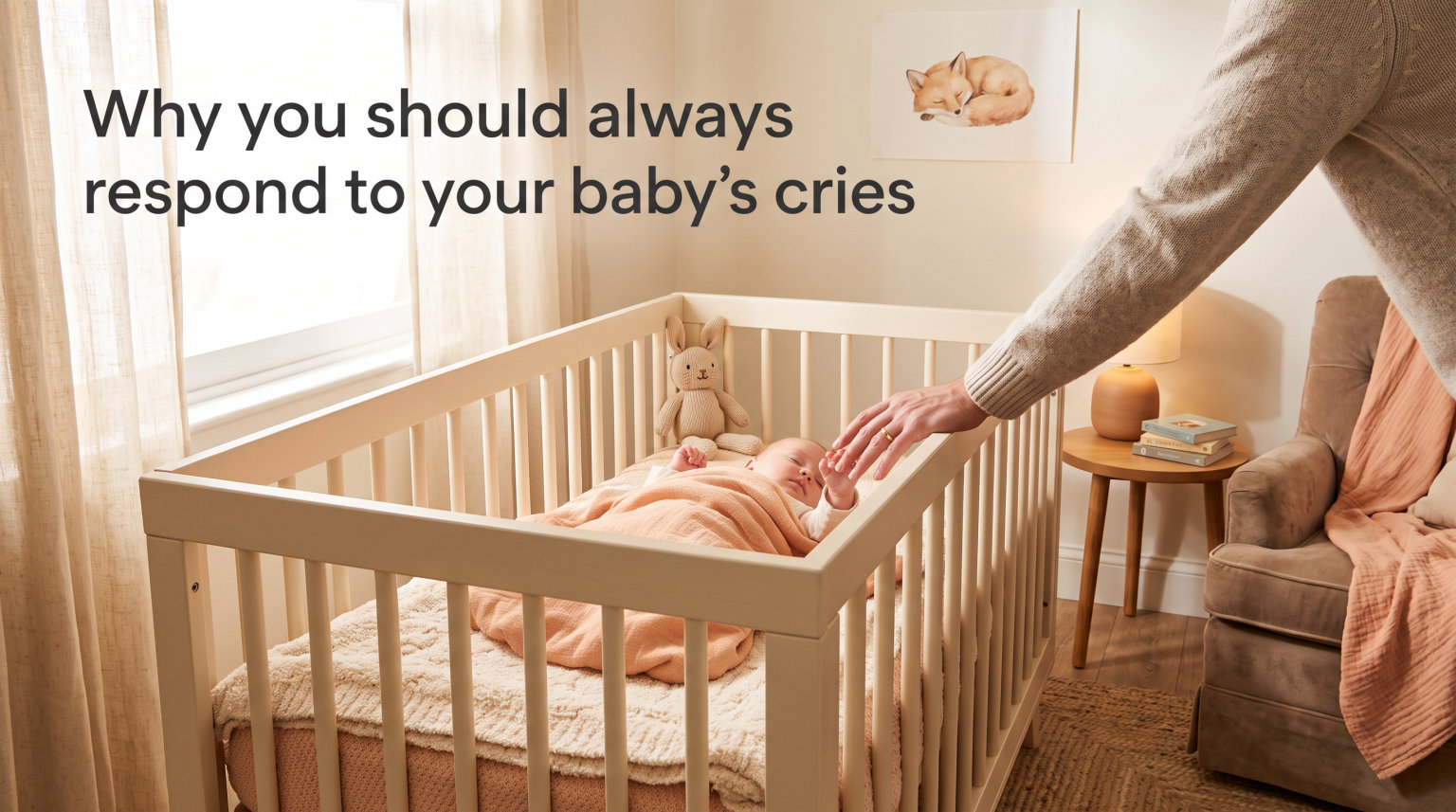
You should always respond to your baby’s cries because crying is their primary form of communication, not a behavior to be corrected. When you respond consistently, you build secure attachment, support healthy brain development, and teach your baby that their needs matter. This responsive approach lays the foundation for your child’s emotional wellbeing and future relationships.
As a new parent, you have probably heard conflicting advice about how to handle your baby’s tears. One well-meaning relative might tell you that picking your baby up too often will spoil them. Another might insist that letting them cry strengthens their lungs. This barrage of opinions can leave you feeling confused and second-guessing your natural instincts.
The truth is backed by decades of research in child development and attachment theory. Responding to your baby’s cries is one of the most important things you can do for their developing brain and emotional health. Let me walk you through what the science actually says about why you should always respond to your baby’s cries.
Table of Contents
What Your Baby’s Cries Actually Mean
Your newborn is not capable of manipulation. They cannot cry to control you or test your boundaries. For the first several months of life, crying is your baby’s only way to signal that something in their world needs attention. This is biological programming, not behavioral mischief.
Think about it from your baby’s perspective. They experience hunger, discomfort, cold, or overstimulation, but they lack the ability to tell you with words. Their cry is a distress signal designed by evolution to elicit a caregiver response. When you answer that signal, you are not being manipulated. You are being a parent.
The Six Most Common Reasons Babies Cry
- Hunger – The most frequent cause, especially in the early weeks
- Discomfort – A wet or dirty diaper, tight clothing, or uncomfortable position
- Temperature – Being too hot or too cold
- Fatigue – Overstimulation or difficulty settling to sleep
- Pain or illness – Gas, reflux, teething, or feeling unwell
- Need for closeness – The simple need to be held and comforted
Each cry carries meaning if you listen carefully. Over time, you will learn to distinguish your baby’s different crying patterns. A hungry cry often sounds rhythmic and urgent. A pain cry might be sudden and sharp. A tired cry can sound whiny and repetitive. This learning process is part of developing parental sensitivity.
Why You Should Always Respond to Your Baby’s Cries: The Science
The science behind responsive parenting is compelling and consistent across multiple research studies. When you respond to your baby’s cries, you are doing far more than stopping the noise. You are literally shaping your child’s developing brain and nervous system.
How Crying Affects Your Baby’s Brain
When a baby cries and receives no response, their body releases cortisol, the stress hormone. While brief cortisol spikes are normal, prolonged elevation without comfort can be problematic. Research from the Society for Research in Child Development shows that infants whose cries go unanswered experience elevated stress levels that can affect developing neural pathways.
Your baby’s prefrontal cortex, the part of the brain responsible for emotional regulation and decision-making, is still developing. This region relies heavily on experiences during infancy to build proper functioning. When you respond consistently to cries, you help regulate your baby’s stress hormones, which supports healthy development in this critical brain area.
Attachment Theory and Secure Attachment
The foundation of attachment theory, developed by John Bowlby and Mary Ainsworth, tells us that infants form emotional bonds with caregivers based on how consistently their needs are met. A secure attachment develops when your baby learns that you will respond when they signal distress. This security becomes the base from which they explore the world.
Children with secure attachment tend to show better emotional regulation, stronger relationships, and greater resilience throughout life. The simple act of responding to your baby’s cries builds this foundation one interaction at a time.
From Hetero-Regulation to Self-Regulation
Here is a concept that changed how I understood infant crying: hetero-regulation. This term describes how babies rely on external help to regulate their emotional states. When your baby is crying, they are in a state of dysregulation. They cannot calm themselves down. Your soothing presence, touch, and voice help bring their nervous system back into balance.
Over time, through thousands of these co-regulation experiences, your baby internalizes the ability to self-regulate. They learn what calm feels like because you have shown them repeatedly. This is not spoiling your baby. This is teaching them emotional regulation through modeling.
The Risks of Ignoring Your Baby’s Cries
Let me be clear about what the research actually shows regarding unresponsive care. The evidence points to several concerning outcomes when babies consistently experience unanswered cries during the early months.
Elevated Stress and Its Consequences
When cries go unanswered, stress hormones remain elevated for longer periods. Research published in mental health and developmental journals links this pattern to potential impacts on emotional regulation capacity. The baby’s developing stress response system may become sensitized, making it harder for them to return to calm states later.
This is different from the brief frustration your baby might feel when you take 30 seconds to finish washing your hands before picking them up. The concerning pattern is chronic unresponsiveness, not the occasional delay that happens in real life.
Trust and Emotional Security
Your baby is learning whether the world is a safe place through your responses. When cries consistently bring comfort, they develop basic trust in their environment and caregivers. When cries bring no response, this trust formation is disrupted. The La Leche League International emphasizes that responding to your crying baby protects against future mental health problems by building this early security.
Long-Term Developmental Outcomes
Studies following children from infancy into later years suggest that responsive care in the first months correlates with better outcomes in emotional development, social skills, and even academic performance. The parent-infant bond formed through these early interactions creates a template for future relationships.
This does not mean that one unanswered cry causes permanent damage. Parents are human, and perfection is impossible. What matters is the overall pattern of responsiveness your baby experiences.
Common Myths About Responding to Cries
I have spoken with countless parents who feel pressured by well-meaning family members to ignore their baby’s cries. The advice usually comes from a place of love, but it is based on outdated beliefs rather than current science. Let me address the three most common myths I hear.
Myth: Crying Strengthens Your Baby’s Lungs
This persistent myth has no scientific basis. Your baby’s lungs develop through normal breathing, not through the exertion of crying. In fact, prolonged crying without comfort elevates stress hormones, which is not beneficial for any organ system. The American Academy of Pediatrics does not support this idea, and neither should you.
Myth: You Will Spoil Your Baby by Responding Too Quickly
You cannot spoil a newborn. In the first six months, your baby lacks the cognitive ability to form habits of manipulation. They cry because they have needs, not to control you. Research from the Society for Research in Child Development confirms that infants whose mothers respond quickly, consistently, and warmly when they cry have healthier emotional development, not spoiled behavior.
Myth: Babies Cry for Attention
Newborns do not cry for attention in the way older children might. When your baby cries, they are communicating a genuine need, even if that need is simply to be held. The need for physical closeness is biologically programmed and essential for healthy development. Responding to this need builds security, not demanding behavior.
Handling Family Pressure
If you are facing criticism from older relatives who insist their way was good enough for their children, remember this: parenting advice evolves as our understanding of child development grows. The research available in 2026 paints a clearer picture than the conventional wisdom of decades past. You are not disrespecting your elders by following current evidence. You are advocating for your child’s wellbeing.
How to Respond to Your Baby’s Cries Effectively
Responding does not mean you must drop everything instantly every single time. Life happens, and sometimes you need those 30 seconds to finish a task safely. The goal is consistent, predictable responsiveness, not perfection. Here is a practical framework for responding effectively.
Step 1: Pause and Observe
Before rushing in, take a brief moment to observe. Is this an urgent distress cry or a fussy sound? Sometimes babies make noises during sleep transitions that do not require intervention. Learning your baby’s patterns helps you respond appropriately to the level of need.
Step 2: Check Basic Needs
Run through your mental checklist. When did they last eat? Is their diaper clean? Are they too hot or cold? Are they overtired? Many cries have straightforward solutions once you identify the cause. This systematic approach becomes faster with practice.
Step 3: Offer Physical Comfort
If basic needs are met but crying continues, your baby likely needs physical comfort. Try holding them close, skin-to-skin contact, rocking, gentle bouncing, or swaddling. Some babies prefer motion, others prefer stillness. You will learn what works for your baby through trial and error.
Step 4: Talk and Reassure
Even newborns benefit from hearing your voice. Talk calmly to your baby about what you are doing. Narrate the steps you are taking to help them. This practice, emphasized by Resources for Infant Educarers (RIE), builds communication habits and helps you stay calm during stressful crying episodes.
When It is Okay to Pause
If you are feeling overwhelmed, it is better to take 30 seconds to collect yourself than to respond with tension or frustration. Place your baby in a safe space like a crib, take a few deep breaths, and then return when you are calmer. Your emotional state affects your baby, so caring for your own wellbeing is part of responsive parenting.
Taking Care of Yourself While Being Responsive
Here is something that does not get discussed enough: responding to every cry is exhausting. It is physically and mentally draining, especially in the early weeks when sleep deprivation is at its peak. If you feel like you are running on empty while trying to be the perfect responsive parent, you are not alone.
Recognizing Exhaustion is Normal
Many parents feel guilty when they experience frustration at the sound of their baby’s cry. This is a normal human response to chronic sleep disruption and high demands. Acknowledging your exhaustion does not make you a bad parent. It makes you a realistic one.
Building Your Support System
Responsive parenting is easier when you are not doing it alone. Enlist your partner, family members, or trusted friends to share the load. Even having someone hold the baby while you shower or nap can restore your capacity to respond with patience. The American Academy of Pediatrics emphasizes that asking for help is a sign of good parenting judgment.
Partners and Shared Responsibility
If you have a partner, talk about how to share night duty and soothing responsibilities. Responsive parenting works best when all caregivers are on the same page. When both parents respond consistently, the baby learns that their signals work with multiple people, building broader security.
Remember that taking care of yourself enables you to take care of your baby. A burned-out parent cannot provide the consistent, warm responsiveness that builds secure attachment. Your needs matter too.
Frequently Asked Questions
Should I respond every time my baby cries?
Yes, you should respond to your baby’s cries, especially in the first 3-6 months. Crying is your baby’s primary way of communicating needs, not a manipulative behavior. Newborns cry for reasons like hunger, discomfort, or needing comfort. While you do not need to panic or drop everything dangerously, aim for consistent, predictable responses that show your baby their signals matter.
What is the 5 3 3 rule for crying?
The 5-3-3 rule is a sleep training method for night wakings, not for newborn care. When your baby cries at night, you wait 5 minutes before checking, then 3 minutes if they wake again, then another 3 minutes. This method is only appropriate for older babies (typically 4+ months) and is not recommended for newborns who need responsive care for healthy development.
What is the 3 6 9 rule for babies?
The 3-6-9 rule refers to sleep training intervals where parents wait increasing amounts of time before responding to crying. Like the 5-3-3 rule, this is a sleep training approach for older babies, not a guideline for newborn care. Newborns under 3-4 months should not be subjected to timed waiting periods as they need consistent responses for healthy attachment and brain development.
Why shouldn’t you ignore a crying baby?
Ignoring a crying baby can increase cortisol (stress hormone) levels, potentially affecting brain development, emotional regulation, and attachment formation. Research shows unresponsive care is linked to increased risk of behavioral and emotional problems later in childhood. Babies cry to communicate genuine needs, and consistent responses build the trust and security essential for healthy development.
Can you spoil a baby by picking them up too much?
No, you cannot spoil a newborn by picking them up too much. In the first six months, babies lack the cognitive ability to manipulate or form demanding habits. They cry because they have genuine needs, including the need for physical closeness. Research confirms that responsive care leads to healthier emotional development, not spoiled behavior. Secure attachment forms through consistent, warm responses.
Do babies cry for attention?
Newborns do not cry for attention in the way older children might. In the early months, crying is a biological communication signal, not a behavioral choice. Your baby cries because they have needs such as hunger, discomfort, or the need to be held. This need for closeness is essential for healthy development and builds security, not demanding behavior.
Is crying good for baby lungs?
No, crying does not strengthen baby lungs. This is a persistent myth with no scientific basis. Your baby’s lungs develop through normal breathing, not crying exertion. Prolonged crying without comfort actually elevates stress hormones, which is not beneficial. The American Academy of Pediatrics does not support this myth. Responding to cries supports healthy development in all systems.
What is the hardest month for a baby?
The hardest month varies for each family, but many parents find months 2-3 particularly challenging. This is when the initial newborn adrenaline wears off, sleep deprivation accumulates, and babies often experience peak fussiness or colic. Crying typically increases until 6-8 weeks and then gradually decreases. Remember that this phase is temporary, and responsive care remains important throughout.
Conclusion
The decision to always respond to your baby’s cries is one of the most powerful choices you can make as a parent. The science is clear: responsive parenting builds secure attachment, supports healthy brain development, and creates the foundation for your child’s emotional wellbeing. When you answer your baby’s cry, you are teaching them that their needs matter and that the world is a safe place.
Trust your instincts when they tell you to comfort your crying baby. The outdated advice about spoiling babies or strengthening lungs through crying has no place in modern parenting. You are not creating bad habits by being responsive. You are building a relationship of trust that will serve your child for a lifetime.
If you feel pressure from family members to ignore your baby’s cries, stand firm in what the research shows. Your responsive approach is backed by decades of attachment theory, brain development science, and child psychology. You have permission to prioritize your baby’s needs over outdated opinions.
Remember that responding does not mean perfection. You will have moments when you need to take a breath before answering a cry. You will have times when exhaustion makes every wail feel like a weight. This is normal, and it does not undo the countless times you have been there for your baby. What matters is the overall pattern of responsiveness and love that your baby experiences.
Keep responding. Keep building that trust. You are doing exactly what your baby needs you to do when you answer their cries with warmth and consistency. The relationship you are building through responsive parenting will outlast these sleepless months and become one of the greatest gifts you give your child.