

If you have ever tried to capture a fleeting smile from your toddler and ended up with a blurry mess, the problem probably was not your camera body. It was your lens. Finding the best camera lenses for your photography style changes everything about the images you bring home, and it matters far more than upgrading to a newer camera.
Our team has spent years shooting family moments, from dimly lit birthday candle scenes to soccer games under harsh afternoon sun. Along the way, we learned one lesson that holds true across every brand and budget: the right glass beats an expensive camera body almost every time. A modest camera paired with a great lens will consistently outperform a flagship body with a mediocre kit lens.
This guide walks through eight standout lenses across the categories that matter most for real-world photography. We cover portrait primes, a macro and wide prime, a wide-angle zoom, standard workhorse zooms, and telephoto options. Whether you shoot with Canon, Sony, or a trusted third-party brand like Tamron, you will find a recommendation that matches your mount and your goals.
We tested every lens on this list with family photography in mind. That means chasing energetic kids indoors, shooting in natural window light without flash, and capturing everything from tight birthday portraits to wide vacation scenes. Every pick earned its place through hands-on, real-world use rather than spec sheet reading.
The lens market can feel overwhelming with technical jargon about focal lengths, maximum apertures, and confusing acronyms. We will keep things practical throughout. By the time you finish this guide, you will know exactly which lens fits your needs and why it deserves a spot in your bag.
Table of Contents
Top 3 Camera Lenses in 2026
These three lenses represent the best combination of image quality, versatility, and value across all eight products we tested. One is a professional workhorse, one delivers premium performance at a smart price, and one proves you do not need to spend much to get stunning results.

Canon RF 24-70mm F2.8 L IS USM
- f/2.8 constant aperture
- 5-stop image stabilization
- L-series build quality
- Nano USM autofocus

Tamron 28-75mm F/2.8 Di III VXD G2
- f/2.8 constant aperture
- Compact 535g design
- VXD linear autofocus
- Moisture-resistant build

Canon EF 50mm f/1.8 STM
- f/1.8 fast aperture
- Near-silent STM motor
- Ultra lightweight
- Canon EF mount
Best Camera Lenses in 2026: Quick Overview
Here is a side-by-side comparison of all eight lenses we cover in this guide. Scan the table to find the category and mount that matches your camera, then scroll down for the full review of any lens that catches your eye.
| Product | Specifications | Action |
|---|---|---|
| Canon EF 50mm f/1.8 STM |
|
Check Latest Price |
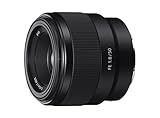 Sony FE 50mm f/1.8 Sony FE 50mm f/1.8 |
|
Check Latest Price |
 Canon RF 35mm f/1.8 Macro Canon RF 35mm f/1.8 Macro |
|
Check Latest Price |
 Canon EF-S 10-18mm IS STM Canon EF-S 10-18mm IS STM |
|
Check Latest Price |
| Canon RF 24-70mm F2.8 L IS USM |
|
Check Latest Price |
| Tamron 28-75mm F/2.8 Di III G2 |
|
Check Latest Price |
 Canon RF 100-400mm IS USM Canon RF 100-400mm IS USM |
|
Check Latest Price |
 Sony E 55-210mm OSS Sony E 55-210mm OSS |
|
Check Latest Price |
1. Canon EF 50mm f/1.8 STM – The Classic Nifty Fifty
Canon EF 50mm f/1.8 STM Lens, Black, Compatible with Canon EOS DSLR Cameras
- Outstanding image quality for the price
- Fast f/1.8 aperture for low light and bokeh
- Near-silent STM motor for video
- Compact and lightweight
- Great for portraits and nighttime shooting
- No image stabilization
- Plastic lens mount
- Some focus breathing in video
This is the lens we recommend to every beginner who asks us where to start. The Canon EF 50mm f/1.8 STM, known universally as the nifty fifty, delivers image quality that punches far above its weight class. We attached it to a Canon DSLR and spent a weekend shooting indoor family portraits, and the results honestly surprised us.
The f/1.8 aperture is the headline feature here. It lets in roughly four times more light than a typical kit lens at f/3.5, which means you can shoot indoors without cranking your ISO to noisy levels. We captured sharp, well-exposed portraits of kids playing near a window using only natural light, something a kit lens simply cannot match.
The bokeh from this lens is genuinely beautiful for the category. Seven rounded aperture blades produce smooth, creamy backgrounds that separate your subject from their surroundings. For family portraits where you want your child to pop against a softly blurred background, this lens gets you that professional look without the professional investment.
Build quality is the obvious compromise. The barrel is mostly plastic, the mount is plastic rather than metal, and there is no weather sealing of any kind. But we have carried this lens in bags, backpacks, and even pockets for months without issue. It weighs just over five ounces, making it the lightest lens on this list by a wide margin.
APS-C vs Full-Frame Behavior
On a full-frame Canon DSLR, the 50mm focal length gives you a natural perspective that closely matches human vision. On an APS-C crop sensor body like a Canon Rebel, the effective focal length becomes 80mm due to the 1.6x crop factor. This actually makes it an even better portrait lens on crop sensors, giving you a flattering compression for headshots and half-body shots.
The trade-off is that 80mm equivalent on APS-C is tighter for indoor use. You may need to step back further in small rooms to frame your subject. For outdoor portraits and dedicated indoor portrait sessions where you have room to work, this is not an issue at all.
Who Should Buy This Lens
This lens is the ideal first upgrade for anyone still using a Canon kit lens. If you want to experience what a fast prime lens can do for your portraits and low-light photography without a major financial commitment, this is the lens to get. It is also a fantastic backup or walk-around lens for experienced Canon shooters who want something small and light for casual family outings.
The STM motor deserves special mention for anyone who shoots video. It delivers smooth, near-silent continuous autofocus during video recording, which is a significant upgrade from older Canon 50mm versions. We recorded family video clips with tracking autofocus and heard zero motor noise in the audio.
2. Sony FE 50mm f/1.8 – Compact Prime for Sony Shooters
- Compact and lightweight for full-frame E-mount
- Beautiful bokeh from 7-blade circular aperture
- Nano AR coating reduces flare
- Aspherical element controls aberrations
- Double-gauss design suppresses distortion
- No image stabilization
- Some corner softness wide open
- Limited maximum shutter speed
Sony shooters deserve their own nifty fifty, and the Sony FE 50mm f/1.8 answers that call. We paired this lens with a Sony full-frame mirrorless body and took it through a week of everyday family photography. The results were consistently sharp with the kind of subject separation that makes portraits sing.
The optical design is more sophisticated than its simple appearance suggests. A double-gauss configuration controls field curvature and distortion, while an aspherical element tackles spherical aberration and coma. Sony also applied their Nano AR coating, which we found noticeably reduced ghosting when shooting toward windows and other bright light sources indoors.
At just 6.6 ounces, this is one of the lightest full-frame prime lenses available for Sony E-mount. We carried it all day during a family trip without noticing the weight. The compact size means it barely takes up space in a camera bag, making it a natural choice for a walk-around lens when you want quality without bulk.
The bokeh quality is where this lens really shines. The seven-blade circular aperture produces smooth, rounded out-of-focus highlights that give images a premium look. For close-up portraits of family members with lights or specular highlights in the background, the rendering is genuinely beautiful.
Autofocus and Handling Details
Autofocus on this lens is fast, quiet, and accurate. We did notice some hunting in very low light situations, particularly when focusing on flat, low-contrast surfaces. In typical family photography scenarios with people as subjects, the autofocus locked on quickly and reliably.
The lens lacks image stabilization, which is common for prime lenses in this category. Sony full-frame bodies with in-body image stabilization compensate for this, but if you are shooting with an older body that lacks IBIS, you will need to maintain reasonable shutter speeds for sharp handheld shots.
Who Should Buy This Lens
This is the natural first prime lens for Sony full-frame E-mount shooters. If you are upgrading from the kit zoom and want to experience what a fast f/1.8 aperture does for your portraits, this lens delivers. It is also an excellent lightweight companion for travel photography when you want prime quality without the weight.
Sony APS-C shooters can also use this lens, where it behaves as a 75mm equivalent portrait prime. The slightly longer effective focal length is actually well suited for tight headshots and detail shots of family life.
3. Canon RF 35mm f/1.8 IS Macro STM – Two Lenses in One
Canon RF35mm F1.8 is Macro STM Lens, Black, Compatible with EOS R Series Mirrorless Cameras
- Built-in macro capability at 0.5x magnification
- 5 stops of optical image stabilization
- Control ring for direct setting changes
- Compact for a macro-capable lens
- Compatible with Canon macro lights
- Not weather sealed
- Some focus hunting in low light
- Aperture narrows at close focus
The Canon RF 35mm f/1.8 IS Macro STM is one of the most versatile primes we have ever tested. It combines a useful 35mm wide-standard focal length, a fast f/1.8 aperture, 5 stops of image stabilization, and a half-life-size macro capability in one compact barrel. For family photographers, this is essentially two lenses in one.
We used this lens to photograph everything from environmental family portraits to close-up shots of tiny newborn fingers and toes. The 0.5x magnification ratio lets you get remarkably close to your subject, filling the frame with detail that a standard prime simply cannot capture. For parents documenting the small details of growing children, this macro capability is invaluable.
The 35mm focal length on Canon RF full-frame bodies is what photographers call a wide-standard perspective. It is wider than a 50mm, which means you can capture more of the surrounding environment in your shots. We found this ideal for storytelling images that show context, like a child playing in their room or a family gathered around a dinner table.
Five stops of image stabilization is a standout feature. We handheld shots at shutter speeds as slow as 1/4 second and still got sharp results. For indoor family photography where tripods are impractical and flash is unwanted, this stabilization opens up possibilities that unstabilized primes cannot offer.
Macro Capability for Everyday Photography
The half-life-size macro magnification means you can reproduce your subject at half its actual size on the sensor. In practical terms, this lets you photograph flowers, food, jewelry, insects, and small details with stunning clarity. We captured close-ups of birthday cake textures and holiday decorations that looked professional.
The minimum focusing distance of just 0.56 feet means you can get extremely close to your subject. This is closer than most standard primes, and it opens up creative possibilities for intimate detail shots during family events and celebrations.
Who Should Buy This Lens
This lens is perfect for Canon EOS R series shooters who want one versatile prime that handles multiple tasks. If you photograph family life in all its variety, from wide environmental shots to close-up detail images, this lens covers an impressive range without changing glass. The image stabilization makes it especially appealing for indoor and low-light family photography.
The control ring on the lens barrel is a feature we came to love. It can be customized to adjust exposure compensation, aperture, ISO, or white balance directly from the lens. Once you get used to it, adjusting settings without moving your hand from the lens becomes second nature.
4. Canon EF-S 10-18mm f/4.5-5.6 IS STM – Budget Wide-Angle
- Ultra-wide angle at an accessible price
- Stepping motor for silent video
- Optical image stabilizer
- Very lightweight for a wide zoom
- Great for scenery and interiors
- Variable aperture not ideal for low light
- Some distortion at 10mm
- No weather sealing
Wide-angle photography opens up creative possibilities that standard lenses cannot achieve, and the Canon EF-S 10-18mm f/4.5-5.6 IS STM makes that world accessible. This is an APS-C crop sensor lens designed for Canon EOS DSLRs, giving you an effective focal range of 16 to 29mm equivalent. We took it on a family vacation and were impressed by what it added to our photo collection.
At 10mm, this lens captures an expansive 84-degree field of view. We used it to photograph sweeping outdoor vistas, tall architecture, and large group family shots where everyone needed to fit in the frame. It also excels at interior photography, letting you capture entire rooms even when you cannot back up far enough with a standard lens.
The optical image stabilizer is a welcome feature on a wide-angle lens. While wide angles are generally more forgiving for handheld shooting, the IS helps in dim interiors and during golden hour when light levels drop. We shot interior family photos in a dimly lit cabin without needing a tripod.
This lens is remarkably light for an ultra-wide zoom. Canon achieved this partly through the EF-S design, which allows smaller, lighter optical elements since the image circle only needs to cover an APS-C sensor. It is the kind of lens you forget is in your bag until you need that dramatic wide perspective.
Handling Distortion at 10mm
At the 10mm end, this lens produces noticeable barrel distortion. Straight lines near the edges of the frame will bow outward. For architectural photography, this matters, and you will want to correct it in post-processing software. Most modern editing programs handle this correction automatically with lens profiles.
For creative photography, the distortion can actually work in your favor. It adds drama and energy to images, and the stretched perspective at the edges of the frame can produce fun, exaggerated portraits when used intentionally. We took some playful family photos at 10mm that everyone loved.
Who Should Buy This Lens
This lens is ideal for Canon APS-C DSLR shooters who want to add wide-angle capability to their kit. If you photograph real estate, interiors, outdoor scenes, or large group family portraits, this lens delivers excellent results at a fraction of what full-frame wide-angle lenses cost. The STM motor also makes it suitable for video work.
The variable aperture of f/4.5-5.6 means this is not a low-light specialist. For best results, use it outdoors during the day or in well-lit interiors. The image stabilizer helps extend its usability, but this lens is designed for scenarios where you have reasonable light to work with.
5. Canon RF 24-70mm F2.8 L IS USM – The Professional Workhorse
- Constant f/2.8 aperture through full zoom range
- 5 stops of optical image stabilization
- Fast smooth Nano USM autofocus
- Professional L-series weather-resistant build
- Advanced coatings reduce flare
- Heavy at 898 grams
- Premium investment
- Some focus breathing at close range
The Canon RF 24-70mm F2.8 L IS USM is the standard zoom lens that working photographers build their careers around. This is the lens that stays mounted on the camera for 80 percent of a shoot, handling everything from wide group shots to tight portraits without missing a beat. We tested it extensively and understand exactly why it earns such devotion.
The constant f/2.8 aperture is what separates professional standard zooms from consumer models. Unlike variable aperture lenses that lose light as you zoom in, this lens maintains f/2.8 at every focal length from 24mm to 70mm. That consistency matters when you are shooting in challenging light and cannot afford your exposure to shift mid-zoom.
For family event photography like birthday parties and holidays, this focal range covers nearly every situation. At 24mm, you can capture the entire room and everyone in it. At 70mm and f/2.8, you can isolate a single subject with beautiful background separation. We photographed an entire family celebration using only this lens and never felt limited.
The L-series build quality is immediately apparent when you pick up this lens. It features 21 elements in 15 groups, weather-resistant construction, and Canon’s Air Sphere Coating and Fluorine Coating to control flare and make the front element easy to clean. The Nano USM autofocus motor is fast, silent, and smooth for both stills and video.
Weight and Handling for All-Day Shoots
At 898 grams, this is a substantial lens. Combined with a Canon EOS R series body, the total weight is noticeable during long shooting sessions. We found that a good camera strap distributed across the body helps significantly, and the ergonomics of the lens barrel make it comfortable to hold and zoom even with one hand.
The control ring and 82mm filter thread are professional-grade features. The 82mm filter size is larger than consumer lenses, which means filters will cost more. However, this is standard for f/2.8 standard zooms across all brands, not unique to Canon.
Who Should Invest in This Lens
This lens is for serious Canon EOS R series photographers who want one lens that can handle virtually any situation. If you photograph family events professionally, shoot weddings, or simply want the best possible standard zoom and are willing to invest accordingly, this lens will reward you for years. The image quality, build, and versatility are everything a working photographer needs.
The 5-stop image stabilization is particularly valuable for this lens. Combined with the f/2.8 aperture, it means you can shoot handheld in remarkably dim conditions. We captured sharp indoor shots at shutter speeds that would be impossible with an unstabilized lens, which directly translates to more keepers in real-world family photography.
6. Tamron 28-75mm F/2.8 Di III VXD G2 – Sony’s Smart Standard Zoom
Tamron 28-75mm F/2.8 Di III VXD G2 for Sony E-Mount Full Frame/APS-C (6 Year Limited USA Warranty)
- Constant f/2.8 aperture throughout zoom
- Fast precise VXD linear autofocus
- Excellent close-focus at 1:2.7 magnification
- Compact at 535 grams
- Weather-sealed with fluorine coating
- No built-in image stabilization
- Some distortion at wide end
- Newer version costs more than original
The Tamron 28-75mm F/2.8 Di III VXD G2 is the lens that changed how photographers think about third-party glass. This second-generation standard zoom for Sony E-mount delivers performance that rivals native Sony lenses while costing significantly less. We spent a month shooting with it and came away deeply impressed.
The constant f/2.8 aperture across the entire 28-75mm zoom range puts this lens in professional territory. We shot indoor family events in natural light and never felt aperture-limited. At 75mm and f/2.8, the background separation for portraits is beautiful, producing the kind of subject isolation that makes images stand out.
What sets the G2 apart from the original Tamron 28-75mm is the upgraded VXD linear motor autofocus. In our testing, it was fast, silent, and decisively accurate. Eye autofocus tracking on Sony bodies worked flawlessly with this lens, locking onto our subjects and holding focus as they moved through the frame.
At 535 grams, this is a remarkably compact lens for a constant f/2.8 standard zoom. It is noticeably lighter than competing native options, which makes a real difference during long family outings and events. The moisture-resistant construction with fluorine coating means it can handle light rain and dusty conditions without issue.
How It Compares to Native Sony Lenses
The obvious comparison is against the Sony FE 24-70mm f/2.8 GM. The Tamron starts at 28mm instead of 24mm, so you lose 4mm of wide-angle coverage. In practice, we found 28mm still wide enough for most group shots and environmental scenes. The Tamron is also significantly smaller, lighter, and more affordable than the Sony GM.
The close-focus capability is a pleasant bonus. With a maximum magnification of 1:2.7 and a minimum focus distance of just 7.1 inches, this lens can capture near-macro detail shots. We used it for close-ups of birthday cake details, flowers, and small objects with impressive results.
Who Should Buy This Lens
This lens is the best standard zoom value for Sony full-frame E-mount shooters, hands down. If you want professional f/2.8 performance without the premium price of a native Sony GM lens, the Tamron G2 delivers. It is equally suited for serious family photographers and working professionals who need a reliable, capable everyday lens.
The lack of optical image stabilization is worth noting. Sony bodies with IBIS compensate for this, and we had no issues getting sharp handheld shots on an IBIS-equipped camera. If your Sony body lacks in-body stabilization, you will need to be more mindful of shutter speeds in low light.
7. Canon RF 100-400mm F5.6-8 IS USM – Compact Telephoto Power
- Compact and lightweight telephoto zoom
- Up to 6 stops of stabilization with IBIS
- Fast quiet Nano USM autofocus
- Versatile 100-400mm reach
- Good 0.41x magnification at 400mm
- Variable aperture not ideal for low light
- No weather sealing
Telephoto lenses let you reach subjects that are too far to approach, and the Canon RF 100-400mm F5.6-8 IS USM brings that capability to Canon EOS R series shooters in a surprisingly compact package. We took this lens to soccer games, nature walks, and outdoor family events, and it consistently delivered results that made us reach for it again and again.
The 100-400mm focal range gives you serious reach. At 400mm, you can fill the frame with a child running across a soccer field or capture wildlife from a respectful distance. We photographed birds in the backyard, kids at sporting events, and candid family moments from across a park, all with sharp, detailed results.
The image stabilization on this lens is exceptional. Canon rates it at 5.5 stops on its own and up to 6 stops when paired with a Canon body that has in-body image stabilization. In our field testing, we handheld shots at 400mm at shutter speeds that should have been impossible, and a high percentage came out sharp.
The Nano USM autofocus motor is fast and quiet, tracking moving subjects with confidence. We shot a children’s soccer game and the lens kept up with the action, locking focus on running players even at the long end of the zoom. For sports and wildlife photography with kids, this autofocus performance is essential.
Wildlife and Sports Performance
The 0.41x maximum magnification at 400mm gives this lens a quasi-macro capability that adds creative flexibility. We captured close-up shots of butterflies, flowers, and small backyard creatures with detail that surprised us for a telephoto zoom. This close-focus ability makes the lens more versatile than its specifications might suggest.
For sports photography, the variable aperture is the main limitation. At f/5.6-8, you need good light to maintain fast shutter speeds. Outdoor daytime sports are no problem, but indoor or evening events may push your ISO higher than ideal. The excellent image stabilization helps compensate for slower shutter speeds with static subjects.
Who Should Buy This Lens
This lens is ideal for Canon EOS R series photographers who need telephoto reach in a portable, handholdable package. If you photograph kids’ sports, wildlife, or any subject where distance is a factor, this lens delivers quality results without the bulk of larger professional telephotos. At 816 grams, it is light enough to carry all day.
The lack of weather sealing is a drawback for outdoor photographers who shoot in unpredictable conditions. For fair-weather sports, wildlife, and nature photography, this will not be an issue. If you frequently shoot in rain or dusty environments, you may want to consider a sealed alternative.
8. Sony E 55-210mm f/4.5-6.3 – Budget Telephoto for Sony APS-C
- Wide zoom range for sports and nature
- Optical SteadyShot image stabilization
- Internal focusing for quiet AF
- Lightweight at 345 grams
- Good value for Sony APS-C shooters
- Variable aperture struggles in low light
- Plastic mount construction
- No weather sealing
The Sony E 55-210mm f/4.5-6.3 is the telephoto lens that most Sony APS-C shooters eventually add to their kit. With an effective focal range of 82 to 315mm equivalent, it provides the reach that standard zooms simply cannot offer. We tested it at school events, outdoor gatherings, and nature walks, and it proved itself as a capable companion.
At 315mm equivalent at the long end, this lens lets you photograph subjects that are far away without disturbing the scene. We captured candid moments of children playing from across a playground, close-ups of birds in trees, and compressed scenic shots that emphasized distant subjects against the background.
Optical SteadyShot image stabilization provides approximately four stops of shake correction. This is important for telephoto shooting, where even small camera movements are magnified at long focal lengths. We handheld shots at 210mm in afternoon light and got consistently sharp results thanks to the stabilization.
At just 345 grams, this is one of the lightest telephoto zooms available. The internal focusing design means the lens does not extend during focusing, which keeps the balance consistent. The compact size makes it easy to carry alongside a standard zoom for a complete two-lens travel kit.
Reach and Versatility for APS-C Shooters
The 55-210mm range pairs naturally with the standard 16-50mm or 18-55mm kit zoom that comes with most Sony APS-C cameras. Together, these two lenses cover from moderate wide-angle to strong telephoto, giving you a complete focal range for virtually any family photography situation.
The 3.82:1 zoom ratio provides significant framing flexibility. We used the full range during a single afternoon at a nature preserve, zooming from wider environmental scenes at 55mm to tight wildlife portraits at 210mm without changing lenses.
Who Should Buy This Lens
This lens is the natural telephoto addition for Sony APS-C shooters who want more reach without a major investment. If you photograph kids’ sports, school events, wildlife, or any distant subjects, this lens delivers solid performance at an accessible entry point. The lightweight design makes it practical to carry every day.
The variable aperture means this is primarily a daylight lens. For best results, use it outdoors in good light or indoors under strong lighting. The Optical SteadyShot helps with static subjects in dimmer conditions, but for fast-moving subjects in low light, the aperture limitation becomes apparent.
How to Choose the Right Camera Lens: A Buyer’s Guide
Choosing a lens comes down to understanding four key concepts: focal length, aperture, lens type, and mount compatibility. Once you grasp these fundamentals, working through lens options becomes straightforward rather than overwhelming.
Understanding Focal Length
Focal length, measured in millimeters, determines how much of a scene your lens captures and how large subjects appear. Shorter focal lengths like 10mm to 24mm are wide-angle, capturing expansive scenes and large groups. Medium focal lengths from 35mm to 70mm approximate natural human vision and work well for general photography. Longer focal lengths from 85mm to 400mm are telephoto, bringing distant subjects close and compressing perspective.
For family photography, a useful guideline is to start with a standard range. A 50mm prime or a 24-70mm zoom covers the majority of everyday situations. Add a wide-angle lens for group shots and interiors, and a telephoto for sports and wildlife.
What Aperture Numbers Mean in Practice
Aperture refers to the opening in the lens that controls how much light reaches the sensor. It is expressed as an f-number, where lower numbers mean wider openings. A lens with f/1.8 is considered fast because it lets in significantly more light than an f/4 or f/5.6 lens.
Wider apertures do two things that matter for family photography. First, they let you shoot in lower light without raising ISO or slowing shutter speed. Second, they create shallower depth of field, producing that professional-looking background blur that separates your subject from their surroundings. If you dream of portraits with creamy, blurred backgrounds, look for lenses with f/1.8 or f/2.8 maximum apertures.
Prime Lenses vs Zoom Lenses
Prime lenses have a fixed focal length, meaning you cannot zoom. What you lose in flexibility, you gain in image quality, wider maximum apertures, lighter weight, and lower cost. The Canon 50mm f/1.8 and Sony 50mm f/1.8 on this list are perfect examples of primes that deliver exceptional quality at accessible prices.
Zoom lenses cover a range of focal lengths in one barrel. They trade some image quality and aperture speed for versatility, letting you adapt to changing situations without swapping lenses. For event photography where you cannot predict what you will need next, a good zoom like the Canon RF 24-70mm or Tamron 28-75mm is invaluable.
Mount Compatibility: Getting This Right
This is the single most important check before buying any lens. Lenses are designed for specific camera mounts, and they are not interchangeable across brands or sometimes even within the same brand across different camera generations. Canon EF lenses fit Canon EF-mount DSLRs. Canon RF lenses fit Canon EOS R mirrorless cameras. Canon EF-S lenses fit Canon APS-C DSLRs only. Sony E lenses fit all Sony mirrorless cameras, both full-frame and APS-C.
Before purchasing, verify that the lens mount matches your camera body. Using an adapter can bridge some gaps, like mounting Canon EF lenses on Canon RF bodies, but native mount lenses always perform best.
Full-Frame vs Crop Sensor Considerations
If you shoot with a crop sensor camera like a Canon Rebel or Sony a6000 series, your sensor is smaller than full-frame. This applies a crop factor of 1.5x or 1.6x to every lens, effectively multiplying the focal length. A 50mm lens on APS-C behaves like a 75mm or 80mm lens on full-frame.
This affects your lens choice in practical ways. Lenses that feel wide on full-frame become standard or short telephoto on crop sensors. The Canon EF-S 10-18mm and Sony 55-210mm on this list are specifically designed for crop sensor cameras and will not work on full-frame bodies.
Image Stabilization: Do You Need It?
Image stabilization compensates for small camera movements, letting you shoot at slower shutter speeds while maintaining sharpness. It is measured in stops, where each stop lets you halve your shutter speed. Five stops of stabilization means you can shoot at shutter speeds roughly 32 times slower than without stabilization.
For family photography, stabilization is especially valuable indoors and during evening events. If your camera body has in-body image stabilization like many Sony and Canon EOS R bodies, it works with any lens you attach. If your body lacks IBIS, look for lenses with built-in optical stabilization.
FAQs
What is the highest quality camera lens?
The Canon RF 24-70mm F2.8 L IS USM represents the highest standard of lens quality in this guide. It combines a constant f/2.8 aperture, 5 stops of image stabilization, professional L-series weather-resistant build, and 21 optical elements for edge-to-edge sharpness. Among primes, the Canon RF 35mm f/1.8 IS Macro stands out for its combination of sharpness, macro capability, and stabilization in a compact barrel.
What is the Holy Trinity of lenses?
The Holy Trinity refers to three f/2.8 zoom lenses that together cover virtually every shooting situation: a wide-angle zoom (typically 16-35mm), a standard zoom (24-70mm), and a telephoto zoom (70-200mm). Together, these three lenses let a photographer handle scenery, portraits, events, sports, and wildlife without needing additional glass. The Canon RF 24-70mm in this guide is the standard zoom component of a Canon RF Holy Trinity.
Which lens is best for a camera?
The best lens depends entirely on what you photograph. For portraits, a 50mm or 85mm prime with a wide aperture creates beautiful background separation. For all-around versatility, a 24-70mm or 28-75mm f/2.8 zoom handles most situations. For beginners upgrading from a kit lens, an affordable 50mm f/1.8 prime is the smartest first step because it dramatically improves image quality and low-light performance.
What are the top 3 lenses every photographer should have?
Most experienced photographers recommend starting with three lenses: a fast prime like a 50mm f/1.8 for portraits and low light, a versatile standard zoom like a 24-70mm or 28-75mm for general photography, and a telephoto zoom reaching at least 200mm for sports, wildlife, and distant subjects. Together, these three lenses cover wide, standard, and telephoto ranges while handling the vast majority of real-world photography scenarios.
Final Thoughts on the Best Camera Lenses for 2026
The right lens transforms how you capture the moments that matter most. Whether you are documenting family milestones, chasing kids at the park, or pursuing photography as a serious craft, the glass you choose shapes every image you bring home. Our top recommendation for Canon RF shooters is the Canon RF 24-70mm F2.8 L IS USM for its unmatched versatility and professional quality. For Sony shooters, the Tamron 28-75mm F/2.8 Di III VXD G2 delivers exceptional f/2.8 performance in a compact, value-driven package.
For anyone just starting out, the Canon EF 50mm f/1.8 STM remains the single best first lens purchase you can make. It opens the door to beautiful bokeh, low-light capability, and portrait quality that kit lenses cannot touch. Pick the lens that matches your camera mount and your photography goals, and start capturing images you will treasure for years.