
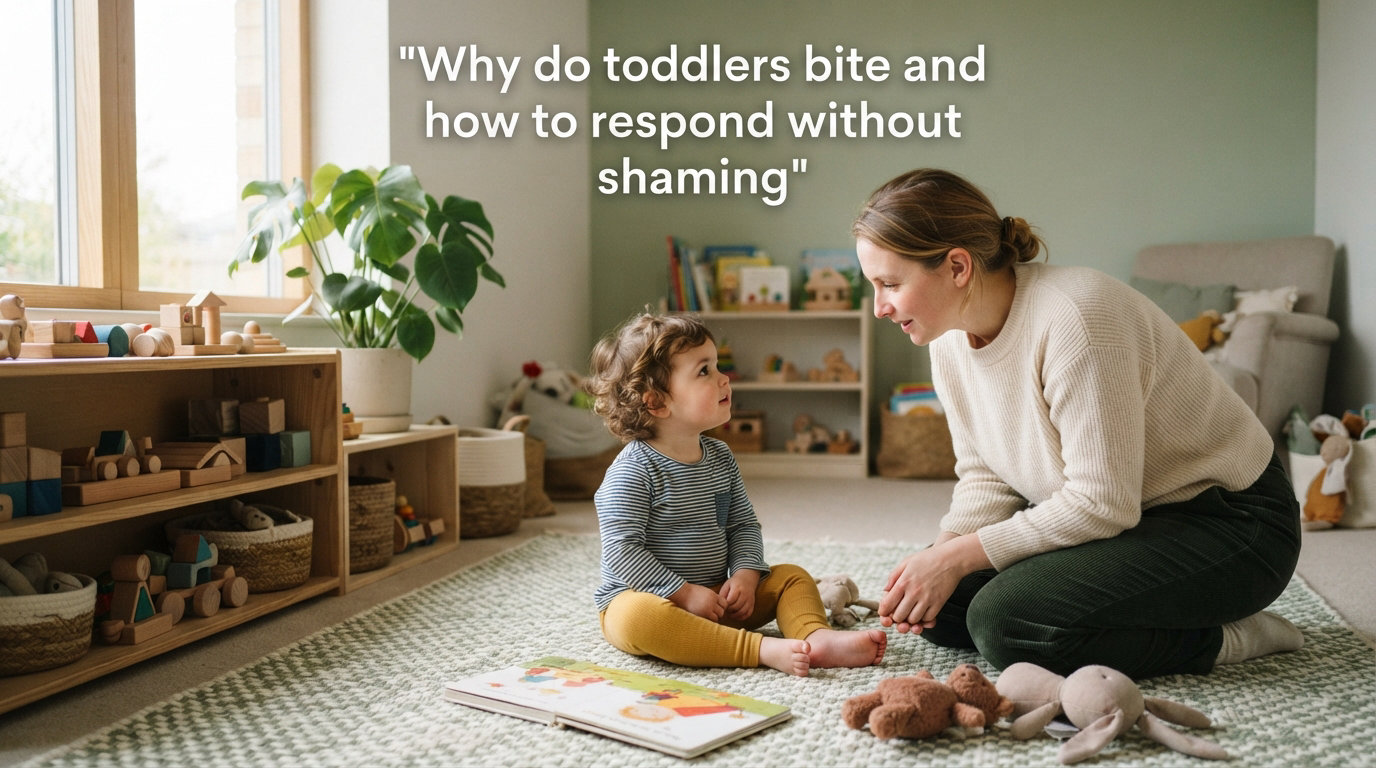
When your toddler sinks their teeth into someone’s arm at the playground, time seems to stop. You feel every eye on you, the other parent’s shock, and the burning shame that rises in your chest. If you’re searching for why do toddlers bite and how to respond without shaming, you’re likely in that moment or recovering from it.
Biting is one of the most common and most misunderstood behaviors in early childhood. Between ages one and three, many children go through a biting phase that leaves parents feeling embarrassed, frustrated, and worried they are failing somehow. I have worked with hundreds of families over the years, and I can tell you this with complete confidence: biting does not mean your child is bad, aggressive, or destined for behavioral problems.
This guide will help you understand the real reasons toddlers bite and give you practical, shame-free strategies to handle it when it happens. You will learn exactly what to say, what to avoid, and how to prevent future incidents without damaging your relationship with your child.
Table of Contents
Why Do Toddlers Bite? Understanding the Psychology
Toddlers bite for reasons that make perfect sense when you understand their developmental limitations. Children aged 1 to 3 years old are experiencing intense emotions and desires but lack the language skills and impulse control to express them appropriately. Biting is not an act of malice. It is communication.
Here are the primary psychological drivers behind biting behavior:
Communication Gaps
Most toddlers who bite have limited verbal abilities. They know what they want but cannot find the words fast enough to express it. When another child takes their toy, they feel a surge of frustration that has nowhere to go. Biting becomes their exclamation point.
I have watched children try to say “stop” or “mine” but the words get stuck. The other child keeps taking, pushing, or invading their space. The bite happens in that gap between feeling and speaking.
Emotional Overwhelm
Toddlers feel emotions with incredible intensity but have almost no ability to regulate them. Frustration, anger, excitement, fear, and even joy can overwhelm their nervous systems. Biting sometimes emerges from this emotional flood when they simply cannot contain what they feel.
A toddler might bite when they are overtired and the world feels too loud, too bright, too much. They might bite when excited during rough play because their body cannot process the stimulation. They might bite out of fear when a new person gets too close too fast.
Sensory and Oral Needs
Many toddlers bite because they need oral stimulation or are experiencing teething pain. The pressure of biting can feel satisfying when gums are swollen. Some children have sensory processing patterns that make mouthing and biting feel calming or organizing.
I remember working with an 18-month-old who bit constantly during transitions. His parents discovered he had significant oral sensory needs. Once they provided appropriate chew toys and crunchy snacks throughout the day, the biting decreased dramatically.
Cause and Effect Exploration
Toddlers are scientists experimenting with the world. They bite to see what happens. Will it make a sound? Will the other child cry? Will mom come running? This experimental biting is not aggression. It is cognitive development in action.
Attention and Connection
Sometimes toddlers bite because it works. If biting gets a big reaction from adults, they learn that this behavior brings immediate attention. Even negative attention can feel better than being ignored when a child needs connection.
Why Shame-Free Responses Matter?
The shaming approach to biting does more harm than good, yet it remains surprisingly common. Parents may call their child a “biter,” make them apologize publicly, or respond with visible disgust. These reactions come from a place of fear and embarrassment, but they damage the very relationship that helps children learn better behavior.
Shame tells a child that they are bad, not that their behavior was unhelpful. Research consistently shows that shame-based discipline creates anxiety, hiding behaviors, and actually increases the very problems parents want to stop. A child who feels shame about biting may become secretive, withdraw, or develop a negative self-concept that follows them for years.
When we respond to biting without shame, we accomplish something crucial. We separate the child from the behavior. We communicate that we love them even when we do not like their actions. We preserve the safety of our relationship, which is the foundation for all future learning and cooperation.
The goal is not to make your child feel terrible about biting. The goal is to teach them new skills while keeping your connection intact. A child who feels connected and understood is far more likely to develop self-control than a child who feels rejected and shamed.
How to Respond to Toddler Biting: A Step-by-Step Guide
When biting happens, you need a clear script. Your emotions will be activated, other adults may be watching, and your child needs immediate guidance. Here is exactly what to do in the moment:
Step 1: Stop the Behavior Immediately
Move quickly to separate your child from the victim. Get down to their eye level. Use a firm, low voice and say “Stop. No biting.” Your tone should be serious but not screaming. Physical safety comes first, so do whatever you need to prevent another bite from happening.
Step 2: Comfort the Victim First
This is a step many parents miss. Turn your attention to the child who was bitten before addressing your own. Get them ice, offer comfort, and check if the skin is broken. This models empathy and shows your child that their actions had real consequences for another person.
Say something like “I am sorry you got hurt. Biting is not okay. Let me help you feel better.” Your child is watching you do this, and they are learning.
Step 3: Make a Firm, Calm Statement
Now turn to your child. Keep your voice steady and look them in the eyes. Use simple, clear words. “Teeth are not for biting people. Biting hurts.” Avoid lectures. A toddler cannot process a long explanation in an emotional moment.
Step 4: Acknowledge Their Feelings
This is where shame-free parenting really shines. After the firm boundary, offer emotional support. “You were frustrated when she took your truck. You wanted it back.” This validates their experience without validating their behavior.
You are teaching them that feelings are allowed even when certain actions are not. This distinction helps children develop emotional intelligence and self-regulation over time.
Step 5: Teach an Alternative
Give your child the words or actions they should use instead. “Next time, say ‘Mine!’ or come get me. Use your words, not your teeth.” You may need to practice this with them when everyone is calm.
For children with limited language, teach them to show you instead. Hand signals, pointing, or bringing the adult to the situation can all replace biting.
Step 6: Redirect and Monitor
Move your child to a different activity or space. Some parents find that briefly removing their child from the situation helps reset their nervous system. Stay close for the next several minutes to prevent another incident.
If your child is very dysregulated, they may need help calming down before they can engage with anything. Offer deep pressure, a quiet space, or a comfort item.
What to Avoid: Responses That Make Biting Worse
Knowing what not to do is just as important as knowing the right response. Many traditional discipline approaches actually increase biting behavior or damage your relationship with your child. Here is what to avoid:
Shaming and Public Humiliation
Never label your child as “a biter” in front of them or others. Do not force elaborate public apologies that serve the adult’s embarrassment more than the child’s learning. Avoid saying things like “You are so naughty” or “Why do you always bite?”
These responses create shame rather than growth. A child who hears “you are bad” eventually believes it. This self-concept affects behavior far beyond the toddler years.
Yelling and Harsh Reactions
While you need a firm tone, screaming terrifies toddlers and shuts down their ability to learn. A harsh, angry reaction can also be reinforcing for attention-seeking biters. They got a big response, which was exactly what they wanted.
Take a breath before you respond. It is okay to pause and collect yourself. Your calm matters more than your speed.
Biting Back as “Teaching”
Some well-meaning grandparents or even pediatricians may suggest biting your child back to show them how it feels. This approach is harmful and ineffective. You cannot teach a child not to bite by biting them. You simply model that biting is something people do when they are bigger.
Biting back also destroys trust between you and your child. They look to you for safety and protection. When you hurt them, even as a “lesson,” that safety is compromised.
Time-Outs for Toddlers
Traditional time-outs are developmentally inappropriate for children under three. Toddlers lack the cognitive capacity to connect a time-out with a behavior that happened minutes ago. They experience isolation as rejection, which increases dysregulation.
Instead of time-out, try “time-in” where you stay with your child and help them calm down. This teaches regulation rather than enforcing isolation.
Punitive Measures
Spanking, taking away beloved items, or other punishments do not reduce biting. They create fear, resentment, and sneaky behavior. A punished child learns to hide their biting, not to stop it.
Prevention Strategies That Actually Work
The best way to handle biting is to prevent it from happening in the first place. These proactive strategies address the root causes and reduce incidents significantly:
Build Communication Skills
Teach simple words and signs for common triggers. “Mine,” “Stop,” “Turn,” and “Help” cover most biting situations. Practice using these words when your child is calm so they are available when emotions run high.
Read books together about feelings and gentle hands. “Teeth Are Not for Biting” by Elizabeth Verdick is a favorite among the families I have worked with. The visual format helps toddlers understand without feeling lectured.
Learn the Warning Signs
Most bites are predictable once you know what to watch for. Tension in the jaw, clenched fists, specific social situations, and time of day can all signal increased risk. When you spot these signs, move closer to your child or intervene early.
I tell parents to “shadow” their child during high-risk times. Stay within arm’s reach during playdates, transitions, and late afternoons when everyone is tired.
Address Sensory and Oral Needs
If your child seems to bite for sensory input, provide appropriate alternatives. Chewable jewelry, crunchy snacks, and textured teethers can satisfy oral needs safely. Cold washcloths or teething rings help when biting is related to gum pain.
Ensure Basic Needs Are Met
Hungry, tired toddlers bite more often. Protect sleep schedules, offer regular snacks, and watch for signs of overstimulation. A well-rested, well-fed child has more capacity for self-control.
Create Consistent Routines
Toddlers feel safer when they know what to expect. Predictable routines reduce anxiety and the biting that can come from feeling overwhelmed. This is especially important during transitions between activities.
Collaborate with Daycare
If biting happens at daycare, work as a team with the caregivers. Share what you have learned about your child’s triggers. Ask them to use the same language and responses you use at home. Consistency across settings helps children learn faster.
Do not be defensive if teachers raise concerns. They are required to address biting for safety reasons, but they also understand it is normal. Together you can create a plan that supports your child.
Managing Your Own Emotions as a Parent
Biting triggers powerful feelings in parents. Embarrassment, anger, fear, and shame are all common. You may worry that other parents are judging you, that your child will be kicked out of daycare, or that you have failed somehow.
These feelings are normal, but they can derail your response if you do not manage them. When you feel activated, take a breath before acting. It is okay to say to the other parent, “I am so sorry. I am handling this right now.”
Remember that one biting incident does not define your parenting or your child. The parents watching have likely been through similar moments or will be soon. Most people understand that toddlers are learning.
If family members suggest harsh responses that conflict with your approach, stay firm. You can say “I appreciate your concern, but we are handling this with gentle guidance that research supports.” You do not need to justify your choices extensively.
Find support from other parents who use respectful discipline approaches. Online communities, local parenting groups, or a child development specialist can provide encouragement when you feel discouraged.
When to Seek Professional Help?
Most biting is a normal developmental phase that resolves with consistent guidance. However, some situations warrant professional support:
Seek help if your child bites multiple times daily despite consistent intervention, if biting continues past age three and a half, or if bites break skin and seem intentionally severe. If biting is accompanied by other concerning behaviors like extreme aggression, withdrawal, or regression in multiple areas, consult your pediatrician.
A pediatrician can rule out sensory processing issues, communication delays, or other developmental factors. They may refer you to an occupational therapist, speech-language pathologist, or child psychologist depending on the underlying needs.
Early intervention is effective and nothing to be ashamed of. Getting help shows you are a responsive, caring parent who wants to support your child’s development.
Frequently Asked Questions
How to respond to toddler biting?
Respond immediately with a firm but calm approach. First, separate your child and comfort the victim. Then get to your child’s eye level and say ‘No biting. Teeth hurt.’ Acknowledge their feelings and teach an alternative like using words or getting help from an adult. Finally, redirect your child to a different activity and stay close to prevent another incident.
What is the 3 bite rule for kids?
The 3 bite rule refers to trying new foods, not biting behavior. It means a child should try at least three bites of a new food before deciding they do not like it. This is unrelated to biting people. For biting behavior, there is no ‘rule’ about number of incidents. Focus instead on consistent prevention and teaching alternatives.
What is the psychology behind children biting?
Toddlers bite primarily due to developmental limitations. They experience intense emotions but lack language skills and impulse control to express them appropriately. Common psychological drivers include communication gaps, emotional overwhelm, sensory needs, cause-and-effect exploration, and attention-seeking. Biting is communication, not aggression.
How do you discipline a 2 year old for biting?
Avoid traditional discipline like time-outs or punishment which are ineffective for toddlers. Instead, use immediate intervention with a firm ‘no biting’ statement, comfort the victim first to teach empathy, acknowledge your child’s feelings, and teach specific alternatives like saying ‘mine’ or getting help. Stay consistent and patient as they learn.
Is it normal for toddlers to bite?
Yes, biting is very common among children aged 1 to 3 years. Studies show that up to half of toddlers in daycare settings may bite at some point. It is a developmentally normal behavior that typically fades as children develop better language skills and emotional regulation.
How long does the biting phase last?
Most biting phases last a few months, typically peaking between 18 and 24 months and fading by age 3. Consistent intervention can shorten the phase, while inconsistent or harsh responses may prolong it. Every child is different, but most outgrow biting as their communication skills improve.
Why Do Toddlers Bite and How to Respond Without Shaming: A Summary
Understanding why do toddlers bite and how to respond without shaming transforms one of parenting’s most stressful moments into an opportunity for growth. Your child is not bad. They are developing skills that take time to mature. They need your guidance, not your shame.
Remember the key principles: respond immediately with firmness but stay calm, comfort the victim first, teach alternatives to biting, and never use shame or harsh punishment. Prevention through communication skill-building and meeting sensory needs will reduce incidents over time.
This phase will pass. Your child will learn to use words instead of teeth. What they will remember is not that they bit someone at age two, but that you stayed connected to them even when their behavior was challenging. That security is what helps them develop into emotionally healthy, kind human beings. You have got this, and you are not alone.