
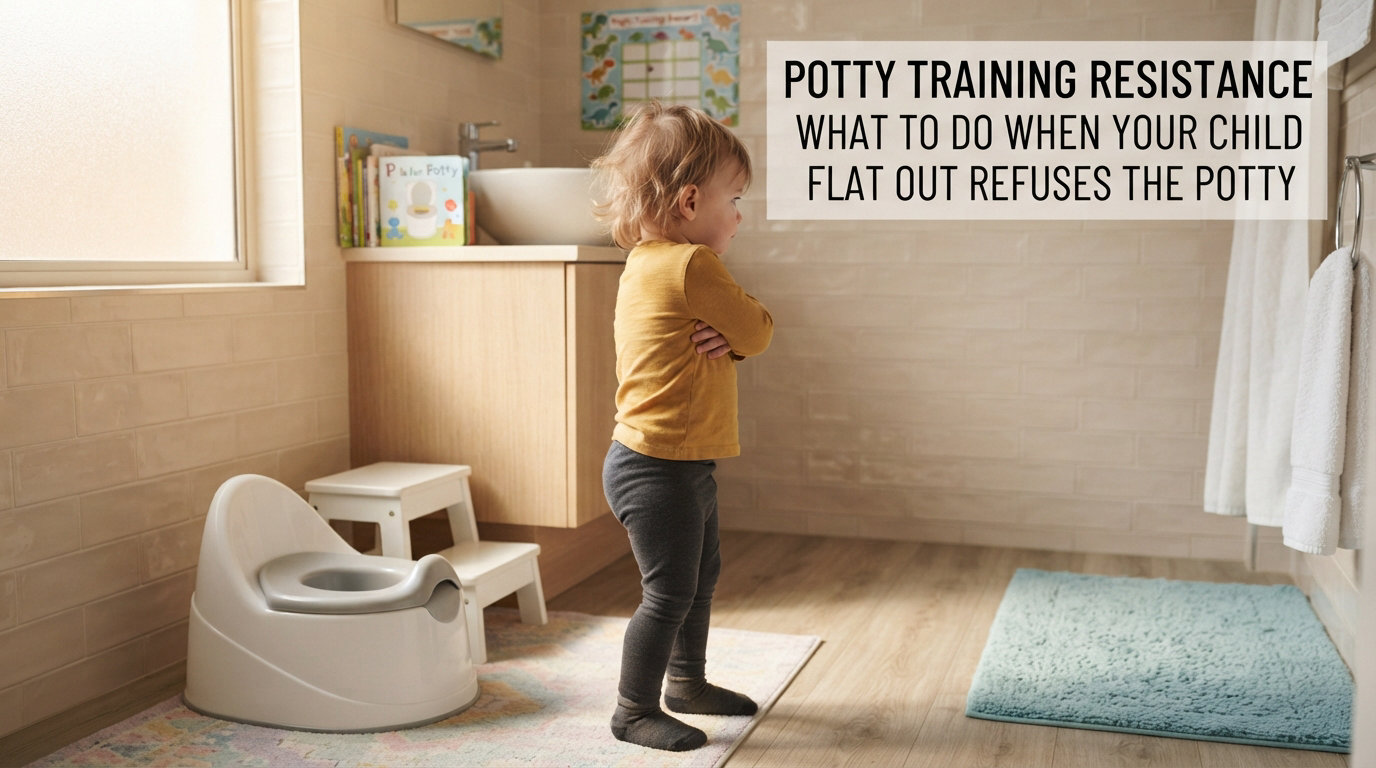
You have been trying for weeks. The potty chair sits in the bathroom, unused and collecting dust. Every time you mention it, your child crosses their arms, stomps their foot, or runs away screaming. This is potty training resistance, and it is one of the most frustrating phases of parenting.
I have worked with hundreds of families over the past decade, and I can tell you this: your child is not broken, and you are not failing. Potty training resistance is incredibly common, especially between ages two and four. The good news? Most children who resist eventually train successfully with the right approach.
In this guide, you will learn why children refuse the potty, how to recognize the signs of true resistance versus simple unreadiness, and practical strategies that actually work. We will cover age-specific guidance for two, three, and four year olds, and I will share real stories from parents who have been exactly where you are right now.
Table of Contents
What Is Potty Training Resistance?
Potty training resistance happens when a child who is physically capable of using the toilet consistently refuses to do so. Unlike a child who simply is not developmentally ready, a resistant child has the skills but chooses not to use them.
This resistance typically shows up between ages two and four. Your child might be dry for hours, understand the concept, and even use the potty occasionally, but then flat-out refuse for days or weeks at a time. They may insist on diapers, hold their urine or stool until a diaper is offered, or melt down at the mere suggestion of sitting on the toilet.
The key distinction is ability versus willingness. A resistant child can use the potty. They just won’t.
Why Your Child Refuses the Potty?
Understanding the root cause of your child’s refusal is the first step toward solving it. Based on my experience and insights from thousands of parents in online communities, here are the most common reasons children resist.
Fear of the Toilet or Flushing
Many toddlers are genuinely frightened by the toilet. The size is intimidating. The sound of flushing is loud and unpredictable. Some children fear they might fall in or get sucked down the drain. These fears are real to your child, even if they seem irrational to you.
The Need for Control
Toddlers and preschoolers are discovering their autonomy. Using the potty is one of the few areas where they have complete control. You cannot force a child to pee or poop. When children feel pushed or pressured, they often dig in their heels simply to assert their independence.
One parent on Reddit shared what finally worked for their three-year-old: “We gave him complete control. We told him, ‘Your body, your choice. You tell us when you are ready.’ Two weeks later, he just started using the potty on his own.”
Feeling Pressured or Pushed
Sometimes the resistance is a direct response to parental pressure. If you have been asking constantly, celebrating successes too enthusiastically, or showing frustration, your child may feel stressed. That stress creates a negative association with the potty.
Pain or Constipation
If your child has experienced painful bowel movements in the past, they may associate the potty with pain. They start holding their stool to avoid discomfort, which leads to more constipation and more pain. This cycle can make toilet training feel impossible.
Developmental Timing
Sometimes what looks like resistance is actually just not being ready. Children develop at different rates. A child who resists at two and a half may train easily at three with no resistance at all.
Signs Your Child Is Resisting Potty Training
How do you know if you are dealing with true resistance versus a child who simply needs more time? Look for these specific behaviors.
Your child says “no” or physically resists when you suggest using the potty. They hold their urine or stool for hours, sometimes until they are in pain, but refuse to go on the toilet. They only have bowel movements in a diaper or pull-up, and may even ask for a diaper specifically to poop.
Other signs include tantrums or crying when the potty is mentioned, asking to go back to diapers after some success, or showing interest in the potty but refusing to actually sit on it. Some children will sit on the potty but not release, holding it until they get off.
If you see these patterns consistently over several days or weeks, you are dealing with resistance, not just normal learning curves.
How to Handle Potty Training Resistance
Here are the strategies that have worked for the families I have guided, combined with insights from parenting forums where real parents share what actually worked in their homes.
Step 1: Pause and Reset
The first and most important step is to stop pushing. Tell your child, “I can see you are not ready. We will try again later.” Put the potty away or move it to a neutral location. Stop all reminders and prompting. This reset period usually lasts one to three weeks.
Many parents in online communities report this was the turning point. One mother shared: “We took a complete break for a month. No mention of the potty at all. When we brought it up again, he was totally fine and trained in three days.”
Step 2: Give Complete Control
Make it crystal clear that using the potty is your child’s choice. Use phrases like: “This is your body. You decide when you are ready.” Do not praise successes or show disappointment at accidents. Stay completely neutral.
This removes the power struggle. When there is nothing to resist against, most children naturally move forward.
Step 3: Address Fears Directly
If your child is afraid of the toilet, acknowledge that fear. Say, “I know the toilet seems big and loud. That makes sense.” Let them flush from across the room while standing on a stool. Use a small potty chair instead of the adult toilet. Read books about potty training where characters overcome fears.
Step 4: Remove All Pressure
This cannot be overstated: pressure backfires with resistant children. Do not ask if they need to go. Do not remind them. Do not set timers. Do not talk about potty training in front of them with other adults. Act like you do not care either way.
Ironically, this is often when progress happens. One parent explained: “The moment we truly stopped caring and stopped talking about it, our daughter started asking to use the potty. She wanted it to be her idea.”
Step 5: Use Low-Pressure Incentives
Some children respond to sticker charts or small rewards. Others see these as pressure. Try offering incentives without tracking or celebrating. Simply say, “When you are ready to use the potty, you can pick a sticker.” Let them put it on the chart themselves without commentary.
If rewards create tension, skip them entirely. Some children do better with no external motivation at all.
Step 6: Model and Normalize
Let your child see family members using the bathroom. Keep the door open if you are comfortable. Talk casually about bodily functions without making them a big deal. Children often want to do what they see older siblings or parents doing.
Step 7: Consider the Daycare Effect
Many parents report their resistant child trained quickly after starting daycare or preschool. Peer influence is powerful. Seeing other children their age use the potty can motivate a child who resisted at home. If your child is starting group care soon, you might wait and see if that environment helps.
Age-Specific Guidance: 2, 3, and 4 Year Olds
Potty training resistance looks different at different ages. Here is how to approach it based on your child’s developmental stage.
The 2-Year-Old Resister
At two, many children who seem resistant are actually just not ready. True readiness signs include staying dry for two hours, showing interest in the bathroom, and being able to pull pants up and down. If your two-year-old is pushing back hard, they probably need more time.
Wait three months and try again. Most two-year-olds who resist initially train easily a few months later with minimal drama.
The 3-Year-Old Resister
Three is the classic age for power struggles. Your child understands the concept fully but wants control. This is where the “give them all the control” strategy works best. Let them pick their underwear. Let them decide when to try. Back off completely from any prompting.
Three-year-olds also respond well to simple explanations about their bodies. You might say, “Your body knows how to hold pee and poop. That is a great skill. Now it is learning how to let go on the potty.”
The 4-Year-Old Resister
Resistance at four requires a closer look. By this age, most children have the physical and cognitive skills to use the toilet. If your four-year-old is still flat-out refusing, there may be deeper issues at play.
Look for underlying fears, anxiety, or sensory issues. Constipation is also extremely common at this age and can make toilet training painful. If your four-year-old has been resisting for months despite your best low-pressure efforts, it is time to consult your pediatrician.
When to Worry vs When to Wait
Most potty training resistance resolves on its own with time and a low-pressure approach. But some signs indicate you should seek professional guidance.
Signs It Is Normal (Wait It Out)
Your child refuses the potty but is otherwise healthy and happy. They are holding urine or stool but not experiencing pain. They express their refusal clearly without extreme distress. There are no physical symptoms like blood in stool or urine.
These situations typically improve with time, patience, and the strategies outlined above.
Red Flags That Need Professional Help
Contact your pediatrician if your child experiences constipation lasting more than two weeks, pain during bowel movements, blood in stool or urine, or repeated urinary tract infections. Also seek help if your child shows severe emotional distress around bathroom issues, refuses to sit on the potty due to pain or fear that does not improve, or is over age four with no progress despite months of attempts.
Regression after months of successful potty training can also signal medical issues like constipation or infection. Do not assume this is purely behavioral.
Frequently Asked Questions
What to do if a child resists potty training?
Pause all potty training efforts for two to four weeks. Give your child complete control by stating it is their choice when to use the potty. Remove all pressure and prompting. Address any fears they have about the toilet. When you restart, use a low-pressure approach with no rewards or celebrations.
What is the 10 10 10 rule for potty training?
The 10 10 10 rule suggests having your child sit on the potty for 10 minutes, try for 10 seconds, and then take a 10-minute break. However, this structured approach can backfire with resistant children who need autonomy rather than scheduled attempts.
What is a red flag for potty training?
Red flags include constipation lasting over two weeks, pain during bowel movements, blood in stool or urine, repeated UTIs, severe emotional distress, or no progress by age four despite consistent low-pressure attempts. These warrant a pediatrician visit.
How to potty train a child who refuses to sit on the potty?
Do not force sitting. Offer choices: small potty versus toilet, bathroom versus other room, sitting versus standing. Address underlying fears about the toilet size or flushing sound. Let them watch you or siblings use the bathroom. Remove all pressure to perform.
Is it okay to give up and try again later?
Yes, taking a break is often the best strategy. A one to three month pause with no mention of potty training frequently breaks resistance cycles. Most children train more easily after a reset period when they feel no pressure.
Final Thoughts on Potty Training Resistance
Here is what I want you to remember: every single child eventually learns to use the toilet. Your resistant two, three, or four-year-old will not be in diapers forever. This is a temporary phase, not a permanent problem.
The parents who get through potty training resistance with their sanity intact are the ones who stop fighting and start trusting. They trust their child’s timeline. They trust that giving control does not mean giving up. They trust that a low-pressure approach is not lazy parenting, it is smart parenting.
If you are in the thick of potty training resistance right now, take a deep breath. Put the potty in the closet for a few weeks. Tell your child you trust them to decide when they are ready. Then let it go. When the time is right, they will surprise you.
And if you see red flags that suggest a medical issue, call your pediatrician. You are not bothering them. That is what they are there for.
You have got this. Your child has got this. It will happen.