
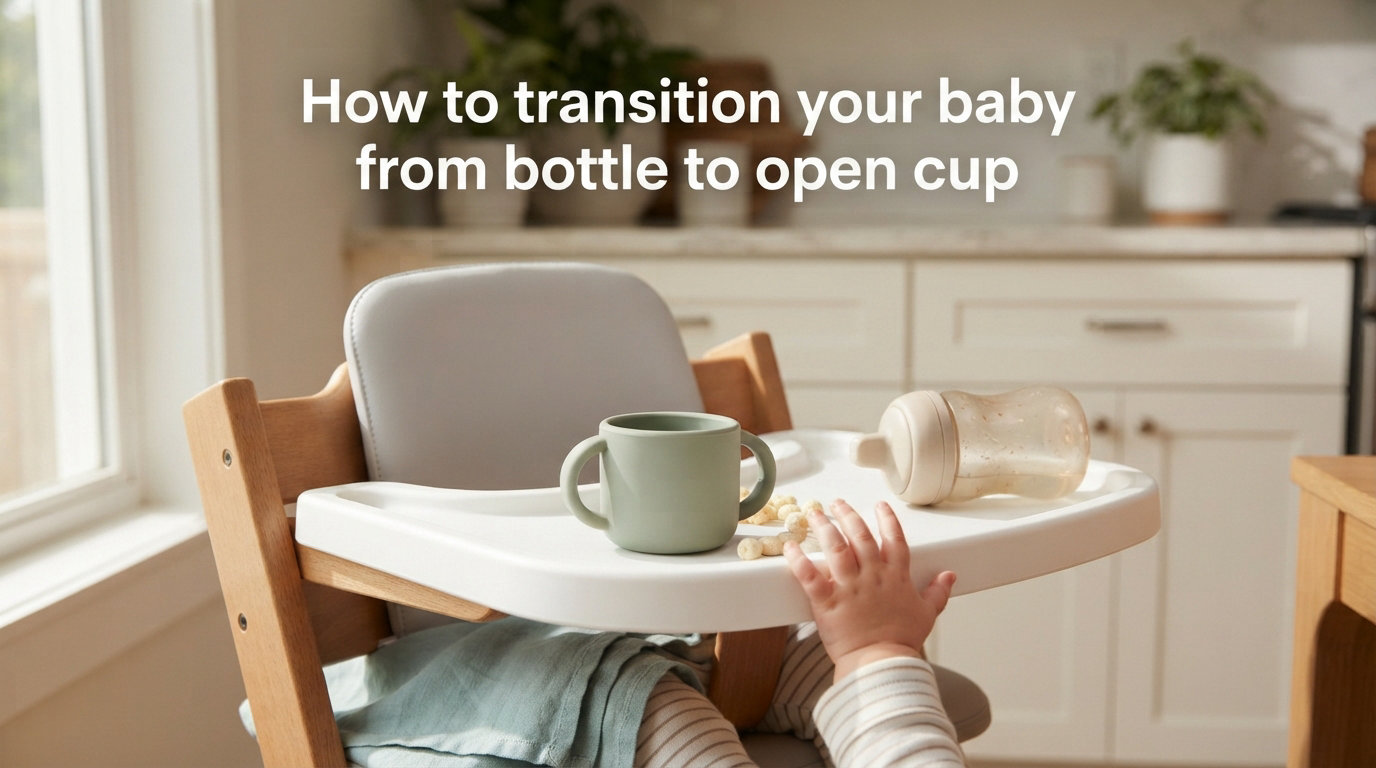
Learning how to transition your baby from bottle to open cup is one of those parenting milestones that feels daunting until you break it down into manageable steps. Most parents worry about spills, resistance, and whether their child will stay hydrated during the process. The good news? With the right approach, most babies adapt to cup drinking within one to two weeks.
In this guide, I’ll walk you through everything our team of pediatric feeding specialists and I have learned from helping hundreds of families make this transition. You’ll discover evidence-based methods, realistic timelines, and practical troubleshooting tips for when things do not go as planned.
Table of Contents
Why Transition Matters for Your Baby’s Health?
Prolonged bottle feeding beyond 18 months creates risks that many parents do not realize until problems appear. The American Academy of Pediatrics recommends transitioning from bottle to cup by 18 months because the health benefits are significant and long-lasting.
Preventing Baby Bottle Tooth Decay
Baby bottle tooth decay, also called early childhood caries, happens when milk or formula sits against your child’s teeth for extended periods. The bacteria in your baby’s mouth feed on these sugars and produce acids that attack tooth enamel. This is particularly common with bedtime bottles when saliva production drops during sleep.
Once you transition to an open cup, drinks are consumed quickly rather than sipped slowly over time. This reduces the exposure of teeth to sugars and significantly lowers cavity risk.
Supporting Healthy Weight Development
Research shows that toddlers who continue using bottles past 18 months have higher rates of obesity. Bottles encourage passive drinking throughout the day, which can lead to overconsumption of calories. Cup drinking creates natural breaks and helps children recognize their body’s hunger and thirst cues.
Building Oral Motor Skills for Speech
Drinking from an open cup develops the same oral motor skills your child needs for clear speech. The lip seal, tongue elevation, and swallowing mechanics required for cup drinking strengthen muscles used in articulation. Children who transition earlier often show improved speech clarity.
Establishing Healthy Mealtime Patterns
Bottles blur the line between feeding and comfort. When children use cups, drinking becomes part of structured meal and snack times rather than a continuous activity. This distinction helps prevent meal skipping and encourages better eating habits as your child grows.
Is it okay for a 2 year old to still drink from a bottle? While not immediately dangerous, the AAP strongly discourages bottle use past 18 months. At age 2, continued bottle feeding significantly increases the risk of tooth decay and unhealthy weight patterns. It is never too late to start the transition.
When to Start the Transition: Timeline from 6 to 18 Months
Timing matters when transitioning from bottle to open cup. Starting too early frustrates everyone. Starting too late makes the habit harder to break. The sweet spot aligns with your baby’s natural developmental readiness.
What age should a baby use an open cup? Most babies can begin practicing with an open cup between 6 and 9 months, with the goal of completing the transition by 12 to 18 months. The AAP specifically recommends that all babies be fully transitioned off bottles by 18 months.
6-9 Months: The Introduction Phase
Once your baby sits independently and starts solids, you can introduce cup practice during meal times. At this stage, think exploration rather than drinking. Offer 1 to 2 ounces of water in a small cup while your baby sits in the high chair. Hold the cup to their mouth and let them investigate.
Most babies this age will mouth the rim, tip the cup, or play with the liquid. This is normal and valuable. They are learning the mechanics of cup drinking.
9-12 Months: The Active Transition
Between 9 and 12 months, your baby develops the coordination to hold a cup with two hands and bring it to their mouth independently. This is the ideal time to begin replacing bottle feedings with cup drinking. Start with one daytime feeding, typically the midday meal when your baby is most alert.
12-18 Months: The Completion Phase
By 12 months, aim for your baby to get most of their fluids from cups during the day. The bedtime bottle is typically the last to go. Use the second year of life to phase out this final bottle while fully transitioning to cups for all other drinking.
Understanding Cup Types: Open, Straw, and Sippy
Not all cups support healthy development equally. Understanding the differences helps you choose wisely during each phase of transition.
Open Cups for Optimal Development
Open cups require your baby to form a lip seal and coordinate swallowing without valves or spouts. This builds the strongest oral motor skills. Look for small cups with two handles that hold 2 to 4 ounces. Weighted bases help prevent tipping. Silicone cups are gentle on developing teeth and gums.
Straw Cups as a Stepping Stone
Straw cups offer a middle ground between bottles and open cups. They require different oral motor skills than bottles but are easier for many babies than open cups. Use straw cups during the 9 to 12 month phase, then transition to open cups by 18 months.
Sippy Cups: Temporary Only
Traditional hard-spout sippy cups function similarly to bottles and do not promote the oral motor development that open cups do. The AAP recommends avoiding valve-based sippy cups whenever possible. If you use them, treat them as a very temporary bridge, not a long-term solution.
Three Proven Methods to Transition from Bottle to Cup
Every baby has a unique temperament, which means no single approach works for everyone. Choose the method that aligns with your child’s personality and your family’s lifestyle.
Method 1: The Gradual Approach (One Bottle at a Time)
The gradual method works best for babies who need time to adjust to new routines. Replace one bottle feeding with a cup every 3 to 5 days. Start with the midday feeding when your baby is least attached. Save the morning and bedtime bottles for last.
Best for: Sensitive babies, those who rely on bottles for comfort, and families who prefer gentle transitions.
Timeline: 2 to 3 weeks for complete transition.
Method 2: Cold Turkey (All at Once)
Cold turkey means removing all bottles at once and offering only cups. This method creates initial protest but typically resolves faster than gradual approaches. Choose a weekend or low-stress period when you can manage extra fussiness.
Parents who use this method report that most babies adjust within 48 to 72 hours. The key is absolute consistency. Do not give in and offer a bottle, as this teaches your baby that protest works.
Best for: Determined babies who respond well to clear boundaries, and parents who want the transition over quickly.
Timeline: 2 to 7 days for complete adjustment.
Method 3: The Hybrid Approach (Flexible and Responsive)
The hybrid method combines structure with flexibility. Remove all daytime bottles at once but keep one comfort bottle temporarily. This typically means cold turkey for morning, midday, and afternoon feedings, while maintaining the bedtime bottle for an additional week or two.
Best for: Babies who need one anchor point of comfort, working parents who need daytime success first, and families who want to balance efficiency with gentleness.
Timeline: 1 to 2 weeks for daytime transition, 2 to 3 weeks total.
Step-by-Step Guide: How to Transition Baby from Bottle to Open Cup
When should babies transition from bottle to cup? The ideal window starts at 6 months with practice, active transition at 9 to 12 months, and completion by 18 months. Here is your detailed action plan.
Step 1: Preparation (1 Week Before)
Choose 2 to 3 small open cups with handles (2 to 4 ounce capacity)
Practice independent sitting if not already mastered
Let your baby see you drinking from open cups to model behavior
Introduce cups during bath time for low-pressure play
Step 2: First Introduction (Days 1-3)
Sit your baby in the high chair at meal time
Fill the cup with 1 to 2 ounces of breast milk, formula, or water
Hold the cup to their lips and tip slowly
Let them investigate the rim with their mouth
Expect spillage. This is exploration, not drinking.
Step 3: Daily Practice (Days 4-10)
Offer the cup at every meal and snack
Guide their hands to hold the handles
Model drinking from your own cup
Offer celebratory praise for any attempt
Step 4: Replacing Feedings (Days 11-21)
Replace the midday bottle with a cup
Offer the same milk volume in the cup
Stay calm if they drink less initially
Add a second cup feeding every 3 days
Step 5: Complete Transition (Week 3-4)
Remove all daytime bottles
Address the bedtime bottle with a new routine
Celebrate your baby’s achievement
Night Weaning: The Final Bottle Challenge
The bedtime bottle is almost always the hardest to eliminate. This feeding serves multiple purposes. Nutrition, comfort, and sleep association all intertwine here. Breaking this habit requires replacing the bottle with new soothing routines.
Start by separating the feeding from bedtime. Offer the bottle in a well-lit room, then brush teeth and begin your sleep routine. Over several days, reduce the bottle volume while offering a cup of milk with dinner. Eventually, replace the bottle with a cup at the dinner table and use cuddling, stories, or songs for bedtime comfort.
Many parents find success by introducing a special lovey or comfort object during this transition. This gives your baby something new to associate with sleep.
Common Mistakes to Avoid During the Transition
Learning from other parents’ experiences saves you stress. These are the most common pitfalls families encounter:
Starting too late: After 18 months, bottle attachment becomes stronger and the habit harder to break.
Inconsistent approach: When one caregiver gives bottles while another pushes cups, babies get confused and protest more.
Using juice as bait: Adding juice to entice cup use creates a new unhealthy habit you will need to break later.
Rushing the process: Pushing too fast creates resistance. Each baby needs their own timeline.
Worrying about hydration too early: Babies naturally drink less during transitions. They catch up once comfortable with cups.
Troubleshooting: When Your Baby Refuses the Cup
Even with the best approach, challenges arise. Here is how to handle the most common resistance scenarios:
Baby Refuses All Cup Types
If your baby rejects every cup you try, experiment with different materials and shapes. Some babies prefer the flexibility of silicone rims. Others like the stability of weighted stainless steel. Try a shot glass or small Dixie cup for a completely different experience. The change might spark curiosity.
Will Drink Water But Not Milk
This is incredibly common. The bottle creates a strong milk association. Your baby sees the cup as a water vessel. Continue offering milk in the cup while staying patient. Most babies eventually accept milk from cups once bottles are fully removed.
Treats Cup as Toy
Exploration is normal, but some babies get stuck in play mode. Offer smaller amounts so there is less to spill. Remove the cup after a few minutes of play and try again later. Keep cups exclusively for drinking, not as bath toys or general entertainment.
Regression After Progress
Illness, teething, travel, or developmental leaps can trigger regression. This is normal and temporary. Revert to whatever method previously worked and re-establish the routine. Most babies return to their previous cup skills within a few days.
When to Pause and Try Again
If your baby shows extreme distress, loses significant weight, or develops feeding aversion, pause the transition. Consult your pediatrician and consider working with a pediatric feeding specialist. Some children need additional support, and that is completely okay.
Special Circumstances: Breastfed Babies, Daycare, and Autism
Every family’s situation is unique. Here is guidance for specific scenarios:
Breastfed Babies Who Use Bottles Occasionally
Breastfed babies who only take occasional bottles often transition more easily because they are less bottle-dependent. Focus cup introduction during the times they would typically use bottles. Continue nursing on demand as usual.
Coordinating with Daycare Providers
Consistency across caregivers speeds up the transition. Share your plan with daycare staff. Most centers are experienced with cup transitions and will support your approach. Pack your preferred cups and communicate clearly about timing.
Children with Autism and Sensory Sensitivities
How do you transition from bottle to cup autism? Children with autism often need extra time and specialized approaches due to sensory sensitivities and need for routine consistency.
Start earlier if possible. Maintain absolute consistency in cup type, liquid temperature, and drinking location. Introduce the cup gradually with desensitization techniques. Work with an occupational therapist familiar with feeding challenges. Never force the cup if it creates trauma.
Quick Reference Checklist
Print this checklist and post it on your refrigerator for easy reference:
Before You Start
Baby sits independently: Yes / No
Cup types selected: 2-3 options
All caregivers informed of method: Yes / No
Timeline planned: Yes / No
Week 1 Goals
Baby explores cup without distress
One meal per day offered in cup
No bottles during play or comfort (except bedtime)
Week 2-3 Goals
All daytime bottles replaced
Baby drinks independently from cup
Bedtime bottle reduced or eliminated
Success Indicators
Baby reaches for cup independently
Drinks appropriate volume for age
No bottles used for 7 consecutive days
Healthy weight maintained
Frequently Asked Questions
When should babies transition from bottle to cup?
Babies should start practicing with cups between 6 and 9 months, with the transition completed by 12 to 18 months. The American Academy of Pediatrics recommends beginning cup introduction at 6 months when solids start, and completely discontinuing bottles by 18 months to prevent tooth decay and support healthy development.
How to transition from bottle to open cup?
Start by offering 1-2 ounces of liquid in a small cup during meal times while your baby sits in a high chair. Model drinking behavior, let your baby explore the cup, and gradually replace one bottle feeding at a time. Choose between gradual weaning (one bottle at a time), cold turkey (all bottles at once), or a hybrid approach based on your baby’s temperament.
What age should a baby use an open cup?
Babies can begin practicing with open cups at 6 months, but most become proficient between 12 and 18 months. By 18 months, all babies should be drinking primarily from open cups rather than bottles, according to pediatric guidelines.
How do you transition from bottle to cup autism?
Children with autism often need extra time, consistency, and sensory-friendly approaches. Start earlier if possible, maintain the same cup type and routine, introduce gradually through desensitization, and work with an occupational therapist if needed. Never force the cup if it creates feeding aversion.
Is it okay for a 2 year old to still drink from a bottle?
While not immediately dangerous, the American Academy of Pediatrics strongly discourages bottle use past 18 months. At age 2, continued bottle feeding significantly increases risks of tooth decay, obesity, and speech delays. It is never too late to transition. Start immediately with the gradual or cold turkey method.
How long does the bottle to cup transition take?
Most babies adjust to cup drinking within 1 to 2 weeks, though the complete transition from all bottles typically takes 2 to 3 weeks. Cold turkey methods often resolve within 48 to 72 hours of initial protest. Gradual approaches take longer but may create less stress for sensitive babies.
What if my baby refuses all cup types?
Experiment with different materials, sizes, and shapes. Try silicone cups, stainless steel, or even small shot glasses or Dixie cups. Some babies respond to weighted bases, while others prefer flexibility. Model drinking enthusiastically, and consider introducing the cup during low-pressure times like bath time for initial exploration.
Should I use a sippy cup or go straight to open cup?
The AAP recommends moving to open cups whenever possible, as they promote better oral motor development. If using sippy cups, treat them as a temporary bridge only. Straw cups make an excellent middle ground between bottles and open cups. The goal is to reach open cup proficiency by 18 months regardless of the path taken.
Conclusion: You’ve Got This
Learning how to transition your baby from bottle to open cup is a journey that tests your patience but builds important skills for your child. Remember that every baby adapts at their own pace, and temporary setbacks are normal.
The key takeaways are simple. Start between 6 and 9 months. Choose a method that fits your baby’s temperament. Stay consistent across all caregivers. And celebrate every small victory along the way.
By 18 months, your baby should be drinking confidently from open cups. Until then, keep practicing, stay patient, and trust the process. You’ve got this.