
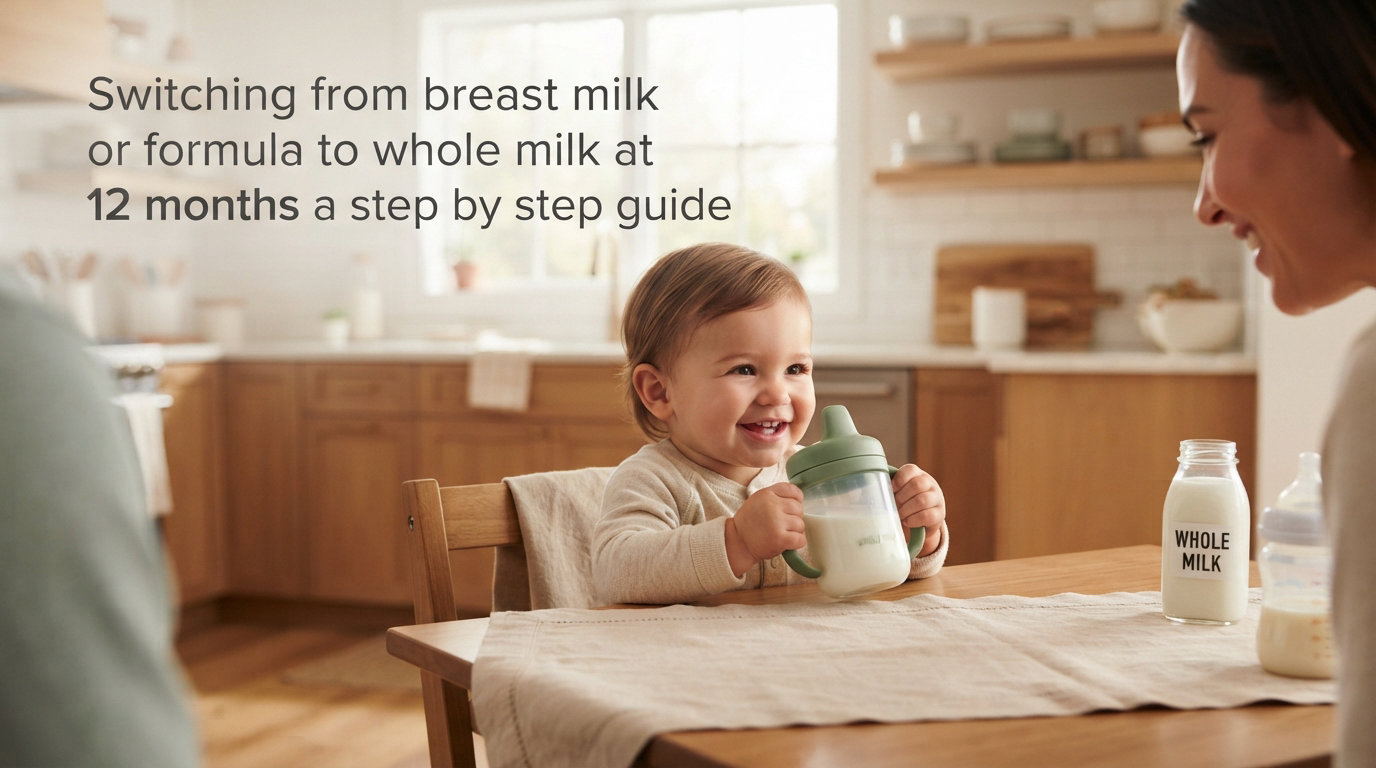
Switching from breast milk or formula to whole milk at 12 months marks one of the biggest milestones in your baby’s first year. Most parents feel a mix of excitement and anxiety when this transition approaches. I remember wondering if my daughter’s digestive system was truly ready, and whether the taste difference would cause a battle at every feeding.
The good news? Most babies adapt to whole cow’s milk within 1-2 weeks with the right approach. Pediatricians recommend this transition because your baby’s kidneys and digestive system reach a maturity level at 12 months that can handle the proteins and mineral content in cow’s milk. This guide walks you through exactly when to start, which method works best for your situation, and how to handle common challenges like taste refusal or digestive upset.
Table of Contents
When and Why to Make the Switch at 12 Months?
Your baby’s first birthday brings more than just cake and presents. It signals a major shift in nutritional needs and digestive capabilities.
Why 12 Months Is the Magic Number
Before 12 months, your baby’s digestive system isn’t mature enough to process cow’s milk proteins properly. The kidneys also cannot handle the higher levels of sodium, potassium, and chloride found in whole milk. Introducing cow’s milk too early can lead to intestinal bleeding, iron deficiency anemia, and stress on developing organs.
By the first birthday, most babies have developed sufficient digestive enzymes and kidney function. They’ve also typically established a solid eating routine with purees and finger foods. This foundation makes whole milk a safe beverage addition rather than a nutritional gamble.
Whole milk specifically matters because babies need the fat content for brain development. The brain grows rapidly during the second year of life, and the healthy fats in whole milk (3.25% milk fat) support this critical neurological growth. Reduced-fat or skim milk doesn’t provide adequate fat content for toddlers under age 2.
The Nutritional Shift: From Meal to Beverage
Breast milk and formula serve as complete nutrition sources for infants. They contain precisely balanced proteins, fats, carbohydrates, vitamins, and minerals that single-handedly sustain a growing baby. Whole milk cannot replicate this completeness.
After 12 months, solid foods become the primary nutrition source. Milk transitions into a calcium-rich beverage that complements meals rather than replacing them. This shift explains why pediatricians cap daily milk intake at 12-16 ounces (1.5-2 cups). Too much milk fills up tiny tummies and crowds out iron-rich foods, potentially causing anemia.
Switching From Breast Milk or Formula to Whole Milk at 12 Months: The Two Methods
Parents succeed with two distinct transition approaches. Your baby’s temperament and your family’s schedule determine which method works better.
Method 1: The Quick Transition (Cold Turkey)
Some babies accept whole milk immediately with zero fuss. If your little one happily drinks whatever you offer, the quick method saves time and mental energy. Simply replace one formula or breast milk feeding with whole milk on day one.
Wait 24 hours to monitor for digestive issues or allergic reactions. If everything looks normal, replace a second feeding on day two. Continue this pattern until all feedings use whole milk, typically completing the transition within 3-4 days.
The quick method works best for babies already eating a diverse solid food diet and showing no signs of digestive sensitivity. It also suits busy parents who prefer ripping the bandage off rather than managing complex mixing ratios for weeks.
Watch for signs of trouble including vomiting, diarrhea, excessive gas, or rash. These symptoms indicate your baby needs the slower, gradual approach instead.
Method 2: The Gradual Transition (Mixing Method)
Most pediatricians and parents prefer the gradual method because it reduces digestive upset and lets babies adjust to the new taste slowly. This approach works especially well for babies who initially reject cow’s milk due to the unfamiliar flavor.
Here’s the proven day-by-day mixing ratio schedule that wins featured snippets:
Days 1-2: Mix 75% breast milk or formula with 25% whole milk
Days 3-4: Mix 50% breast milk or formula with 50% whole milk
Days 5-6: Mix 25% breast milk or formula with 75% whole milk
Day 7: Serve 100% whole milk
Start with just one feeding per day using this mixing approach, typically the midday bottle or cup. Once your baby accepts the mixed milk, apply the same ratios to additional feedings every 2-3 days.
Many parents in online communities report success extending this timeline to 2 weeks or more. One parent shared: “We did it gradually. 25% formula plus 75% whole milk for 3 days, then 50/50 for 3 days, then 25% formula plus 75% whole milk for 3 days. No tummy troubles at all.”
The gradual method also helps you identify exactly when problems arise. If your baby develops symptoms on day 3, you know the 50/50 ratio might be too aggressive. You can step back to the previous ratio for a few extra days before progressing.
Practical Tips for a Smooth Transition
Beyond choosing your method, these practical strategies reduce resistance and make the switch easier for everyone involved.
Temperature and Taste Tricks
Breast milk and formula come at body temperature or warm from preparation. Cold cow’s milk shocks some babies who expect that familiar warmth. Try serving whole milk at room temperature or slightly warmed for the first few attempts.
If your baby refuses plain milk, mix it with familiar foods initially. Pour milk over cereal your baby already loves. Blend it into smoothies with accepted fruits like banana or berries. Stir it into oatmeal or mashed potatoes. These combinations help your baby associate the new taste with positive eating experiences.
Some babies prefer the taste of specific brands of whole milk due to subtle flavor differences. If your baby consistently rejects one brand, try another before assuming they hate all cow’s milk.
Bottle to Cup: The Perfect Time to Switch
Your baby’s first birthday coincides with another important transition: moving from bottles to cups. Pediatric dentists recommend weaning from bottles by 12-15 months to prevent tooth decay and support proper oral development.
Many parents combine these transitions successfully. A parent in a breastfeeding support group shared: “Around 11.5 months I replaced one nursing session with a cup of frozen milk. Then I replaced the next one with cow’s milk. Basically each week I dropped a nursing session.”
Skip traditional sippy cups with hard spouts when possible. Dentists increasingly recommend straw cups or open cups instead. The sucking motion on sippy cups mimics bottle feeding and can impact dental alignment over time.
The milk transition creates natural motivation for cup practice. Your baby wants the milk, so they’ll work harder to master whatever vessel contains it. This natural incentive often produces faster cup-learning than offering water or juice in cups.
Breastfeeding vs Formula: Different Paths
Parents transitioning from formula and those weaning from breastfeeding face different challenges. Understanding these distinctions helps set realistic expectations.
Formula to Milk: This transition is often more straightforward because formula already comes in bottles. You’re simply swapping one liquid for another in the same container. Formula-fed babies also tend to accept cow’s milk more readily because they’re accustomed to varying flavors from different formulas.
The primary challenge for formula families is the expense justification. Formula costs add up significantly by 12 months, making the switch to cheaper cow’s milk financially motivating. Most formula-fed babies transition completely within 1-2 weeks.
Breastfeeding to Milk: Breastfeeding parents have more flexibility. The American Academy of Pediatrics recommends breastfeeding continue for at least 12 months, and the World Health Organization encourages breastfeeding up to 2 years or beyond.
This means breastfeeding and whole milk can coexist. Many nursing parents replace daytime feeds with cow’s milk in a cup while continuing morning and bedtime nursing sessions. This hybrid approach works well for families not ready to wean completely.
The emotional component also differs for breastfeeding families. Nursing represents more than nutrition, it includes comfort, bonding, and sleep associations. Transitioning to cow’s milk often requires replacing those emotional elements with new routines.
Signs of Milk Allergies and Sensitivities
Approximately 2-3% of children under age 3 have a true cow’s milk protein allergy. Many more experience temporary sensitivities or lactose intolerance. Recognizing the difference helps you respond appropriately.
Warning Signs to Watch For
Milk allergy symptoms typically appear within minutes to hours after consumption. Look for these warning signs:
Skin reactions: Hives, itching, eczema flare-ups, or swelling around the mouth and face
Digestive issues: Vomiting, diarrhea, blood in stool, or severe abdominal pain
Respiratory symptoms: Wheezing, coughing, runny nose, or difficulty breathing
Milk protein sensitivity produces milder symptoms that may take days to appear. These include eczema that won’t clear, chronic constipation or loose stools, fussiness after feeding, and frequent ear infections.
Lactose intolerance differs from allergy because it involves the sugar in milk rather than the protein. Symptoms include gas, bloating, and diarrhea that appear 30 minutes to 2 hours after drinking milk. True lactose intolerance is actually rare in babies under age 2.
When to Slow Down or Stop the Transition
Minor digestive adjustments are normal during the first week of transition. Loose stools or slightly increased gas typically resolve as your baby’s gut bacteria adapt to processing cow’s milk.
Stop the transition and contact your pediatrician if you observe severe diarrhea, vomiting, blood in stool, difficulty breathing, or widespread hives. These symptoms require immediate medical evaluation.
For milder symptoms like constipation or mild eczema, try slowing the transition pace. Return to the previous mixing ratio for 3-4 extra days before attempting to increase the milk percentage again.
Some babies tolerate yogurt and cheese before plain milk. The fermentation process in yogurt breaks down some milk proteins, making them easier to digest. If your baby struggles with liquid milk, try introducing whole milk yogurt first, then return to milk attempts in a few weeks.
Milk Alternatives for Babies With Allergies
When cow’s milk protein allergy prevents standard whole milk consumption, several alternatives provide adequate nutrition for toddlers.
Soy milk: The most common alternative, offering comparable protein content to cow’s milk. Choose full-fat, calcium-fortified, and vitamin D-fortified varieties. Avoid low-fat or flavored versions designed for adults.
Pea protein milk: Growing in popularity, this option provides similar protein to cow’s milk with a creamy taste many toddlers accept. Ripple is the most recognized brand, though store brands now offer comparable options.
Oat milk: Higher in carbohydrates and naturally sweeter than other alternatives, oat milk appeals to many toddlers. However, most oat milks contain significantly less protein and fat than whole milk. Look for barista or toddler-specific formulations with added fats and proteins.
Avoid almond milk, rice milk, and coconut milk as primary milk alternatives for toddlers under age 2. These options lack sufficient protein and fat content to support healthy growth. They work fine as occasional beverages but cannot replace the nutritional role of whole milk or proper alternatives.
Always consult your pediatrician or a pediatric dietitian before choosing a milk alternative. They can recommend specific brands and ensure your toddler’s overall diet compensates for any nutritional gaps.
Daily Milk Limits and Nutritional Balance
Once your baby successfully transitions to whole milk, the next challenge involves limiting intake. Too much milk creates health problems despite milk’s nutritional benefits.
The American Academy of Pediatrics recommends 16-24 ounces (2-3 cups) of whole milk daily for toddlers ages 12-24 months. Some pediatricians suggest the lower end of this range at 12-16 ounces, especially if your child eats a diverse solid food diet.
Excessive milk consumption causes iron deficiency anemia through two mechanisms. First, milk contains very little iron. Second, the calcium in milk interferes with iron absorption from other foods. When milk displaces iron-rich foods like meat, beans, and fortified cereals, iron stores deplete.
Heavy milk drinkers also tend to have less appetite for solid foods at meals. This creates a cycle where parents offer more milk because the child seems hungry, which further reduces solid food intake.
Structure milk consumption around meals rather than allowing constant sipping. Offer milk with breakfast, lunch, dinner, and perhaps one snack. Avoid using milk as a pacifier between meals or during car rides. This structure supports both nutritional balance and dental health.
FAQ
How to switch from formula to whole milk for a 12 month old?
You can use either the quick method (direct replacement) or gradual method (mixing). For the gradual approach, mix 75% formula with 25% milk for 2 days, then 50/50 for 2 days, then 25% formula with 75% milk for 2 days, then 100% milk. Start with one feeding per day and monitor for any digestive issues.
How long does it take to transition from breastmilk to whole milk?
Most babies complete the transition within 1-2 weeks. Quick transitions happen in 3-4 days, while gradual transitions typically take 7-14 days. Breastfeeding parents can take longer if maintaining some nursing sessions alongside cow’s milk in cups.
Can I continue breastfeeding while introducing whole milk?
Yes, absolutely. Many families choose a hybrid approach where daytime feeds become cow’s milk in a cup while morning and bedtime continue as nursing sessions. The World Health Organization recommends breastfeeding up to 2 years or beyond alongside appropriate complementary foods.
What if my baby refuses to drink whole milk?
Try serving it at room temperature or slightly warmed. Mix it into foods your baby already loves, like cereal or oatmeal. Experiment with different brands. If refusal persists, ensure adequate calcium from yogurt and cheese while trying again in a few weeks.
How much whole milk should a 1 year old drink daily?
Pediatricians recommend 16-24 ounces (2-3 cups) of whole milk daily for 12-24 month olds. Some suggest 12-16 ounces if your child eats plenty of iron-rich solid foods. Too much milk can cause iron deficiency anemia and reduce appetite for solids.
What are signs of milk allergy in toddlers?
Watch for hives, itching, facial swelling, vomiting, diarrhea, blood in stool, wheezing, or difficulty breathing within minutes to hours after drinking milk. Milder sensitivities may show as eczema flare-ups, chronic constipation, or fussiness after feeding.
Conclusion
Switching from breast milk or formula to whole milk at 12 months represents a significant milestone in your child’s development. This transition works best when you choose the method matching your baby’s temperament, whether that’s the quick direct replacement or the gradual mixing approach.
Remember that whole milk serves as a beverage complementing solid foods, not as a complete nutrition source like formula or breast milk. Keep daily intake between 12-24 ounces and watch for signs of allergies or sensitivities.
Trust your instincts and your pediatrician’s guidance. Every baby adapts at their own pace, and some resistance during the first week is completely normal. Before you know it, your toddler will be happily drinking cow’s milk from a cup like a pro.