
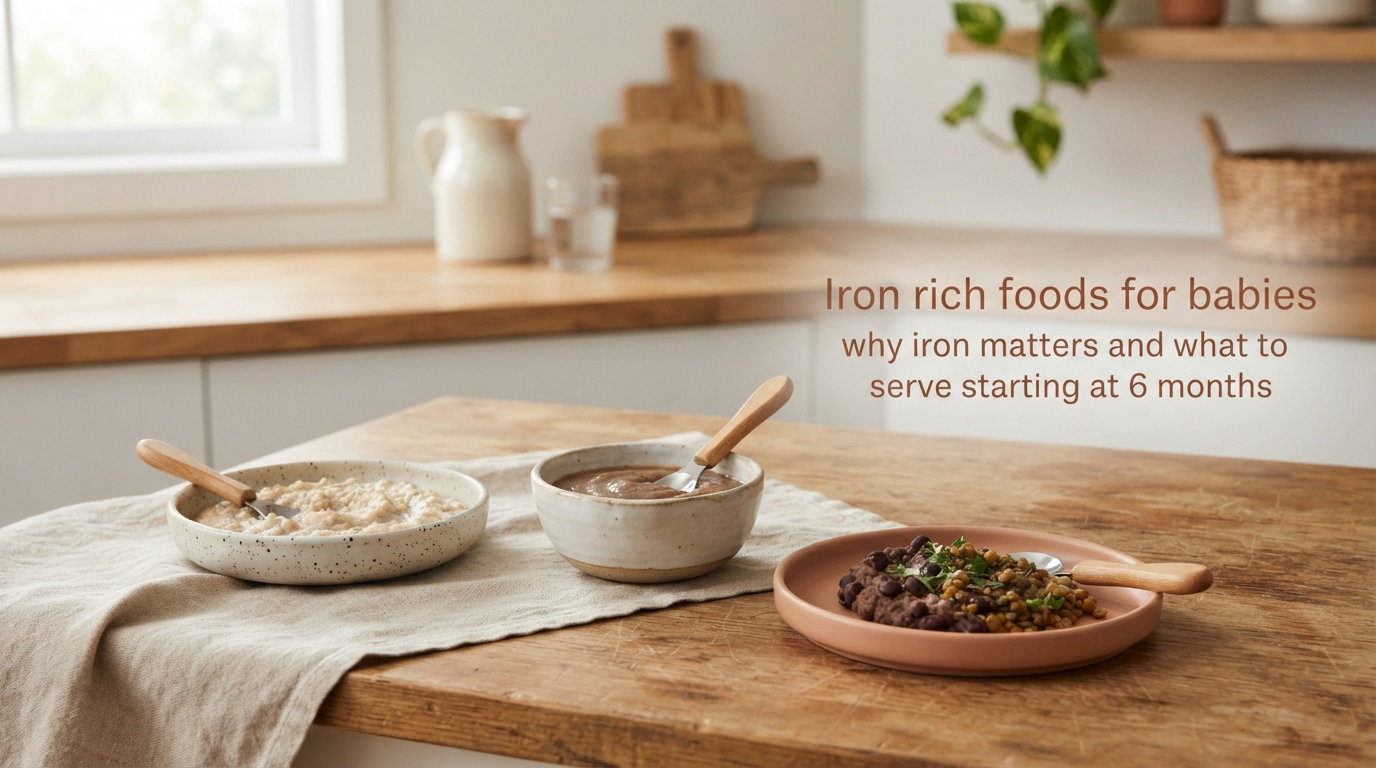
Standing in the kitchen at 6 AM, I stared at the jar of iron-fortified baby cereal and wondered if I was doing this right. My pediatrician mentioned iron. The parenting forums mentioned iron. Every baby food blog mentioned iron. But no one told me exactly how to get enough of it into my baby without turning every meal into a math problem.
Iron rich foods for babies became my obsession in those early months of starting solids. I researched. I meal-prepped. I watched my daughter spit out half her carefully prepared lentil puree. Then I learned something that changed everything: you do not need to count milligrams. You need to understand patterns.
This guide covers why iron matters at 6 months, the difference between heme and non-heme iron, the best iron-rich foods for every budget and dietary preference, and practical meal ideas that work in real life. Whether you are doing purees, baby-led weaning, or a mix of both, you will find options here that reduce your stress and nourish your baby.
You are already getting it right by reading this. Let us build your confidence with knowledge that actually helps.
Table of Contents
Why Iron Matters at 6 Months?
Babies are born with iron stores that last approximately 4 to 6 months. By the time your baby reaches the half-year mark, those stores have largely depleted. This timing is not random. It aligns perfectly with when babies typically begin eating solid foods and need dietary iron to support their rapid growth and development.
Iron serves three critical functions in your baby’s body. First, it helps red blood cells transport oxygen from the lungs to every cell. Without adequate iron, tissues do not get the oxygen they need to function. Second, iron supports brain development during a period of explosive neural growth. Research consistently links early iron deficiency to long-term cognitive impacts. Third, iron powers the immune system, helping your baby fight off infections at a time when they are exploring the world and encountering new germs daily.
Breastfed babies face a unique consideration. Breast milk contains highly bioavailable iron, but in small amounts. The iron in breast milk absorbs efficiently, but the total quantity may not meet the increased demands of a 6-month-old. Formula-fed babies typically receive iron-fortified formula, which provides adequate iron without additional supplementation in most cases.
The recommended daily allowance for babies 7 to 12 months is 11 milligrams of iron. That sounds like a lot when you realize a tablespoon of pureed chicken contains less than 1 milligram. But here is the relief: babies do not need to hit that number every single day. Iron intake averages out over time. Some days your baby will eat more. Some days less. What matters is consistent exposure to iron-rich foods as part of their regular diet.
Iron deficiency is the most common nutritional deficiency in children worldwide. It affects up to 15 percent of babies and toddlers in developed countries. The good news? It is entirely preventable with the right food choices starting at 6 months.
Heme Iron vs Non-Heme Iron: What Parents Need to Know
Not all iron is created equal. Understanding the two types of dietary iron helps you make smarter choices about what to serve your baby and how to maximize absorption.
Heme iron comes from animal sources. It is the form of iron found in hemoglobin and myoglobin, the proteins that carry oxygen in blood and muscle. Heme iron absorbs at a rate of 15 to 35 percent, making it highly efficient for meeting your baby’s needs. Sources include beef, chicken, turkey, lamb, pork, liver, and fish.
Non-heme iron comes from plant sources and iron-fortified foods. This includes beans, lentils, tofu, spinach, quinoa, fortified cereals, and seeds. Non-heme iron absorbs at a rate of 2 to 20 percent, significantly lower than heme iron. The absorption rate varies based on what else your baby eats in the same meal.
Here is the key insight: you do not need to choose between them. Babies benefit from both types of iron. A diet that includes heme iron from meat plus non-heme iron from plant foods, paired strategically with vitamin C, creates a nutritional foundation that supports optimal iron status.
Some parents worry that a vegetarian or vegan diet cannot provide adequate iron. This is not true, though it requires more attention to food pairing and variety. Vegetarian babies can absolutely meet their iron needs through careful planning and vitamin C pairing with every iron-containing meal.
For omnivore families, aim to serve heme iron sources several times per week while also offering plant-based iron foods daily. For vegetarian families, focus on maximizing absorption through strategic pairing and offering iron-rich plant foods at most meals.
Iron Rich Foods for Babies: The Complete Guide
This section breaks down the best iron sources by category. I have organized them by iron type and included approximate iron content per age-appropriate serving to help you visualize how foods contribute to your baby’s overall intake.
Top Heme Iron Sources (Best Absorption)
Animal-based iron sources provide the most bioavailable form of this essential mineral. These foods should form part of your baby’s regular rotation starting at 6 months.
Chicken Liver: The iron champion among baby foods. A single ounce of chicken liver contains approximately 4 milligrams of iron. That is more than one-third of your baby’s daily needs in a tiny portion. Liver also provides vitamin A, folate, and B12. The strong flavor can surprise babies at first. Try mixing a small amount into purees or offering tiny pieces of liver pate on toast strips. Limit liver to once per week due to high vitamin A content.
Beef: Ground beef offers approximately 1.5 milligrams of iron per ounce. It is versatile, affordable, and baby-friendly when prepared correctly. Meatballs made with ground beef are perfect for both purees and baby-led weaning. Choose 80/20 or 85/15 lean-to-fat ratios for adequate fat content that babies need for brain development. Beef also provides zinc, another critical nutrient for babies.
Lamb: Similar to beef in iron content at roughly 1.5 milligrams per ounce. Lamb has a distinctive flavor that some babies love immediately. Ground lamb works beautifully in meatballs or as a puree addition. The natural fat content makes lamb moist and easier for babies to eat.
Chicken Thighs: Dark meat poultry contains more iron than white meat. Chicken thighs provide approximately 0.8 milligrams per ounce and offer more flavor and moisture than chicken breast. Shredded chicken thigh mixed with sweet potato or avocado makes an excellent first food.
Turkey: Dark meat turkey contains about 1 milligram of iron per ounce. Ground turkey works well for meatballs and patties. The milder flavor compared to beef makes turkey a good starter meat for hesitant babies.
Salmon: Provides approximately 0.3 milligrams of iron per ounce plus omega-3 fatty acids crucial for brain development. Soft, flaky salmon is easy for babies to gum. Always check carefully for bones and serve well-cooked.
Sardines: These tiny fish pack approximately 1.5 milligrams of iron per ounce plus calcium and omega-3s. Mash sardines thoroughly and mix into purees or spread on toast. Their strong flavor means some babies need multiple exposures before accepting them.
Pork Tenderloin: Contains about 0.8 milligrams of iron per ounce. This lean cut becomes tender when slow-cooked and shreds easily for babies. Pork provides thiamine and B vitamins alongside iron.
Non-Heme Iron Sources (Plant-Based Options)
Plant-based iron foods offer variety, fiber, and additional nutrients. They are essential for vegetarian babies and valuable additions for all babies regardless of dietary pattern.
Iron-Fortified Infant Cereal: The most reliable iron source for babies, providing 4 to 6 milligrams per serving depending on brand. Rice, oatmeal, and multi-grain varieties all work. Mix with breast milk, formula, or water to reach appropriate consistency. These cereals were specifically formulated to address infant iron needs.
Lentils: Cooked red lentils contain approximately 3 milligrams of iron per half-cup serving. They cook quickly, puree smoothly, and have a mild flavor babies typically accept easily. Red lentils break down faster than green or brown varieties, making them ideal for baby food.
Black Beans: Provide approximately 1.8 milligrams of iron per quarter-cup serving. Mash thoroughly to reduce choking risk. Black beans mixed with avocado and a squeeze of lime create a nutrient-dense puree or finger food.
Chickpeas: Contain about 1.2 milligrams of iron per quarter-cup. Roast them until very soft for finger food, or blend into hummus-style purees. Chickpeas offer protein and fiber alongside iron.
Tofu: Firm tofu provides approximately 1.5 milligrams of iron per quarter-cup. This soy-based protein works for vegetarian and vegan families. Choose calcium-set tofu for additional bone-supporting nutrients. Serve soft cubes or crumbled into purees.
White Beans: Similar to black beans in iron content at roughly 1.8 milligrams per quarter-cup. Cannellini and navy beans have creamy textures when mashed. They blend well into vegetable purees for an iron boost.
Spinach: Cooked spinach contains approximately 3 milligrams of iron per half-cup. However, spinach also contains oxalates that inhibit iron absorption. Pair spinach with vitamin C foods and serve alongside other iron sources rather than relying on it alone.
Quinoa: This pseudograin provides about 2 milligrams of iron per cooked half-cup. It is a complete protein and gluten-free. Quinoa has a slightly nutty flavor and soft texture when cooked thoroughly.
Pumpkin Seeds: Ground pumpkin seeds contain approximately 2 milligrams of iron per tablespoon. Always grind seeds for babies under 12 months to prevent choking. Sprinkle ground seeds on purees, yogurt, or cereal.
Egg Yolk: One egg yolk contains about 0.4 milligrams of iron plus choline for brain development. Serve well-cooked egg yolk mashed or as finger food. The white contains less iron but provides protein.
Vegetarian and Vegan Iron-Rich Options
Plant-based families can absolutely meet their babies’ iron needs. Success requires variety, consistent offering, and strategic vitamin C pairing at every meal.
The foundation of vegetarian infant nutrition includes lentils, beans, tofu, fortified cereals, seeds, and egg yolks (for vegetarian but not vegan babies). Focus on offering at least two iron sources at each meal. A breakfast of iron-fortified oatmeal with ground pumpkin seeds provides more absorbable iron than either food alone.
Breakfast combinations that work: iron-fortified oatmeal mixed with mashed berries and ground flaxseed. Lunch ideas include mashed black beans with diced mango. Dinner could feature lentil dal with rice and tomatoes.
Vegan families should pay special attention to vitamin B12 and zinc alongside iron. These nutrients often occur together in animal foods but require separate planning in plant-based diets. Consult with a pediatric dietitian for personalized vegan infant feeding plans.
One concern parents voice in forums is whether vegetarian babies develop iron deficiency more often. Research shows that well-planned vegetarian diets support normal iron status in infants. The key phrase is well-planned. Randomly offering vegetables without attention to iron content and absorption enhancers may lead to gaps.
Cast iron cookware adds small amounts of iron to foods, particularly acidic foods like tomato sauce. While not a primary iron source, cooking lentils or beans in cast iron provides a modest boost that contributes to overall intake over time.
Budget-Friendly Iron Sources
Iron-rich feeding does not require expensive ingredients. Some of the most affordable foods in the grocery store also provide excellent iron content.
Chicken thighs cost significantly less than chicken breast while providing more iron. Eggs offer one of the cheapest protein and iron sources per serving. Dried lentils and beans cost pennies per serving and deliver substantial iron.
Iron-fortified infant cereals are moderately priced and deliver the most iron per dollar spent. Generic brands provide the same nutritional value as name brands. Store-brand oatmeal cereals often cost half the price of premium options.
Ground beef typically costs less than steak or roast cuts while offering the same iron content. Choose the fattier grinds that cost less and work better for baby meatballs anyway. Frozen meat goes on sale regularly and works perfectly for baby food preparations.
Frozen spinach costs a fraction of fresh and provides the same iron content. Canned beans are convenient and affordable, though dried beans cooked from scratch cost even less. Stock up when these items go on sale.
Organ meats like chicken liver are incredibly affordable because many consumers avoid them. A small container of chicken liver costs less than a single chicken breast but provides dramatically more iron. Learning to prepare liver opens up an extremely cost-effective nutrition option.
The forum discussions revealed that many parents assume iron-rich feeding requires expensive grass-fed beef or organic everything. This is not true. Conventional chicken thighs, canned black beans, store-brand fortified cereal, and eggs create an iron-rich foundation on any budget.
How to Boost Iron Absorption with Vitamin C?
Here is the secret that transforms plant-based iron from poorly absorbed to highly effective. Vitamin C dramatically increases non-heme iron absorption, sometimes by a factor of three to six times. Every time you serve beans, lentils, fortified cereal, or spinach, pair it with a vitamin C source.
Bell peppers are vitamin C powerhouses. A tablespoon of pureed red bell pepper with iron-fortified cereal significantly boosts iron absorption. Strawberries, kiwi, papaya, mango, and citrus fruits all provide vitamin C. Tomatoes and broccoli offer moderate amounts.
Practical pairing examples work better than theory. Lentils with tomatoes. Black beans with mango. Tofu with bell peppers. Spinach with strawberries. Fortified cereal with orange segments or berry puree.
The vitamin C must be consumed in the same meal as the iron source. A morning orange juice and afternoon beans do not interact. The foods need to meet in your baby’s digestive system simultaneously.
Some foods inhibit iron absorption and should not be served with iron-rich meals. Calcium-rich foods like milk, yogurt, and cheese compete with iron for absorption. Serve dairy products at different meals than your primary iron sources. Tea and coffee are absolute no-gos for babies but worth mentioning because some cultures give weak tea to infants. Do not do this.
Phytates in whole grains and beans can reduce iron absorption. Soaking dried beans overnight and cooking them thoroughly reduces phytate content. Sprouting grains and seeds also reduces phytates. These preparation steps matter more for vegetarian babies who rely heavily on these foods.
The absorption enhancer principle is why a varied diet works better than focusing on single foods. A meal with lentils, tomatoes, and bell peppers provides iron plus two different vitamin C sources. Your baby absorbs more iron from this combination than from lentils alone.
Iron-Rich Meal Ideas for Babies 6-12 Months
Theory transforms into practice through actual meals. These ideas work for different developmental stages and feeding approaches.
6-Month-Old Meal Ideas
At 6 months, babies are just beginning their solid food journey. Iron-fortified infant cereal mixed with breast milk or formula serves as an excellent first food. It is smooth, familiar-tasting, and delivers substantial iron.
Try mixing a tablespoon of iron-fortified oatmeal with mashed banana and a sprinkle of ground pumpkin seeds. The banana provides potassium and familiarity. The seeds add iron and healthy fats.
Pureed chicken thigh mixed with sweet potato creates a balanced meal with heme iron plus vitamin A and fiber. The sweet potato’s natural sweetness helps babies accept the chicken flavor.
Lentil puree with a squeeze of lemon juice offers plant-based iron with vitamin C enhancement. Red lentils cook to a smooth consistency that requires minimal blending. Add breast milk or formula to thin to appropriate texture.
Soft beef meatballs made with ground beef, grated apple, and breadcrumbs work for both puree and baby-led weaning approaches. The apple keeps them moist and adds subtle sweetness. Bake until very soft and cut into appropriate sizes.
Egg yolk mashed with avocado provides iron plus healthy fats. The creamy texture feels pleasant in baby’s mouth. Start with a quarter of a yolk and increase as your baby tolerates it.
9-Month-Old Meal Ideas
By 9 months, many babies develop the pincer grasp and enjoy picking up small pieces of food. Finger foods become more practical and self-feeding becomes part of the meal experience.
Soft turkey meatballs with steamed carrot sticks offer protein and iron in an easy-to-grasp form. Turkey has a milder flavor than beef and works well mixed with grated vegetables.
Black bean patties mashed with diced mango create an iron-rich finger food with built-in vitamin C. The beans hold together when mashed and lightly pan-fried in a little oil.
Flaked salmon mixed into mashed sweet potato provides heme iron plus omega-3 fatty acids. The combination is nutrient-dense and flavorful. Check carefully for any bones before serving.
Tofu cubes pan-fried until golden with bell pepper strips offer vegetarian iron with vitamin C pairing. The soft texture of firm tofu makes it perfect for gumming babies.
Chicken liver pate spread thinly on toast strips introduces this iron powerhouse in an approachable format. The toast provides a handle for self-feeding. Start with a very thin layer and increase as baby accepts the flavor.
Iron-fortified pasta shapes with meat sauce introduce texture variety while maintaining iron content. Choose small pasta shapes that are easy to pick up. The meat sauce adds heme iron to the fortified pasta base.
12-Month-Old Meal Ideas
At 12 months, many babies eat modified versions of family meals. Iron-rich foods integrate into the foods everyone eats rather than separate baby food preparations.
Beef and vegetable stew served in soft, manageable pieces offers a complete meal. Slow cooking makes the meat tender. Include tomatoes or bell peppers in the stew for vitamin C.
Lentil soup with vegetables and a squeeze of lemon provides plant-based iron in a warming format. Blend partially to leave some texture while maintaining easy eating.
Breakfast burritos with scrambled eggs, black beans, and bell pepper strips wrap iron sources into a fun format. Cut into small, graspable pieces for self-feeding.
Mini meatballs with tomato sauce and soft pasta combine heme iron with vitamin C in a classic combination. The tomato sauce acid actually helps iron absorption from both the meat and any fortified pasta.
Quinoa porridge made with fortified infant cereal, topped with berries and ground seeds, creates an iron-rich breakfast that feels like a treat. The quinoa adds protein and texture variety.
By 12 months, your baby should be getting most of their iron from food rather than formula or supplements. The eating patterns established in the first six months of solids create the foundation for lifelong healthy eating habits.
Signs of Iron Deficiency to Watch For
Iron deficiency often develops slowly, with subtle signs that are easy to miss. Knowing what to watch for helps you catch potential problems early and discuss them with your pediatrician.
Pale skin, especially on the face, inside the eyelids, and on the gums, can indicate low iron. Compare your baby’s coloring to photos from a few months ago. The change can be gradual enough that daily observation misses it.
Fatigue and irritability beyond normal baby behavior may signal iron deficiency. Iron carries oxygen to the brain and muscles. When levels drop, babies have less energy for their usual activities and may seem unusually cranky or lethargic.
Poor appetite or pica (eating non-food items like ice, dirt, or paint chips) can indicate iron deficiency. Some babies develop cravings for strange textures when their bodies need nutrients. Report pica behavior to your pediatrician immediately.
Slow growth or developmental delays may relate to iron deficiency, though many factors can cause these issues. Iron supports brain development, and deficiency during critical periods can affect learning and behavior even after iron levels normalize.
Frequent infections or difficulty recovering from illness might indicate low iron since iron supports immune function. However, all babies get frequent respiratory infections, so this sign alone is not diagnostic.
The only definitive way to diagnose iron deficiency is through blood testing. Your pediatrician may order a hemoglobin or hematocrit test as part of routine screening, typically at 9 or 12 months. Some practices screen all babies; others test based on risk factors.
Risk factors for iron deficiency include premature birth, low birth weight, exclusive breastfeeding beyond 6 months without iron-rich solids, and early introduction of cow’s milk (which should not happen before 12 months anyway). Vegan babies without careful planning also face higher risk.
Contact your pediatrician if you notice any of the signs above or if you have concerns about your baby’s iron intake. Iron deficiency is common and treatable. Catching it early prevents the more serious consequences of prolonged deficiency.
Frequently Asked Questions
What to feed a 6 month old for iron?
The best iron-rich first foods for 6-month-olds include iron-fortified infant cereal, pureed chicken or turkey thigh, mashed lentils, soft beef meatballs, and well-cooked egg yolk. These foods provide either heme iron (from animal sources) or non-heme iron (from plants) that babies need as their natural iron stores deplete around 6 months. Always pair plant-based iron foods with vitamin C sources like mashed mango or pureed bell peppers to boost absorption.
Which fruit is full of iron?
No fruit is truly full of iron compared to meat or legumes, but some fruits contain modest amounts. Dried fruits like apricots, raisins, and prunes have the highest iron content. However, iron-rich fruits are not the most efficient strategy for babies. Instead, use vitamin C-rich fruits like strawberries, kiwi, mango, and papaya to enhance iron absorption from other foods. The vitamin C in these fruits multiplies the absorption of iron from beans, lentils, or fortified cereals served in the same meal.
Why do iron-rich foods need to be introduced after six months of age?
Iron-rich foods should be introduced around 6 months because babies are born with iron stores that last approximately 4 to 6 months. By the half-year mark, these stores have largely depleted while babies’ iron needs actually increase due to rapid growth and brain development. Waiting too long to introduce iron-rich foods increases the risk of iron deficiency anemia, which can affect learning, immune function, and energy levels. Before 6 months, babies’ digestive systems are not ready for solids, and breast milk or formula provides adequate nutrition.
Is one egg enough iron for a baby?
One egg yolk contains approximately 0.4 milligrams of iron, which is not enough to meet a baby’s daily needs of 11 milligrams. However, eggs are still valuable because they provide choline for brain development and high-quality protein. Think of egg yolk as one component of an iron-rich diet rather than a complete solution. Combine eggs with other iron sources throughout the day. For example, egg yolk at breakfast with iron-fortified cereal, lentil puree at lunch, and ground beef at dinner creates a balanced iron intake.
Do breastfed babies need iron supplements?
Exclusively breastfed babies typically need an iron supplement starting at 4 months until iron-rich foods are established in their diet. The American Academy of Pediatrics recommends 1 milligram of iron per kilogram of body weight daily for exclusively breastfed babies. Once babies are eating iron-rich foods regularly, typically around 6 months, supplements may no longer be necessary. Formula-fed babies usually do not need supplements because infant formula is iron-fortified. Always discuss supplementation with your pediatrician based on your baby’s specific situation.
Can babies get enough iron without eating meat?
Yes, babies can get enough iron without eating meat, but it requires more planning and attention to absorption. Vegetarian and vegan babies rely on iron-fortified cereals, lentils, beans, tofu, quinoa, seeds, and egg yolks (for vegetarians). The key is pairing every plant-based iron source with vitamin C in the same meal, which increases absorption three to six times. Vegetarian babies may need more frequent iron-rich meals throughout the day since plant-based iron absorbs less efficiently than meat iron. Regular monitoring and possibly blood testing help ensure vegetarian babies maintain healthy iron status.
How do I know if my baby is getting enough iron?
You cannot know for certain without blood testing, which your pediatrician may do at 9 or 12 months. However, you can feel confident if your baby eats iron-rich foods daily, shows normal energy and development, and has good appetite. Signs of potential deficiency include pale skin, unusual fatigue, poor appetite, and frequent illness. Breastfed babies who eat little solid food, babies who drink cow’s milk before 12 months, and those with very limited diets face higher risk. If you are concerned, request screening from your pediatrician rather than guessing.
Does cooking in cast iron add iron to food?
Yes, cooking acidic foods in cast iron pans can add small amounts of iron to food, particularly when cooking tomatoes, tomato sauce, or other acidic ingredients. The iron transfer is modest and should not replace eating iron-rich foods, but it contributes to overall intake. One study showed that cooking tomato sauce in cast iron increased iron content significantly. For babies, the added iron from cast iron cooking is a bonus on top of the iron in the food itself. Use cast iron when cooking lentil dishes, bean chili with tomatoes, or other acidic iron-rich meals.
Conclusion
Iron rich foods for babies do not need to be complicated. You do not need to count milligrams or stress about hitting exact daily targets. What matters is consistent exposure to a variety of iron sources paired smartly with vitamin C for maximum absorption.
Remember the fundamentals. Serve heme iron foods like chicken thighs, ground beef, and liver several times per week. Offer non-heme iron foods like lentils, beans, and fortified cereal daily. Pair every plant-based iron source with vitamin C. Do not serve dairy with your main iron-rich meals. Relax about daily variation because weekly averages matter more.
You are already doing the hard part by reading, learning, and caring about your baby’s nutrition. Trust your instincts. Trust the process. And trust that offering a variety of iron-rich foods regularly creates the foundation your baby needs for healthy growth and development in 2026 and beyond.
Your baby’s next meal is an opportunity, not a test. Make it iron-rich. Make it enjoyable. Make it yours.