
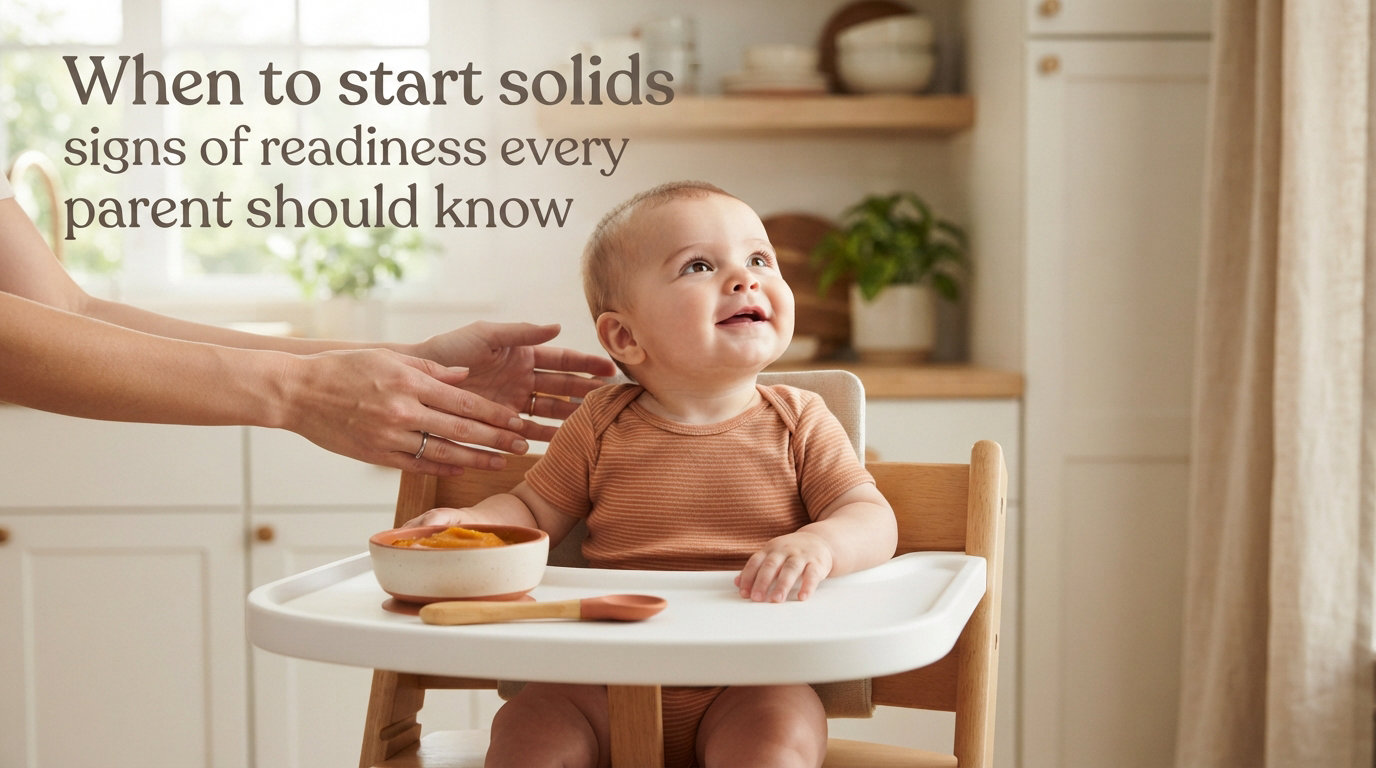
Your mother-in-law insists that all her babies started rice cereal at four months. Your pediatrician mentioned you could begin soon, but your baby still wobbles in the high chair. The parenting forums show photos of six-month-olds devouring avocado while your little one seems perfectly content with milk.
I have been there. As a parent and researcher who has helped hundreds of families navigate this transition, I can tell you that knowing the signs baby is ready for solids brings something invaluable: confidence. When you understand what true developmental readiness looks like, you can trust your baby’s timeline rather than comparing to arbitrary dates or well-meaning advice.
Most babies show all four readiness signs around six months of age, but the range is typically five to seven months depending on individual development. This guide will show you exactly what to look for, how to distinguish between genuine readiness and normal baby behavior, and when waiting is actually the safer choice.
Table of Contents
When Can My Baby Start Eating Solid Foods?
The American Academy of Pediatrics and World Health Organization agree that most babies are ready to begin solid foods at approximately six months of age. This recommendation is based on developmental biology, not just tradition.
Before six months, babies lack the physical coordination for safe swallowing and their digestive systems are not mature enough to process most foods. Starting too early increases the risk of choking, food allergies, and obesity later in childhood. Their bodies are simply not equipped to handle solids, even if they seem interested in your dinner plate.
The 6-Month Milestone
At birth, babies possess a digestive system designed exclusively for milk. Their intestines have open junctions that allow for easy absorption of breast milk antibodies, but these same junctions can let food proteins pass through too early, potentially triggering allergic responses.
By around six months, several biological changes occur. The intestinal lining matures and becomes more selective. Pancreatic enzymes needed for digesting starches and proteins become active. Kidneys develop the capacity to handle the increased renal load that solid foods create. These changes happen on a biological timeline that cannot be rushed by eager parents or old-fashioned advice.
The six-month recommendation also aligns with changing nutritional needs. While breast milk or formula remains the primary source of calories, babies begin requiring additional iron and zinc around this age. Their bodies have typically stored enough iron from birth, but those stores begin depleting right around the six-month mark.
Why Timing Matters for Development
Every readiness sign exists for a specific safety reason. When babies can sit with minimal support, they have the postural control to swallow effectively and prevent food from entering the airway. Strong head control allows them to position their airway optimally and cough effectively if needed. Reaching and grasping skills indicate the motor development necessary for self-feeding and signaling when they are done.
Starting solids before these developmental foundations are in place increases choking risk significantly. A baby who cannot sit upright will struggle to coordinate swallowing. A baby without head control cannot adjust their airway if food goes down the wrong pipe. These are not hypothetical concerns. Pediatric emergency rooms treat thousands of infant choking cases annually, many related to feeding before true readiness.
Beyond physical safety, timing affects your baby’s relationship with food. When babies start solids before they are ready, they often develop negative associations with eating. Gagging, coughing, and forced spoon-feeding create stress around mealtimes. Waiting for genuine readiness means your baby approaches food with curiosity rather than resistance, setting the stage for positive eating habits that last a lifetime.
The 4 Essential Signs Your Baby Is Ready for Solids
A baby is ready for solids when they demonstrate four key developmental abilities: sitting with minimal support, maintaining strong head and neck control, reaching for and grasping objects, and showing genuine interest in food. Most babies develop these skills around six months, though some may be ready slightly earlier or later.
All four signs should be present consistently, not just occasionally. Your baby needs to demonstrate these abilities during regular daily activities, not just once or twice. This is because feeding requires sustained coordination of multiple skills simultaneously. A baby who can sit well for two minutes but then slumps is not yet ready for the fifteen to twenty minutes a meal typically takes.
Let me walk you through each sign with specific descriptions of what to look for in your daily routine.
1. Sitting with Minimal Support (and What That Really Means)
Your baby can sit upright in a high chair or on the floor with just a little support to prevent tipping. This position is often called tripod sitting, where your baby sits with their hands on the floor in front for balance.
The key phrase is minimal support. This does not mean sitting completely independently. It means your baby can maintain an upright posture with just a pillow behind their back or a caregiver’s light hand nearby. They should not be slumping forward, sliding sideways, or collapsing into a C-shape. Their back should be relatively straight, and they should be able to turn their head without losing balance.
In a high chair, look for your baby to sit with their hips at a ninety-degree angle, not reclined. Reclined positions are dangerous for eating because gravity pulls food toward the back of the throat before your baby is ready to swallow. Many high chairs have adjustable recline features for younger infants, but for solid food feeding, your baby needs to be fully upright.
Why this matters for safety: Good sitting posture creates the foundation for safe swallowing. When upright, food travels down the esophagus with gravity’s help. When reclined or slumping, food can pool in the mouth or throat. Additionally, the core strength needed for sitting translates to the trunk stability required for coordinated breathing and swallowing.
To help build this skill before starting solids, provide plenty of supervised floor time. Avoid excessive time in baby containers like swings, bouncers, and car seats. These devices prop babies in positions they cannot maintain themselves and actually delay the development of core strength needed for sitting.
2. Strong Head and Neck Control
Your baby can hold their head steady and upright without wobbling, both when sitting and when pulled to a sitting position from lying down. This indicates the neck strength and motor control necessary for safe feeding.
Test this by lying your baby on their back and gently pulling them up by their hands to a sitting position. A baby with good head control will keep their head in line with their body, chin slightly tucked. If their head falls back or lags behind, they need more time to develop neck strength.
During daily floor time, you should see your baby holding their head up steadily during tummy time, looking around with control, and turning their head smoothly to follow sounds or objects. They should not seem wobbly or require frequent repositioning to keep their head upright.
Why this matters: Head control allows your baby to position their airway optimally for swallowing. When eating, they need to coordinate multiple actions: breathing, moving the tongue, and swallowing. If they are working hard just to hold their head up, they cannot safely manage food. Additionally, the ability to turn the head away is one way babies signal they are finished eating. A baby without head control cannot communicate this important message.
Pediatricians also look for the chin tuck as a sign of readiness. When food approaches, your baby should be able to tuck their chin down toward their chest. This position protects the airway and helps food travel down the esophagus efficiently. Babies without adequate neck control often thrust their heads backward when food approaches, which actually increases choking risk.
3. Reaching and Grabbing Objects
Your baby actively reaches for toys, hair, glasses, and other objects, then brings them to their mouth. This demonstrates the hand-eye coordination and arm strength needed for self-feeding.
Look for your baby to extend their arms purposefully toward interesting objects. They should be able to grasp items using a palmar grasp, where objects are held against the palm with fingers wrapped around. Some babies may also demonstrate a raking grasp, using their whole hand to pull items closer.
The ability to bring hands to mouth is particularly important. Watch your baby during play. Do they consistently get toys, fists, or their fingers to their mouth? This coordination is the same pattern they will use to bring food to their mouth when self-feeding.
Why this matters: Self-feeding, whether with purees or finger foods, requires that your baby can guide food to their own mouth. Even spoon-fed babies eventually need this skill for holding spoons and finger foods. The reaching motion also indicates developing trunk stability and shoulder strength that support the coordinated movements needed for eating.
Additionally, babies who can bring objects to their mouth demonstrate appropriate oral motor patterns. They are practicing the arm-to-mouth movement that will soon bring food rather than toys. This is a developmental progression from the early newborn reflexes to purposeful, coordinated movement.
4. Showing Interest in Food
Your baby watches you eat with focus, may open their mouth when food approaches, and sometimes leans forward toward your plate. This interest indicates cognitive awareness of eating as an activity worth participating in.
However, this sign requires the most careful interpretation. Babies explore their world by putting things in their mouths. Mouthing toys, fingers, and anything within reach is normal developmental behavior, not necessarily a sign of food readiness. The key difference is the context. Does your baby specifically watch eating with interest? Do they seem to follow the path of food from your plate to your mouth?
Signs of genuine food interest include watching family members eat with sustained attention, opening the mouth when food approaches their face, leaning forward when food is nearby, and possibly making sounds or gestures that seem to request food. These behaviors should be directed specifically at eating situations, not just general curiosity about objects.
Why this matters: Feeding should be a positive, engaging experience for your baby. Genuine interest means they are more likely to accept new textures and flavors. Without this readiness component, feeding can feel forced or mechanical. Babies who start solids without genuine interest often resist spoon-feeding and develop negative associations with mealtimes.
However, do not confuse interest with need. A baby watching you eat ice cream does not need ice cream. They are curious about what you are doing, which is developmentally appropriate. The presence of the other three physical readiness signs plus this interest creates the complete picture of readiness.
Common Myths About Starting Solids
Outdated advice and cultural pressure create confusion about when babies are truly ready for solid foods. Let me address the most persistent myths I hear from parents.
Myth: The Tongue Thrust Reflex Must Be Gone
The tongue thrust reflex, also called the extrusion reflex, causes babies to push objects out of their mouth with their tongue when something touches their lips. Many parents worry that this reflex means their baby is not ready for solids.
This is false. The tongue thrust reflex is present in all young babies and actually protects them from choking. It typically diminishes between four and six months but does not need to be completely gone for starting solids. A baby can learn to swallow even with some tongue thrust present.
What matters more is whether your baby can move food to the back of the mouth and swallow once food is past the lips. Some gagging and tongue movement is normal as babies learn to handle new textures. Consistent pushing out of all food with the tongue may indicate readiness is still developing, but occasional tongue thrust is not a reason to delay.
The tongue thrust reflex differs from the gag reflex, which remains important throughout life for preventing choking. Gagging is a normal learning experience when starting solids and actually indicates that your baby’s protective reflexes are working properly.
Myth: Starting at 4 Months Helps Babies Sleep Better
This persistent myth leads many parents to start solids early hoping for longer sleep stretches. The logic seems sound: solid food should keep babies full longer than liquid milk. Unfortunately, research does not support this claim.
A 2026 systematic review of sleep and solid feeding studies found no significant difference in sleep duration between infants who started solids at four months versus six months. Babies wake at night for many reasons: hunger, comfort, developmental milestones, teething, and habit. Filling their stomach with cereal does not address these underlying causes.
Starting solids before four months may actually increase certain health risks. Research links early solid introduction to higher rates of childhood obesity, type 1 diabetes, and celiac disease. The immature digestive system and open intestinal lining may allow inappropriate food proteins to pass through, potentially triggering immune responses.
If your four-month-old is waking frequently, consider other factors before reaching for the rice cereal. Growth spurts at this age often increase feeding frequency. Developmental milestones like rolling or early teething can disrupt sleep. Addressing the actual cause will be more effective than premature solid feeding.
Myth: Rice Cereal Should Be First Food
For generations, parents have been told to start with iron-fortified rice cereal mixed with breast milk or formula. This advice is outdated and no longer reflects current nutritional science.
Rice cereal offers limited nutritional value beyond added iron. It is highly processed and rapidly converted to sugar in the body. More concerning, rice naturally absorbs more arsenic from soil and water than other grains. Regular consumption of rice cereal may expose babies to higher levels of inorganic arsenic than is considered safe.
Current guidance from pediatric nutritionists emphasizes whole foods over processed cereals. Iron-fortified oatmeal cereal offers similar iron benefits with lower arsenic exposure. Even better, naturally iron-rich foods like pureed meats, beans, and lentils provide bioavailable iron along with other nutrients.
The emphasis on cereal also reflects an outdated focus on spoon-feeding purees as the primary starting method. Babies who begin with baby-led weaning approaches may never eat cereal at all, starting instead with soft finger foods like avocado, banana, or cooked vegetables. These whole foods offer superior nutrition compared to processed cereals.
Signs Your Baby Is NOT Ready for Solids Yet
Sometimes the most helpful information is knowing when to wait. Starting solids before your baby is ready creates frustration for everyone and potential safety risks. Here are clear indicators that waiting is the better choice.
Developmental Signs to Watch For
Your baby consistently pushes food out with their tongue rather than attempting to swallow. While some tongue movement is normal, consistent food expulsion indicates the coordination for swallowing is not yet developed.
Slumping or collapsing in the high chair despite supports is a clear sign of inadequate postural control. If your baby cannot maintain an upright position for more than a few minutes, they are not ready for the sustained sitting that eating requires.
Your baby shows no interest in food or actively turns away when food approaches. While interest alone does not indicate readiness, active disinterest suggests waiting is appropriate. Forcing food on a baby who turns away creates negative associations and mealtime battles.
Gagging excessively with even tiny tastes of food may indicate that oral motor skills need more development. Some gagging is normal as babies learn, but persistent, severe gagging on all textures suggests waiting and practicing more with safe objects for mouthing.
When to Wait a Little Longer
If your baby reaches six months but does not yet demonstrate all four readiness signs, waiting is completely appropriate. Most babies will develop these skills within the following weeks. There is no rush, and starting before readiness offers no benefits.
While waiting, you can help your baby build readiness skills through play. Tummy time strengthens the neck and core muscles needed for sitting. Offering safe toys for mouthing helps develop oral motor coordination. Letting your baby sit with support in your lap helps them practice the upright posture needed for the high chair.
Premature babies should use their corrected age rather than chronological age when evaluating readiness. A baby born two months early who is now six months old has the developmental abilities of a four-month-old. Using corrected age gives a more accurate picture of true readiness.
If your baby is approaching seven or eight months and still lacks readiness signs, consult your pediatrician. While the range of normal is wide, significantly delayed readiness may indicate underlying developmental considerations that deserve professional evaluation.
Special Considerations
Every baby is unique, and some circumstances require modified approaches to evaluating readiness. Understanding these special situations helps you make the best decision for your baby.
Premature Babies and Corrected Age
For babies born before thirty-seven weeks gestation, corrected age provides a more accurate picture of developmental readiness. Corrected age is calculated by subtracting the number of weeks early from the chronological age.
For example, a baby born eight weeks early who is now six months old chronologically has a corrected age of four months. When evaluating readiness signs, use this corrected timeline. The baby should be evaluated as if they are four months old developmentally.
Most preemies catch up to their chronological peers by two years of age, but during infancy, the developmental gap matters. Premature babies may need extra time to develop the muscle tone, coordination, and oral motor skills needed for safe feeding.
Work closely with your pediatrician and any early intervention specialists involved in your preemie’s care. They can help assess readiness based on your baby’s unique developmental trajectory rather than calendar dates.
Iron Needs at 6 Months
Around six months, babies’ iron stores from birth begin to deplete. This is one reason the six-month guideline exists. If your baby is not yet showing readiness signs at six months, you may wonder about meeting iron needs.
Continue prioritizing breast milk or iron-fortified formula as the primary nutrition source. These provide bioavailable nutrients that complement your baby’s developmental stage. Iron-fortified cereals are not necessary before starting solids.
If your baby reaches seven months without readiness signs, discuss iron supplementation with your pediatrician. Some babies may benefit from temporary iron drops while waiting for feeding readiness to develop. A simple blood test can assess iron status and guide supplementation decisions.
Once your baby does start solids, prioritize iron-rich foods. Natural sources like meat, beans, lentils, and dark leafy greens provide superior nutrition to processed cereals. Pairing these with vitamin C-rich foods like fruits enhances iron absorption.
When to Seek Help
While most babies develop feeding readiness on their own timeline, some situations warrant professional evaluation. Knowing when to consult your pediatrician brings peace of mind.
Red Flags That Need Pediatrician Attention
Contact your pediatrician if your baby shows these warning signs at any age. Persistent difficulty coordinating sucking, swallowing, or breathing during feeding may indicate oral motor or neurological concerns requiring evaluation.
Significant developmental delays in motor skills beyond feeding should be discussed with your doctor. If your baby is not sitting with support by nine months, reaching for objects by seven months, or demonstrating head control by six months, a developmental assessment may be appropriate.
Signs of aspiration during feeding attempts require immediate medical attention. These include coughing that continues more than a few seconds after food, color change around the lips, wheezing or breathing changes during or after feeding, and recurrent respiratory infections that might indicate silent aspiration.
If your baby has a diagnosed medical condition affecting muscle tone, coordination, or gastrointestinal function, work with specialists before starting solids. Babies with cerebral palsy, Down syndrome, cleft palate, or other conditions may need modified feeding approaches and professional guidance.
Pediatric feeding specialists, including occupational therapists and speech-language pathologists with feeding expertise, can evaluate readiness in complex cases. They offer specific exercises and strategies to help babies develop the skills needed for safe feeding.
Frequently Asked Questions
What is the 3 6 9 rule for babies?
The 3-6-9 rule refers to introducing common allergens: starting with egg around 3 months in high-risk babies with eczema, peanut at 6 months, and other allergens by 9 months. However, this applies specifically to babies with existing allergies or severe eczema under allergist guidance, not as a general feeding rule for all babies. Recent research shows early introduction of allergens may reduce allergy risk, but the timing should be personalized based on your baby’s risk factors and your pediatrician’s advice.
When to introduce solids age and individual readiness?
Most babies are ready around 6 months of age, but individual readiness depends on developmental milestones. Look for four key signs: sitting with minimal support, strong head and neck control, reaching and grabbing objects, and showing interest in food. Age provides a general guideline, but developmental readiness determines the right time for your specific baby. Some babies may be ready at 5 months, others not until 7 months.
Is a 4 month old ready for solids?
Generally, no. The American Academy of Pediatrics recommends waiting until about 6 months. Before 4 months, babies lack the developmental skills for safe eating and their digestive systems are not mature enough. Early introduction may increase risk of food allergies, obesity, and create negative feeding associations. While some babies may show individual readiness signs before 6 months, 4 months is too early for almost all infants.
What is the 3 day rule for introducing solids?
The 3-day rule means waiting 3 to 5 days between introducing each new single-ingredient food. This waiting period allows you to watch for allergic reactions like diarrhea, rash, vomiting, or breathing changes. If no reaction occurs, that food is considered safe and can be mixed with other already-introduced foods. While this rule was once standard practice, current guidance suggests it is less critical for low-risk babies unless introducing common allergens.
Does my baby need to sit independently before starting solids?
No, your baby does not need to sit completely independently. The requirement is sitting with minimal support, which means they can maintain an upright posture with just a little help. This might be a pillow behind their back, a high chair with side supports, or a caregiver’s light hand nearby. They should not be slumping or reclining, but they do not need full independence yet.
What if my baby shows interest but cannot sit yet?
Interest in food is only one of four readiness signs. If your baby cannot sit with minimal support, they are not ready for solids regardless of how interested they seem. Babies are naturally curious about what you are doing, but physical readiness ensures safe swallowing. Continue offering supervised floor time to help build the core strength needed for sitting. Most babies develop all four signs around the same time.
Can I start with purees if my baby is not ready for finger foods?
The same four readiness signs apply whether you choose purees or baby-led weaning. Purees are not easier to manage than soft finger foods. In fact, purees require specific tongue movements that some babies find more difficult than whole foods. If your baby is not ready for self-feeding finger foods, they are likely not ready for spoon-fed purees either. Wait until all readiness signs are present before starting any type of solid food.
Trust Your Baby’s Timeline
The signs baby is ready for solids provide a clear roadmap for this exciting transition. When you see all four readiness indicators, your baby is telling you they are prepared for this next step. Until then, breast milk or formula provides everything they need for optimal growth and development.
Remember that cultural pressure, well-meaning relatives, and outdated advice do not determine your baby’s readiness. Developmental science and your baby’s individual abilities do. Waiting for genuine readiness creates a foundation for positive eating experiences and healthy food relationships that last a lifetime.
When your baby is ready, you will know. The sitting will be steady, the head control strong, the reaching purposeful, and the interest genuine. Then you can begin this adventure together, following your baby’s lead and trusting their natural developmental wisdom.