
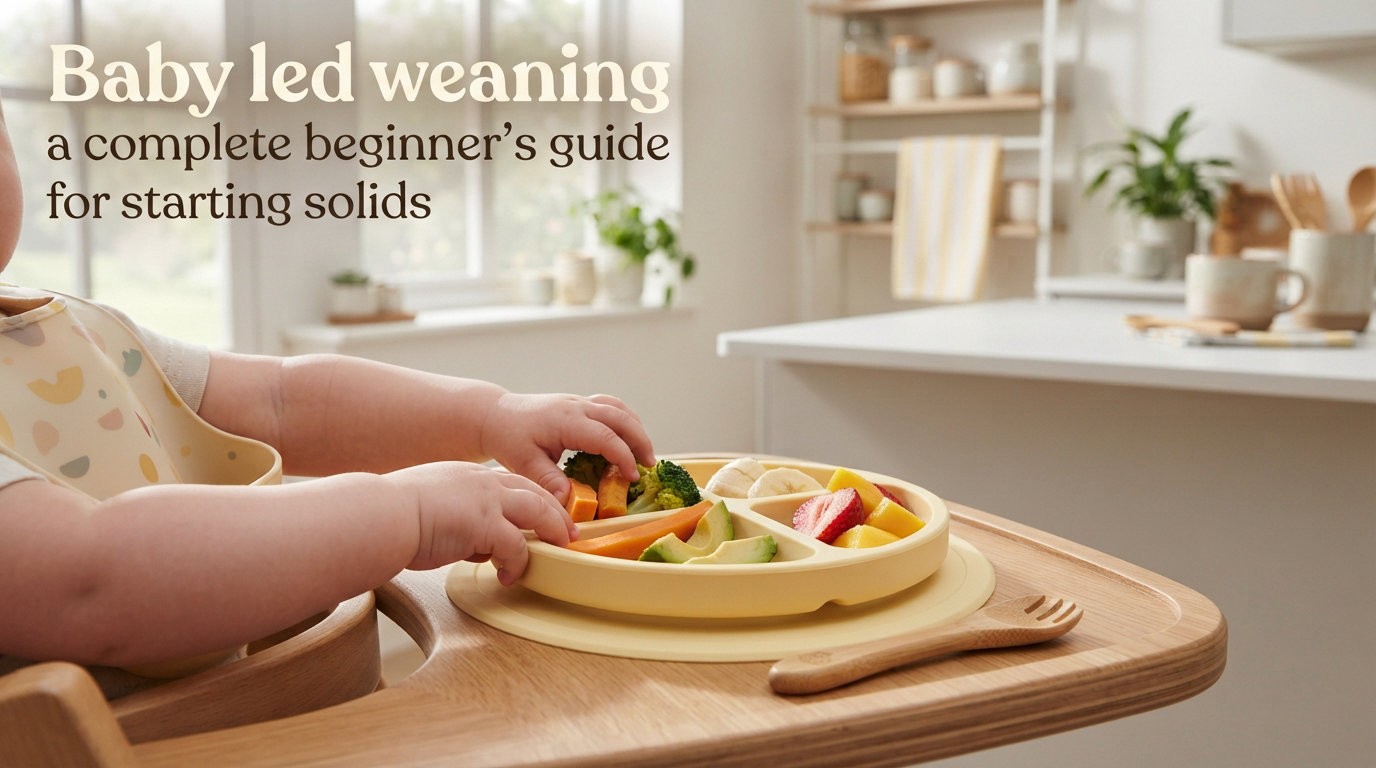
Your baby is grabbing at your plate during dinner, watching every bite you take with intense curiosity, and maybe even mimicking your chewing motions. These are some of the first signs that your little one might be ready to join the family at mealtime. If you have been researching how to start solids, you have probably come across the term baby led weaning beginners guide more than once.
Baby-led weaning (BLW) is an approach to starting solids where babies self-feed appropriately prepared finger foods from the beginning, rather than being spoon-fed purees. I remember feeling both excited and terrified when we started this journey with my first child. The idea of handing a six-month-old a strip of steak seemed completely counterintuitive to everything I had learned about infant feeding.
What I discovered changed how I approach feeding entirely. This comprehensive guide covers everything you need to know about baby-led weaning in 2026, from understanding the basic principles to navigating those nerve-wracking first meals. We will walk through the signs of readiness, safety considerations, best first foods, and answer the most common questions parents ask when starting this feeding approach.
Whether you are a first-time parent feeling overwhelmed by conflicting advice, or you have done purees before and want to try something different with your second child, this guide will give you the confidence to start your baby-led weaning journey safely and successfully.
Table of Contents
What Is Baby-Led Weaning?
Baby-led weaning is a method of introducing solid foods that puts your baby in control of their eating experience. Instead of you spooning purees into their mouth, you offer soft, appropriately sized pieces of food that your baby can pick up and bring to their own mouth. The term was coined by British researcher Gill Rapley in 2003, though the concept of infants self-feeding family foods has existed in many cultures for generations.
The core principle is simple: babies share family meals from the start. You are not preparing special baby food or buying expensive jars of purees. Your baby eats modified versions of what the rest of the family eats, sitting with you at mealtimes and participating in the social experience of eating together.
This approach aligns with Ellyn Satter’s Division of Responsibility in Feeding, a widely respected framework in pediatric nutrition. The parent decides what, when, and where food is offered. The child decides whether to eat it and how much. This division helps babies develop self-regulation skills that research links to healthier eating patterns throughout life.
Baby-Led Weaning vs Traditional Puree Feeding
Many parents wonder whether they need to choose between baby-led weaning and traditional spoon-feeding. The reality is more nuanced than an either-or decision. Here is how the two approaches compare:
| Aspect | Baby-Led Weaning | Traditional Puree Feeding |
|---|---|---|
| Who controls feeding | Baby self-feeds finger foods | Parent spoon-feeds purees |
| Food texture | Soft, graspable finger foods from start | Smooth purees, gradually lumpier |
| Family meals | Baby eats modified family foods | Separate baby food often prepared |
| Motor skills developed | Palmar grasp, pincer grasp, hand-eye coordination | Less emphasis on self-feeding skills early |
| Texture exposure | Immediate exposure to varied textures | Delayed texture introduction |
| Convenience | No special food preparation needed | Requires puree preparation or purchase |
| Choking research | No increased risk when foods are appropriately prepared | Similar safety profile when supervised |
Many families actually use a combination approach, offering some finger foods alongside occasional spoon-fed items like yogurt or oatmeal. Research published in BMC Pediatrics found no significant difference in nutrient intake between babies who did strict BLW and those who used a mixed approach. What matters most is responsive feeding, paying attention to your baby’s hunger and fullness cues regardless of the method you choose.
When to Start Baby-Led Weaning?
The American Academy of Pediatrics (AAP) recommends starting solid foods around 6 months of age. This guidance applies whether you choose baby-led weaning, traditional purees, or a combination approach. Before 6 months, babies get all the nutrition they need from breast milk or formula, and their digestive systems are not developmentally ready for solids.
Starting too early carries real risks. Babies younger than 4 months who receive solids have increased risk of choking, obesity, and digestive issues. Their tongues naturally push foreign objects out (the tongue thrust reflex), and their gut lining is more permeable, potentially allowing undigested proteins to pass through and trigger allergic responses.
At the same time, waiting too long past the 6-month mark can also create challenges. Babies who start solids after 7-8 months may be more resistant to new textures and flavors. The window between 6-7 months represents an optimal period when babies are developmentally ready and typically open to exploring new foods.
It is important to understand that starting solids, whether through BLW or purees, is complementary feeding. Breast milk or formula remains your baby’s primary nutrition source throughout the first year. Think of solids as practice and exploration rather than a major source of calories initially. Most babies take several months to actually consume meaningful amounts of food, and that is completely normal.
The 6-Month Milestone: Why Age Matters
By 6 months, most babies have achieved several developmental milestones that make starting solids safer and more successful. Their digestive systems have matured enough to handle complex foods. They can typically sit with minimal support, which is essential for safe swallowing. The tongue thrust reflex that automatically pushes food out has diminished. They have developed enough head and neck control to manage food in their mouths.
Some pediatricians may suggest starting between 4-6 months based on individual baby readiness. However, research consistently supports waiting until around 6 months for the majority of infants. The World Health Organization, AAP, and most national pediatric societies worldwide align on this recommendation. If your pediatrician suggests starting earlier, ask specifically about the reasoning and whether waiting would be appropriate for your baby.
Signs Your Baby Is Ready for Solids
Age is just one factor in determining readiness for solids. Your baby should also demonstrate several developmental signs before you begin baby-led weaning. These signs indicate that your baby can handle food safely and is developmentally prepared for the eating experience.
Signs of Readiness Checklist
Use this checklist to assess whether your baby is truly ready to begin their solid food journey:
| Physical Signs | Developmental Signs | Interest Indicators |
|---|---|---|
| Can sit upright with minimal support | Has lost the tongue thrust reflex (does not automatically push food out) | Watches you eat with intense interest |
| Has good head and neck control | Can bring objects to mouth independently | Reaches for food on your plate |
| Weighs at least double their birth weight | Demonstrates palmar grasp (can hold objects in fist) | Mimics chewing motions |
| Has growing appetite, seems hungry after milk feeds | Opens mouth when food approaches (optional) | Opens mouth when they see you eating |
| Can swallow food (not pushing everything out) | Attempts to grab spoon or food | Gets excited at mealtime |
Your baby does not need to show every sign on this list, but they should demonstrate most of them consistently. The ability to sit with support and the loss of tongue thrust reflex are non-negotiable safety requirements for baby-led weaning specifically. Without these, babies cannot manage finger foods safely.
Understanding the Tongue Thrust Reflex
The tongue thrust reflex is a protective mechanism present from birth that causes babies to push foreign objects out of their mouths. When you touch your baby’s lips or tongue, you will see their tongue push forward automatically. This reflex typically fades between 4-6 months, though it varies by individual baby.
You can test whether this reflex has diminished by gently touching a clean finger to your baby’s lower lip. If their tongue pushes forward strongly, they are not ready for solids. If they open their mouth and accept without pushing, that reflex has likely resolved. This simple test helps determine readiness regardless of your baby’s age.
Motor Skills for Self-Feeding
Baby-led weaning requires specific motor abilities that develop around the 6-month mark. The palmar grasp, where babies hold objects in their fist, allows them to grip food strips. Over time, this develops into the pincer grasp, using thumb and forefinger to pick up small items. You will see this progression reflected in the foods you offer, starting with large graspable strips and gradually moving to smaller pieces.
Hand-eye coordination also matters. Your baby needs to see food, reach for it, and successfully bring it to their mouth. This sounds simple, but it requires complex neurological development. Most 6-month-olds have developed this capacity, which is another reason the timing aligns so well with starting solids.
How to Start Baby-Led Weaning: A Step-by-Step Guide
Starting baby-led weaning feels overwhelming until you break it down into manageable steps. Here is exactly how to begin your journey, from setup to first meals.
Step 1: Prepare Your Environment
Before your baby’s first meal, set up a safe eating space. Your baby needs a high chair or secure seat that allows them to sit upright with a 90-degree angle at the hips. The tray or table should be at chest level so they can see and reach food easily. Many families find a footrest helps babies feel stable and secure during meals.
Remove distractions. Turn off screens, put away toys, and create a calm mealtime environment. You want your baby focused on food and the social experience of eating together. Consider placing a splat mat or old sheet under the high chair. Baby-led weaning is messy, and accepting that reality upfront makes the experience more enjoyable for everyone.
Step 2: Choose the Right Time
Timing matters for successful first meals. Offer food when your baby is alert and content, not overtired or hungry. Most parents find that mid-morning, about an hour after a milk feed, works well. Your baby should be interested in food but not ravenous, as frustration can make the experience negative.
Avoid offering solids when your baby is sick, teething severely, or has just had vaccinations. Wait until they are feeling their best to start this new experience. Some parents choose weekends to begin, giving them time to observe their baby’s reactions without work pressures.
Step 3: Select Appropriate First Foods
Start with single foods rather than complex mixed dishes. This helps you identify any reactions and keeps things simple for your baby. Iron-rich foods should be a priority, as babies’ iron stores begin depleting around 6 months. Soft-cooked meat strips, well-cooked egg, and iron-fortified cereals are excellent choices.
Prepare foods to be about the size and shape of an adult finger, roughly 3-4 inches long. This allows your baby to grasp the food in their fist with some protruding to chew. Foods should be soft enough that you can easily mash them between your thumb and forefinger. If you need to use significant pressure, cook the food longer.
Step 4: Offer Food Safely
Place 2-3 pieces of food on your baby’s tray or plate. Avoid overwhelming them with too many choices initially. Sit facing your baby so you can observe them clearly. Never leave your baby alone during meals, and avoid eating while driving or in moving vehicles.
Let your baby explore the food at their own pace. They may touch it, squish it, smell it, or put it straight in their mouth. All of these are valid parts of learning about food. Do not force food toward them or try to put it in their mouth. The entire point of baby-led weaning is that they control the experience.
Step 5: Respond to Their Cues
Watch for signs your baby has had enough. Turning away from food, pushing the tray, becoming fussy, or playing without eating all indicate they are finished. Never pressure your baby to eat more than they want. Trust that they know their own hunger and fullness, even if they have eaten very little or nothing at all.
End the meal when your baby shows they are done, even if that happens quickly. First meals might last only 5-10 minutes. That is completely fine. The goal is positive exposure to food and family meals, not consumption quantity.
Step 6: Continue Milk Feeds
After the meal, offer your regular milk feed as usual. Solids complement milk but do not replace it at this stage. Many babies nurse or take a bottle immediately after exploring solids. This ensures they get the nutrition they need while continuing to build positive associations with mealtimes.
Gradually increase to two meals per day around 7-8 months, then three meals by 9 months. Follow your baby’s lead, some eager eaters may want more frequent meals earlier, while others take longer to show interest in regular solid food consumption.
Best First Foods for Baby-Led Weaning
Choosing the right first foods sets your baby up for success with baby-led weaning. The ideal starter foods are nutrient-dense, easy to grasp, and soft enough to gum or chew safely. Here are the best options organized by category and age progression.
Age-Based Food Progression Chart
As your baby develops, the types of food they can handle safely change. This chart outlines appropriate foods by age range:
| Age | Motor Skills | Food Size/Shape | Texture | Example Foods |
|---|---|---|---|---|
| 6 months | Palmar grasp (whole hand) | Finger-sized strips, 3-4 inches long | Very soft, mashes easily | Steamed carrot strips, banana halves, avocado slices, soft meat strips, omelet strips |
| 7-9 months | Developing pincer grasp | Smaller pieces, some strips | Soft with some texture | Well-cooked pasta, soft meatballs, scrambled eggs, soft fruit pieces, steamed vegetable chunks |
| 10-12 months | Pincer grasp established | Small pieces, bite-sized | Varied textures, more resistance | Ground meat, soft-cooked beans, diced fruits, cheese cubes, toast fingers with spreads |
Iron-Rich Foods (Priority Category)
Iron is the most critical nutrient for babies starting solids. Their iron stores from birth begin depleting around 6 months, and breast milk and formula provide insufficient iron to meet growing needs. Make iron-rich foods a daily priority.
| Food | Preparation Method | Serving Size/Shape |
|---|---|---|
| Beef or lamb | Slow-cooked until very tender, or ground and formed into soft meatballs | Large strips they can suck on, or small soft meatballs |
| Chicken or turkey | Poached, stewed, or roasted with moisture; dark meat is moister | Shredded or thin strips |
| Egg | Hard-boiled and mashed, or cooked as omelet/ frittata strips | Strips of omelet, mashed hard-boiled egg |
| Lentils or beans | Cooked until very soft, mashed slightly if needed | Small piles on tray, pre-loaded on spoon |
| Iron-fortified cereal | Mix with breast milk or formula to desired consistency | Thick enough to scoop with hands, or pre-loaded spoon |
| Liver | Cooked thoroughly, pureed or mashed | Small amounts mixed with vegetables |
Vegetables
Vegetables provide essential vitamins, minerals, and fiber. Steam or roast until very soft. Many babies prefer slightly sweeter vegetables initially.
Sweet potato: Baked until very soft, cut into thick wedges
Butternut squash: Roasted or steamed until easily mashed
Carrots: Steamed until soft, cut into thick strips
Broccoli: Steamed with soft florets and tender stems
Cauliflower: Steamed until very soft
Zucchini: Sauteed or steamed until soft
Peas: Lightly mashed or flattened
Avocado: Sliced with some peel left as a natural grip
Fruits
Most fruits are naturally soft and appealing to babies. Remove peels initially, as they can be difficult to manage.
Banana: Thick slices or split lengthwise, ripe but not mushy
Avocado: Slices with peel partially attached for grip
Apple: Grated or steamed until soft (raw apple is a choking hazard)
Pear: Steamed until soft, cut into thick slices
Peach or nectarine: Ripe and sliced, peel removed
Mango: Ripe slices, avoiding the pit area
Watermelon: Large sticks with seeds removed
Blueberries: Halved or quartered, slightly smashed
Grains and Carbohydrates
Grains provide energy and can be vehicles for other nutrients when prepared appropriately.
Oatmeal: Thick-cooked, can be formed into clumps or pre-loaded on spoon
Pasta: Well-cooked until very soft, larger shapes like penne or rigatoni
Rice: Sticky rice balls, well-cooked and slightly mashed
Toast: Lightly toasted with spreads, cut into fingers
Pancakes: Soft, egg-based pancakes cut into strips
Rice cakes: Very lightly used, as they can stick to palate; spread with avocado or hummus
Dairy and Alternatives
Full-fat dairy products support brain development. Wait until 6 months for dairy introduction.
Plain full-fat yogurt: Thick Greek-style works well, pre-loaded on spoon
Cheese: Soft cheeses like mozzarella or mild cheddar, cut into strips
Cottage cheese: Larger curds that baby can pick up
Ricotta: Creamy texture, can be spread on toast fingers
Benefits of Baby-Led Weaning
Baby-led weaning offers benefits for babies and parents that extend beyond simple convenience. Research continues to uncover advantages related to development, nutrition, and long-term eating behaviors.
Developmental Benefits for Babies
Babies who self-feed develop fine motor skills earlier than spoon-fed peers. The act of grasping food, bringing it to the mouth, and manipulating it requires coordination between hands, eyes, and mouth. A study published in the journal Pediatrics found that BLW infants demonstrated better dexterity and hand-eye coordination at 12 months compared to those who received only purees.
Oral motor development also benefits. Chewing, moving food around the mouth, and forming a bolus for swallowing exercises muscles essential for speech development. Babies exposed to varied textures early show more mature chewing patterns and may have advantages in speech clarity later.
Perhaps most importantly, BLW supports the development of self-regulation. Babies who control their own intake learn to recognize hunger and fullness cues from the start. This internal awareness may protect against overeating later in life. Research in BMJ Open associated baby-led weaning with lower BMI scores at 18-24 months compared to traditional weaning approaches.
Reduced Picky Eating
Early exposure to diverse textures, flavors, and family foods appears to reduce picky eating tendencies. When babies participate in family meals from the start, they experience the full range of foods their family eats rather than being limited to single-flavor purees. This exposure during the critical flavor-learning window (6-18 months) establishes a broader palate.
A 2020 study in the journal Appetite found that children who did BLW were more likely to enjoy a variety of foods at age 2 compared to those who received only spoon-fed purees. They were also less likely to show food fussiness at family meals.
Family Mealtime Benefits
BLW integrates babies into family meals from day one. Rather than feeding your baby separately while your food gets cold, everyone eats together. Babies observe family members eating, learning by watching. This social component of eating is as important as the nutritional one.
Shared meals create opportunities for language development as you describe foods and talk about eating. They establish routines and family connection time. Research consistently shows that regular family meals correlate with better nutritional outcomes, reduced obesity risk, and improved psychological well-being for children.
Benefits for Parents
Parents who choose baby-led weaning often report reduced mealtime stress. You are not constantly negotiating bites, bribing with dessert, or worrying about whether your baby ate enough spoonfuls. You offer appropriate foods, and your baby decides what to eat. This aligns with the Division of Responsibility framework and creates more relaxed mealtimes.
The convenience factor is real. No puree preparation, no special baby food purchases, no packing separate meals when going out. Your baby eats modified versions of what you are already preparing. For working parents, this simplicity can make a significant difference in daily logistics.
Gagging vs Choking: Understanding the Difference
Fear of choking stops many parents from trying baby-led weaning. Understanding the difference between gagging and choking is essential for safety and parental confidence. Gagging is a normal, protective reflex. Choking is a medical emergency. They look and sound completely different.
When I started BLW with my first baby, the first gagging episode terrified me. I hovered over the high chair, ready to intervene, not understanding that my baby was actually handling the situation perfectly. Learning to recognize the difference between these two responses changed everything about how I approached mealtimes.
Gagging vs Choking Comparison
| Characteristic | Gagging (Normal Reflex) | Choking (Emergency) |
|---|---|---|
| Sound | Loud coughing, gurgling, retching noises | Silent or very quiet, cannot make sound |
| Color | May turn red in face | Turning blue around lips and face |
| Body language | Still breathing, may push food out with tongue | Panicked expression, clutching throat, rigid body |
| Airway status | Airway is partially open, working to clear food | Airway is blocked, cannot breathe |
| Parent response | Stay calm, do not intervene, let baby work it out | Immediate intervention required |
| Frequency | Common in early BLW, decreases with practice | Rare when foods are appropriately prepared |
What Gagging Looks Like
Gagging is a protective reflex that prevents choking. When food touches the back of the tongue or throat, the gag reflex triggers to push it forward. In babies, this reflex is located much farther forward in the mouth than in adults, making it a highly effective safety mechanism.
During gagging, your baby may cough, splutter, retch, or make loud gurgling sounds. Their eyes may water. They might push their tongue out to move the food forward. This looks dramatic but is actually your baby successfully protecting their airway. The key is that they are making noise and visibly working to clear the food.
Your job when gagging occurs is to stay calm and do nothing. Interfering can actually cause choking by pushing food farther back. Watch, wait, and trust your baby’s reflexes. Most gagging episodes resolve within seconds. Afterward, your baby may continue eating or lose interest in that particular food. Both responses are normal.
What Choking Looks Like
Choking is silent. When the airway is completely blocked, no air can pass through to create sound. A choking baby cannot cough, cry, or make noise. They may have a panicked expression, wide eyes, and skin turning blue around the lips and face. Their body may become rigid.
This is a medical emergency requiring immediate intervention. If your baby is truly choking, you need to act quickly. For infants under one year, alternate between five back blows and five chest thrusts until the object is dislodged or help arrives. Every parent and caregiver should know infant choking first aid before starting solids of any kind.
Essential Safety Guidelines
Following these safety rules dramatically reduces choking risk:
Always supervise meals. Never leave your baby alone with food.
Ensure your baby sits upright at 90 degrees, never reclined.
Test food softness by mashing between your thumb and finger.
Avoid high-risk choking foods (whole grapes, nuts, popcorn, hard raw vegetables).
Take an infant CPR and choking first aid course before starting solids.
Stay calm during gagging episodes. Panic stresses both you and your baby.
Remove distractions during meals so you can focus on your baby.
Never feed in a moving vehicle or while your baby is walking around.
Research published in the journal Pediatrics found no increased risk of choking with baby-led weaning compared to traditional feeding when parents followed safety guidelines. The key is proper food preparation and constant supervision.
Foods to Avoid and Modify
Certain foods present genuine choking hazards and should be avoided or modified for babies under age one. Knowing which foods require changes helps you navigate meal preparation safely.
High-Risk Choking Foods to Avoid
| Food | Risk | Alternative/When to Introduce |
|---|---|---|
| Whole grapes | Perfect size to block airway | Cut lengthwise into quarters until age 4 |
| Whole nuts | Hard, round, difficult to chew | Use thinly spread nut butters instead until age 4-5 |
| Popcorn | Hulls and kernels pose choking risk | Avoid until age 4-5 |
| Hard raw vegetables | Carrots, apples require molars to chew | Steam, cook, or grate until soft |
| Hard or sticky candy | Choking and dental risks | Avoid completely under age 4 |
| Marshmallows | Sticky texture can block airway | Avoid completely under age 4 |
| Hot dogs (whole or sliced into coins) | Cylindrical shape blocks airway | Cut lengthwise then into small pieces; better to avoid |
| Whole cherry tomatoes | Round, smooth surface | Cut into quarters until age 4 |
Foods Requiring Modification
Many family favorites can be safely modified for baby-led weaning:
Apples: Always grate raw apples or cook until very soft. Raw apple chunks are a common choking hazard.
Carrots: Steam or roast until easily mashed. Raw carrot coins or sticks are too hard for babies without molars.
Cherry tomatoes and grapes: Cut lengthwise into quarters, not just in half.
Bread: Lightly toasted bread is easier to manage than fresh soft bread, which can form a dense ball.
Cheese: Shredded or cut into thin strips, not cubes which can block airways.
Meat: Offer slow-cooked tender strips, ground meat formed into soft meatballs, or meat shredded with a fork.
Rice and quinoa: Serve sticky and slightly clumped, or mix with sauce to prevent scattered dry grains.
Honey: The One-Year Rule
Honey is the one food that should never be given to babies under 12 months, even in cooked or baked goods. Honey can contain Clostridium botulinum spores, which can cause infant botulism, a serious and potentially fatal illness. Babies under one year lack the mature gut bacteria needed to prevent these spores from growing.
This restriction includes raw honey, cooked honey, and honey as an ingredient in breads, cereals, or other foods. After your baby’s first birthday, their digestive system can handle honey safely. Until then, use maple syrup, mashed fruit, or other sweeteners if needed.
Sodium and Added Sugars
Babies’ kidneys cannot process high amounts of sodium. Avoid adding salt to your baby’s food and limit foods naturally high in sodium like processed meats, canned soups, and restaurant meals. The recommended daily sodium intake for babies 7-12 months is less than 370mg.
Added sugars provide empty calories and can establish preferences for sweet foods. Avoid sugary cereals, desserts, sweetened yogurts, and juice. Fruit provides natural sweetness along with fiber and nutrients. Water and milk are the only beverages babies need.
Introducing Allergens Safely
Current research and guidelines from the American Academy of Pediatrics recommend introducing common allergens early, not delaying them. Early introduction (around 6 months) may actually reduce allergy risk for some foods, particularly peanuts and eggs.
The 3-4 Day Rule Explained
The 3-4 day rule suggests waiting 3-4 days between introducing new foods, especially potential allergens. This allows time to observe for any allergic reaction. If you introduce multiple new foods in one day and your baby reacts, you will not know which food caused the problem.
However, many pediatricians now agree that for low-risk babies (no eczema or family history of allergies), this waiting period is less critical for non-allergenic foods. You might introduce a new vegetable every 2-3 days while being more cautious with the top nine allergens. Discuss the appropriate approach for your baby with your pediatrician.
The Top Nine Allergens
These nine foods account for about 90% of food allergies. Introduce them one at a time, starting with tiny amounts:
| Allergen | Safe Introduction Method | Notes |
|---|---|---|
| Milk (dairy) | Plain yogurt, small amounts of cheese | Wait until 6 months |
| Eggs | Well-cooked egg (omelet strips, hard-boiled mashed) | Introduce early, evidence suggests reduced allergy risk |
| Peanuts | Thinly spread peanut butter on toast, peanut powder mixed into oatmeal | Never whole peanuts; high-risk babies should consult allergist first |
| Tree nuts | Almond butter thinly spread, cashew butter | Never whole nuts; introduce individually (almonds, cashews, walnuts separately) |
| Soy | Tofu strips, small amounts of soy sauce in cooking | Tofu is soft and easy for babies |
| Wheat | Soft bread, pasta, wheat-based cereals | Watch for gluten sensitivity |
| Fish | Well-cooked, soft, flaky white fish (cod, tilapia) | Check for bones carefully |
| Shellfish | Well-cooked shrimp, crab (shredded) | High allergen risk, introduce carefully |
| Sesame | Tahini thinly spread on bread | Ninth major allergen as of 2023 |
Signs of Allergic Reaction
Mild reactions may include a rash around the mouth, hives, or mild vomiting. These symptoms typically appear within minutes to two hours after eating. Stop feeding that food and contact your pediatrician.
Signs of a severe allergic reaction (anaphylaxis) require immediate emergency care:
Difficulty breathing or wheezing
Swelling of the lips, tongue, or face
Skin turning blue or pale
Sudden lethargy or unresponsiveness
Repetitive vomiting
Loss of consciousness
If any severe symptoms appear, call emergency services immediately. While scary, remember that severe reactions in babies are rare. Most food allergies present with mild symptoms that resolve once the food is removed from the diet.
High-Risk Babies
Babies with severe eczema, known food allergies, or strong family history of allergies may need a modified approach. The AAP recommends that high-risk babies be evaluated by an allergist before introducing peanuts. Your pediatrician can guide the safest introduction strategy for your baby’s specific situation.
Frequently Asked Questions
What are the best first foods for baby-led weaning?
The best first foods for baby-led weaning are soft, nutrient-dense finger foods that babies can easily grasp. Iron-rich foods should be prioritized since babies need additional iron starting around 6 months. Excellent options include: soft strips of beef or chicken, omelet strips, banana halves, avocado slices, steamed sweet potato wedges, and soft-cooked broccoli florets. Prepare foods about the size of an adult finger so babies can hold them in their fist with some protruding to eat. All foods should be soft enough to mash easily between your thumb and finger.
Why do pediatricians not recommend baby-led weaning?
Not all pediatricians discourage baby-led weaning, but some express concerns about choking risk and nutritional adequacy. However, research published in Pediatrics and other peer-reviewed journals has found no increased choking risk with BLW compared to traditional feeding when safety guidelines are followed. The key is proper food preparation and supervision. Some pediatricians may lack familiarity with BLW or worry about parents implementing it incorrectly. If your pediatrician is skeptical, share current research and emphasize that you will follow safety protocols. Many pediatricians now support BLW as a valid approach when done properly.
What is the 4 day rule for baby-led weaning?
The 4-day rule suggests waiting 4 days between introducing each new food to your baby. This practice allows time to observe for any allergic reactions before adding another new item. If you introduce multiple foods simultaneously and your baby reacts, you cannot identify which food caused the problem. While strict adherence to this rule is less emphasized today for low-risk babies, it remains a cautious approach, especially for the top nine allergens. Many parents introduce non-allergenic foods every 2-3 days while maintaining the 4-day spacing for common allergens. Discuss the best approach for your baby with your pediatrician.
What should a 6 month old eat first?
At 6 months, start with iron-rich foods since your baby stores begin depleting. Good first options include soft meat strips (slow-cooked beef, chicken thigh), well-cooked egg omelet strips, and iron-fortified cereals mixed thick. Add soft fruits and vegetables like banana, avocado, steamed sweet potato, and steamed broccoli. Offer 2-3 food items per meal, keeping it simple. Food should be finger-sized (about 3-4 inches) and soft enough to mash between your fingers. Remember that milk (breast milk or formula) remains the primary nutrition source throughout the first year. Solids at this stage are about exploration and learning.
What is the 3 day rule for weaning?
The 3-day rule is similar to the 4-day rule, suggesting a 3-day waiting period between introducing new foods. This guideline helps parents identify potential allergic reactions by isolating new foods. During this waiting period, you offer the new food daily while continuing previously tolerated foods. If no reaction occurs after 3 days, that food is considered safe and can be combined with other foods. This rule is particularly important for common allergens like eggs, dairy, peanuts, tree nuts, fish, shellfish, wheat, soy, and sesame. For non-allergenic foods, some pediatricians allow shorter waiting periods, especially for babies without allergy risk factors.
Is there any evidence that baby-led weaning is better?
Research suggests several advantages to baby-led weaning, though it is not definitively superior for all families. Studies published in BMJ Open found BLW infants had lower BMI scores at 18-24 months compared to traditionally weaned babies. Research in Pediatrics and Appetite journals indicates BLW may promote better self-regulation of food intake and reduced picky eating at age 2. The approach supports fine motor development and earlier dexterity. However, the best feeding method is one that works for your family and follows responsive feeding principles. Research confirms that BLW is safe when safety guidelines are followed, with no increased choking risk compared to traditional feeding.
Additional Common Concerns
Beyond the PAA questions, parents often ask these questions:
Do babies need teeth for baby-led weaning? No. Babies use their gums to mash soft food effectively. The first teeth that emerge (front incisors) are not actually used for chewing anyway. Molars, which arrive later, do the grinding work. Many babies successfully do BLW for months before getting any teeth.
Is it too late to start BLW at 9 months? It is never too late to start. Babies at 9 months may transition more quickly since their motor skills are more developed. You can begin offering finger foods alongside or instead of purees at any point. The principles of self-feeding and family meals work at any age.
How do I know when my baby is full? Watch for signs: turning away from food, pushing the tray, becoming fussy or distracted, playing with food rather than eating, or closing their mouth when food approaches. Trust these cues even if your baby ate very little. They know their own hunger better than we do.
What if my baby gags on water during meals? Many babies gag when learning to drink from open cups. This is normal and improves with practice. Offer small amounts of water in an open cup (with help) or straw cup. Avoid sippy cups with valves, as they do not teach proper drinking skills. Gagging on small amounts of liquid is different from choking and usually resolves quickly.
Conclusion
Baby-led weaning offers a natural, family-centered approach to starting solids that respects your baby’s developmental timeline and autonomy. By waiting until around 6 months, watching for true readiness signs, and following simple safety guidelines, you can help your baby develop a healthy relationship with food from their very first bite.
The key takeaways from this baby led weaning beginners guide are straightforward: start around 6 months when your baby shows readiness signs, prioritize iron-rich foods, prepare foods soft enough to mash and large enough to grasp, understand the difference between gagging and choking, and trust your baby to regulate their own intake. Remember that milk remains the primary nutrition source throughout the first year. Solids are about exploration, motor development, and family connection during this stage.
Every baby is different. Some take to self-feeding immediately; others need more time to warm up to the idea. Some eat significant amounts from the start; others play and explore for weeks before actually swallowing much. All of these patterns are normal and appropriate. There is no single right way to do baby-led weaning except the way that works for your family.
If you are feeling nervous about starting, consider taking an infant CPR and choking first aid course. The confidence that comes from knowing how to respond in an emergency, even though you will likely never need to use it, allows you to relax and enjoy mealtimes with your baby. Connect with other BLW families online or in your community for support and recipe ideas.
Starting solids is a milestone that marks your baby’s growing independence. Whether you choose strict baby-led weaning, a combination approach, or traditional feeding, the goal is the same: raising a child who enjoys food, trusts their body, and participates happily in family meals. Trust yourself, trust your baby, and enjoy this messy, wonderful journey.