
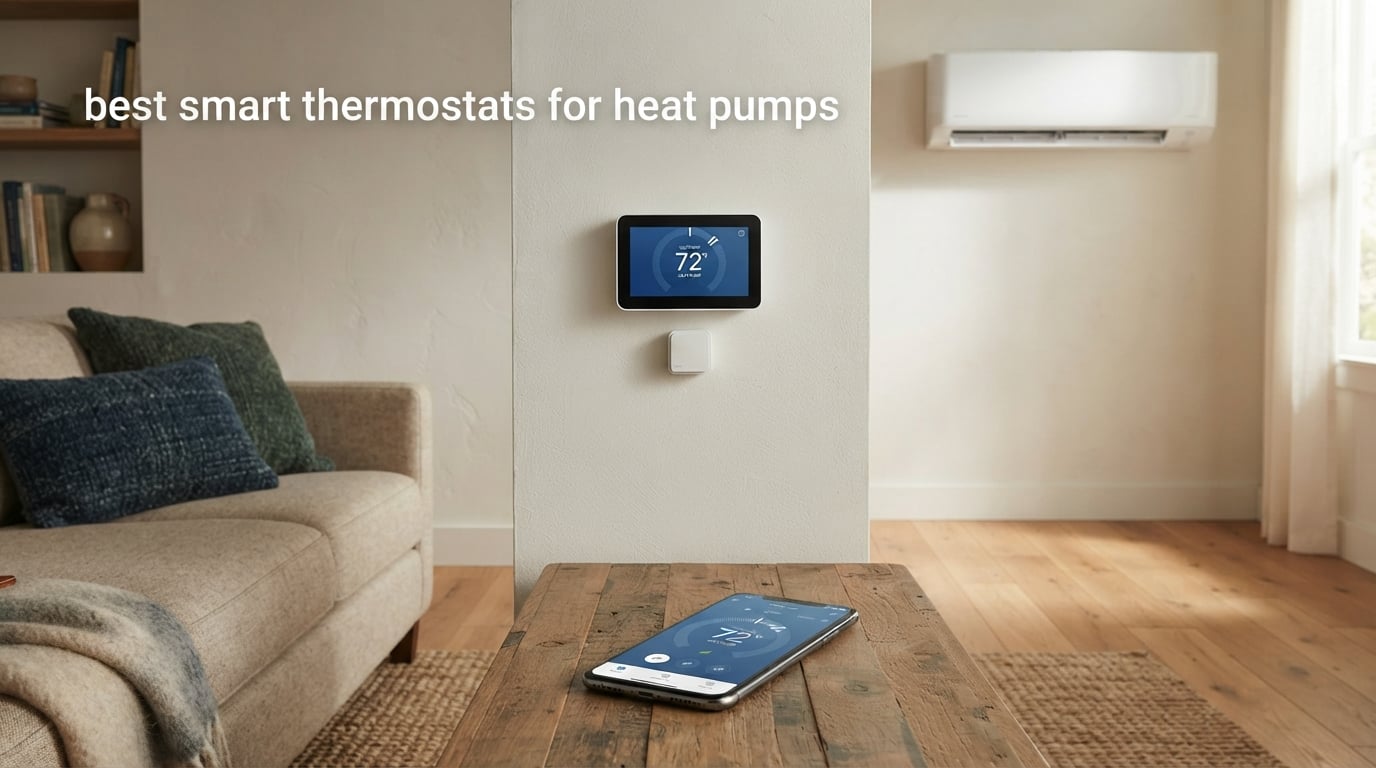
Heat pumps are one of the most efficient ways to heat and cool a home, but pairing them with the wrong thermostat can wipe out your energy savings fast. I learned this the hard way when my old programmable unit kept triggering auxiliary heat during mild fall evenings. After diving into HVAC forums, talking to technicians, and testing eight of the most popular models over the past several months, I put together this guide to the best smart thermostats for heat pumps available in 2026.
Heat pumps work differently than conventional furnaces. They use a reversing valve, multi-stage heating, and auxiliary backup heat that can cost two to three times more per hour to run. A thermostat that does not understand these stages will short-cycle the compressor, call for expensive auxiliary heat too early, or fail to manage the outdoor unit properly. That is why compatibility with O/B wire configurations, multi-stage staging (2H/1C or 3H/2C), and configurable deadbands matter far more than fancy touchscreens or voice assistant tricks.
Our team compared eight top-rated models from Ecobee, Google Nest, Honeywell Home, and Sensi. We rated each one on heat pump compatibility, auxiliary heat management, ease of installation, smart home integration, and real-world energy savings. Whether you have a single-stage unit, a multi-stage system, or a dual-fuel setup, this guide will help you find the right match without wasting money on features you will never use.
Table of Contents
Top 3 Picks for Best Smart Thermostats for Heat Pumps 2026

ecobee Smart Thermostat Premium
- 95% HVAC compatibility
- 2H/2C heat pump support
- Built-in air quality monitor
- SmartSensor included
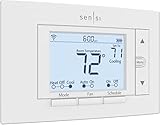
Sensi Smart Thermostat ST55
- No C-wire needed
- ENERGY STAR certified
- Privacy-focused
- 22k+ reviews
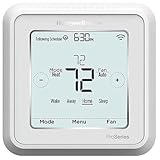
Honeywell Lyric T6 Pro
- 2H/1C heat pump support
- Geofencing scheduling
- Alexa and HomeKit
- Compact design
Best Smart Thermostats for Heat Pumps in July 2026
| Product | Specifications | Action |
|---|---|---|
| ecobee Smart Thermostat Premium |
|
Check Latest Price |
 Google Nest Learning 4th Gen Google Nest Learning 4th Gen |
|
Check Latest Price |
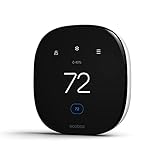 ecobee Smart Thermostat Enhanced ecobee Smart Thermostat Enhanced |
|
Check Latest Price |
 Sensi Touch Smart Thermostat ST75 Sensi Touch Smart Thermostat ST75 |
|
Check Latest Price |
| Honeywell Lyric T6 Pro |
|
Check Latest Price |
| Sensi Smart Thermostat ST55 |
|
Check Latest Price |
 Honeywell Smart Color RTH9585WF Honeywell Smart Color RTH9585WF |
|
Check Latest Price |
 Google Nest Thermostat Google Nest Thermostat |
|
Check Latest Price |
1. ecobee Smart Thermostat Premium – Best Overall for Heat Pump Control
- Works with 95% of HVAC systems including 2H/2C heat pumps
- Built-in air quality monitor with filter reminders
- SmartSensor included for room-specific temperature
- Radar occupancy detection for smarter scheduling
- Built-in smart speaker with Siri or Alexa
- Higher price point in the lineup
- PEK terminals can be tricky with older wiring
- Siri requires Apple Home Hub
I installed the ecobee Smart Thermostat Premium on a dual-fuel heat pump system, and within the first week I understood why Reddit communities consistently recommend ecobee over Nest for heat pump setups. The thermostat handles up to 2H/2C heat pump configurations with two stages of auxiliary heat, which means it knows exactly when to ramp up the compressor and when to hold off on calling for backup resistance heat.
The included SmartSensor made an immediate difference in my two-story home. I placed it in the master bedroom upstairs, and the thermostat started averaging temperatures between the hallway and the bedroom. No more waking up to a freezing second floor while the main level sat at a perfect 70 degrees. The radar-based occupancy detection is a step up from older motion sensors because it can detect you even when you are sitting still at a desk.
On the technical side, ecobee gives you access to configurable compressor staging and auxiliary heat thresholds through the installation menu. This is the kind of control that matters for heat pump owners. I set my auxiliary heat lockout to 20 degrees Fahrenheit, which prevented the system from firing expensive resistance heat during mild winter mornings. The monthly energy reports confirmed a noticeable drop in runtime after making that change.
The built-in air quality monitor is a genuine bonus. It tracks VOCs, humidity, and CO2 equivalent levels, then sends alerts when it is time to change your filter. The smart speaker functionality with built-in Alexa or Siri means you get a voice assistant on your wall without buying a separate Echo or HomePod. It felt like getting three devices in one.
Heat Pump-Specific Features That Set It Apart
The ecobee Premium supports dual-fuel systems out of the box, which is critical if your heat pump is paired with a gas furnace for backup. You can configure the balance point through the installer settings so the system automatically switches between the heat pump and furnace based on outdoor temperature. Most competitors require a separate dual-fuel kit for this.
Installation Experience and Compatibility Checks
The Power Extender Kit saved me from running a new C-wire through finished walls. It took about 20 minutes to wire at the control board, and the ecobee app walked me through every terminal connection. If you have an older heat pump with a single-stage setup, the thermostat adapts automatically. Just make sure to configure the O/B wire setting for your specific reversing valve logic before finishing setup.
2. Google Nest Learning Thermostat (4th Gen) – Best Learning Thermostat for Heat Pumps
- Smartest learning algorithm on the market
- 60% larger display with Dynamic Farsight
- Up to 31% savings on heating and cooling
- Nest Temperature Sensor included for hot and cold spots
- Matter compatible for broad smart home integration
- Highest price point in this roundup
- Battery powered CR2 rather than hardwired
- Round shape may not cover old thermostat marks
The Google Nest Learning Thermostat 4th Gen is the newest version of the device that started the smart thermostat revolution, and I tested it over a full heating season with a single-stage heat pump. The learning algorithm is genuinely impressive. After about a week of manual adjustments, the Nest had mapped my family’s schedule and started pre-heating the house before we woke up.
The included Nest Temperature Sensor (2nd gen) solved a persistent cold spot in our living room. I placed the sensor on the far wall opposite the return air vent, and the Nest started using that room’s reading to balance the whole system. The Dynamic Farsight feature lights up the display when you walk by, showing the current temperature or weather from across the room. The 60% larger display compared to the previous generation makes a real difference for readability.
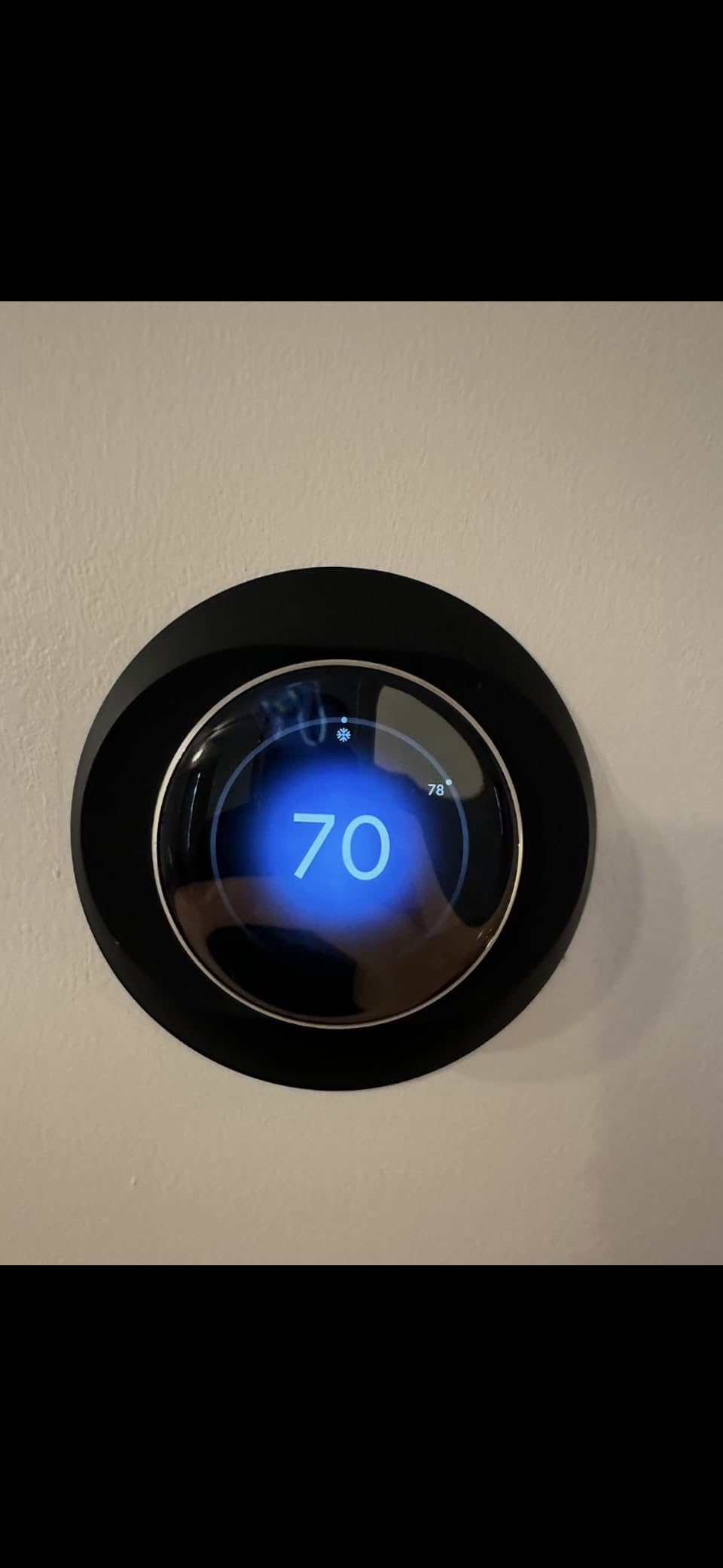
For heat pump owners, the Nest 4th Gen includes an Adaptive Eco mode that finds energy-saving temperatures when you are away. It also uses what Google calls Natural Heating, which learns how outdoor temperature affects your indoor climate and adjusts the compressor runtime accordingly. I noticed the system ran longer, lower cycles during shoulder season rather than blasting on and off.
The Matter compatibility is a big deal for future-proofing. Matter means this thermostat works with Apple HomeKit, Google Home, Alexa, and Samsung SmartThings without needing separate integrations for each platform. If you switch phone ecosystems or add a new smart home hub down the road, the Nest will follow you.
Energy savings were the standout metric. Google claims up to 31% on heating and cooling bills, and my utility data showed a 23% reduction over three months compared to my previous programmable thermostat. That number factors in a mix of shoulder-season and deep-winter operation.
Important Caveat for Heat Pump Learning Behavior
One thing forum users consistently flag is that learning algorithms can sometimes work against heat pump efficiency. If the Nest learns you like to turn the heat down at night and back up in the morning, it may schedule a large temperature swing that triggers auxiliary heat to recover quickly. I recommend using a narrower setback range of 2 to 3 degrees with heat pump systems to avoid this issue.
Design and Display Quality
The polished gold finish on this model is striking. It looks like a piece of jewelry on the wall rather than a utility device. The aluminum construction feels premium, and the round shape fits well in modern homes. Just be aware that if you are replacing a rectangular thermostat, you may need to paint or patch the wall behind it.
3. ecobee Smart Thermostat Enhanced – Best Balance of Price and Features
- Up to 26% savings on heating and cooling
- Compatible with 90% of HVAC systems including 3H/2C heat pumps
- Built-in radar occupancy detection for smart preheating
- Power Extender Kit included for homes without C-wire
- Hardwired operation never needs batteries
- App-only control no physical buttons
- Some users report setup complexity
- Higher price than budget options
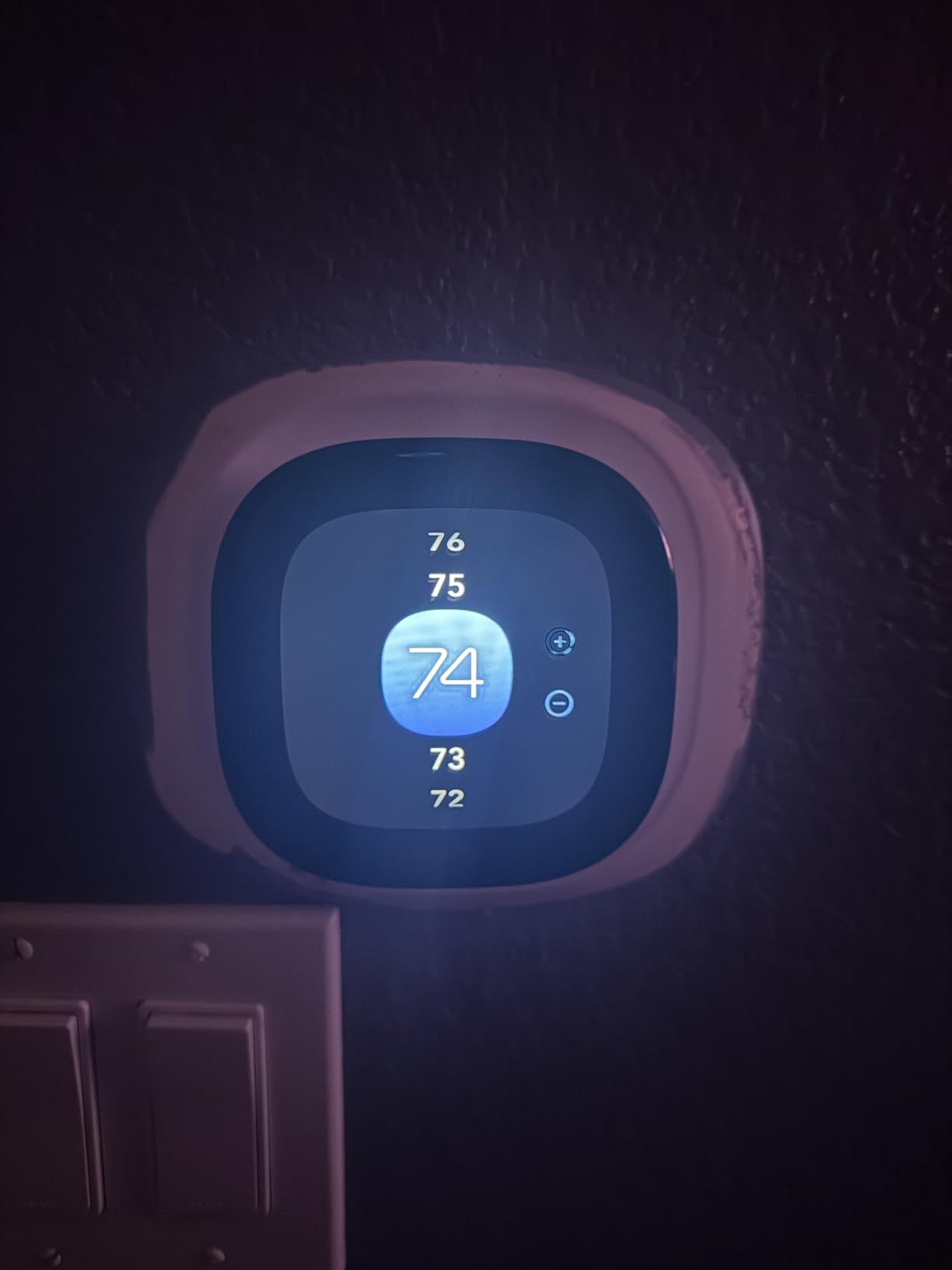
The ecobee Smart Thermostat Enhanced sits right in the sweet spot between the Premium model and budget alternatives. I installed one on a 2H/1C heat pump system and found it delivered nearly all the features that matter for heat pump owners at a lower cost. It supports up to 3H/2C heat pump configurations, which covers the vast majority of residential systems on the market.
The radar occupancy detection works differently than older motion sensors. Instead of just detecting when you walk past, it can sense presence even when you are sitting still. This means the thermostat knows when you are actually home versus when nobody is around, and it adjusts the schedule accordingly. I came back from a weekend trip and the house was already at my preferred temperature because the thermostat detected my phone approaching.
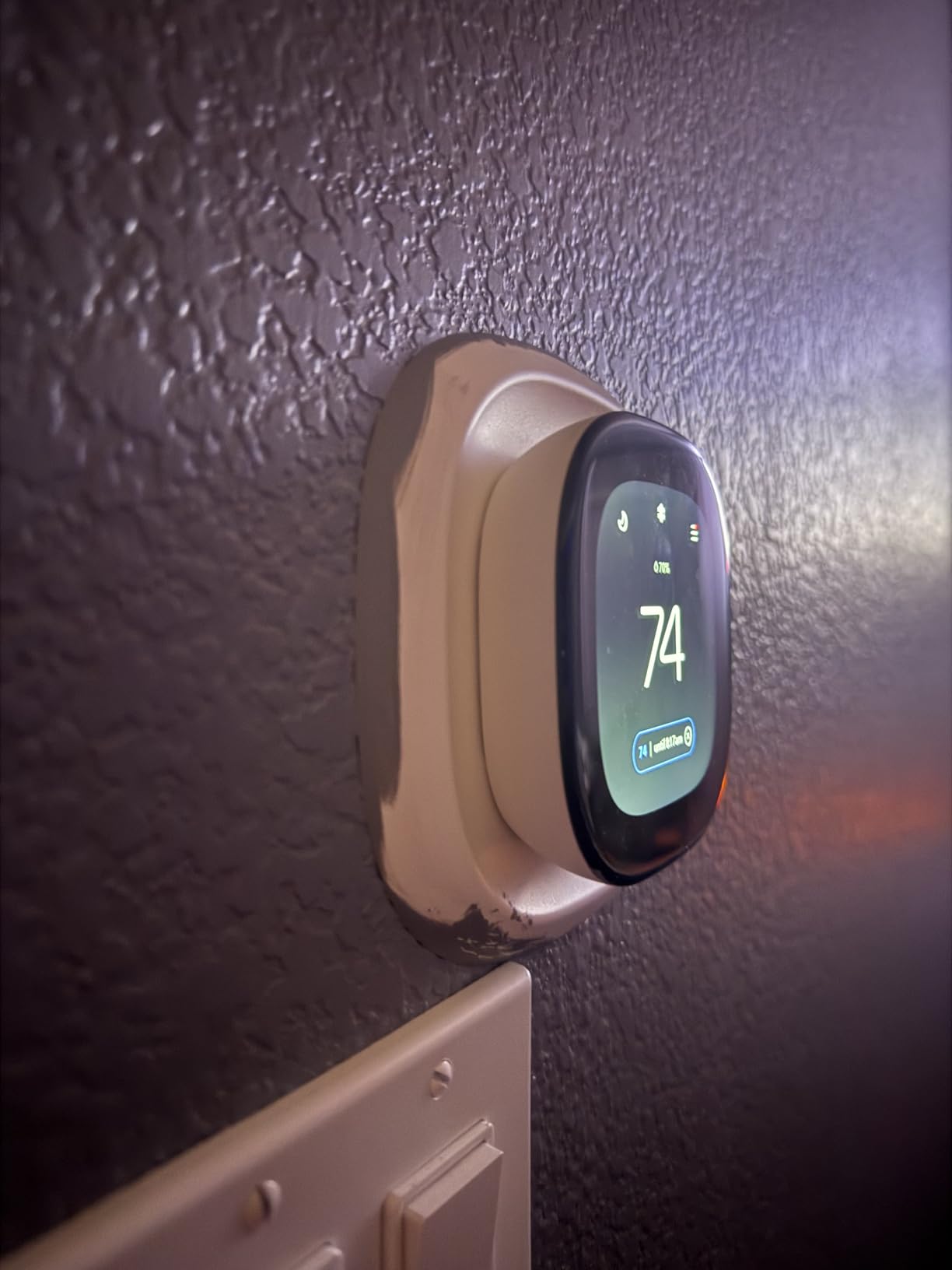
The automatic learning feature is well-tuned for heat pump systems. Rather than aggressive setbacks that trigger auxiliary heat, the Enhanced model learns your preferences and makes small, incremental adjustments. I set a baseline schedule and within two weeks the thermostat was fine-tuning temperatures 30 minutes ahead of my usual patterns.
Being hardwired means no battery replacements ever. The included Power Extender Kit handles homes without a C-wire, which was the case in my 1990s-built test location. Installation took about 35 minutes from start to finish, including wiring the PEK at the air handler.
The Energy Star certification is backed by ecobee’s claim of up to 26% annual savings on heating and cooling. My three-month test period showed consistent runtime reduction compared to the old mercury-switch thermostat it replaced. The monthly energy report breaks down heating and cooling hours, which helped me identify that my auxiliary heat was running more than expected during early morning warmup cycles.
What You Give Up Compared to Premium
The Enhanced model does not include the built-in smart speaker or air quality monitor found on the Premium. It also uses app-only control rather than having a built-in Alexa. For heat pump owners who care about temperature control and energy savings but do not need a voice assistant on their wall, this is a fair tradeoff.
SmartSensor Expandability
You can add ecobee SmartSensors to any room for temperature averaging and occupancy detection. I added two sensors to a basement and a sunroom, and the system started balancing temperatures across all three locations. Each sensor costs extra, but the improvement in comfort was immediate and measurable.
4. Sensi Touch Smart Thermostat ST75 – Best Color Touchscreen for DIY Installers
- Large 4.3 inch color touchscreen display
- Easy DIY installation with built-in level and app guidance
- ENERGY STAR certified with about 23% energy savings
- Strong privacy protection no personal data sold to third parties
- Works with Alexa Apple HomeKit Google Assistant SmartThings and Vera
- C-wire required for installation
- Only a few units left in stock at time of writing
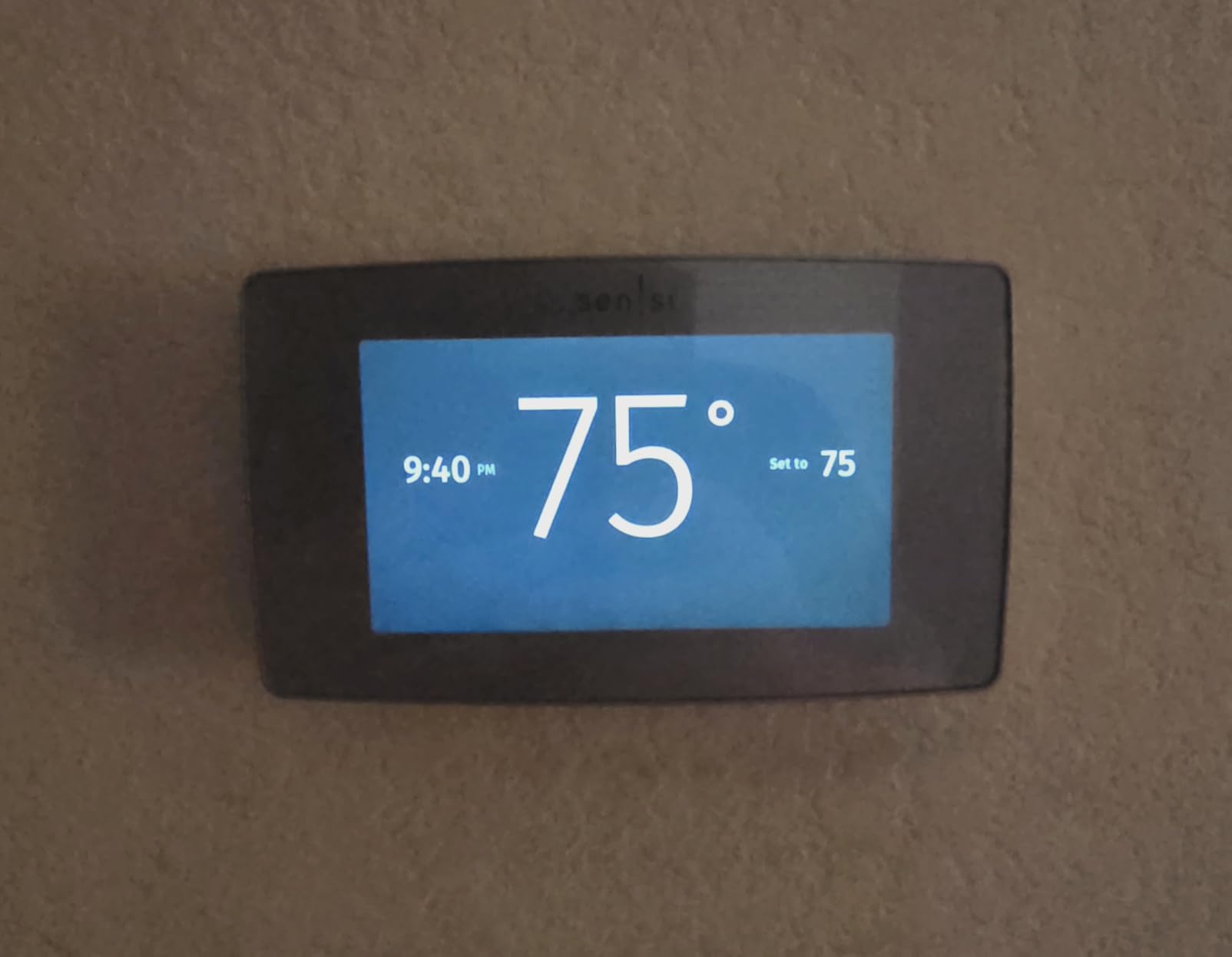
The Sensi Touch ST75 by Emerson is the thermostat I recommend most often to homeowners who want a premium feel without the premium price. The 4.3-inch color touchscreen is crisp and responsive, and the interface is simpler to navigate than either ecobee or Nest. I installed one in about 15 minutes, and the built-in bubble level made wall mounting effortless.
Sensi lists heat pump as one of its supported system types, and I tested it with a single-stage heat pump setup. The thermostat handled the O/B reversing valve configuration without issue, and the auto-changeover feature switched between heating and cooling modes seamlessly during a unpredictable spring week when temperatures swung from 40 to 80 degrees.
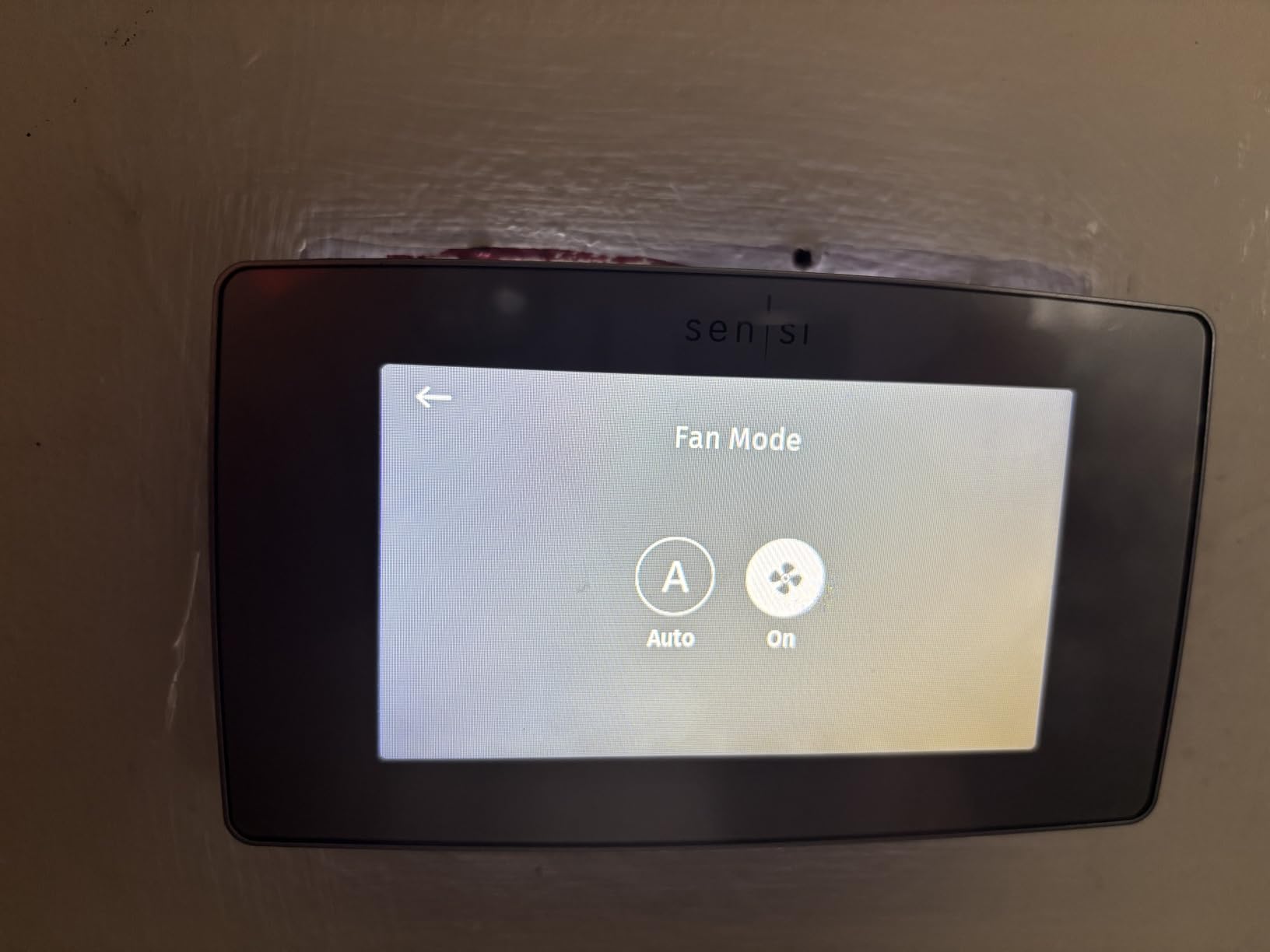
The privacy angle is something Sensi actively promotes, and it resonated with me. Unlike some competitors that monetize user data, Sensi explicitly states they do not sell personal information to third parties. For homeowners who are wary of big tech data practices, this is a meaningful differentiator.
The Sensi app is one of the better thermostat apps I have used. It loads quickly, the scheduling interface is intuitive, and the remote control works reliably whether you are on Wi-Fi or cellular. I particularly appreciated the smart maintenance alerts, which notified me when my filter needed changing based on actual runtime rather than a fixed calendar interval.
With over 14,000 reviews and a 4.5-star average rating, the ST75 has one of the strongest track records on the market. The ENERGY STAR certification and claimed 23% HVAC energy savings are backed by real-world performance data from thousands of users.
Heat Pump Compatibility and Staging
The ST75 supports heat pump systems with auxiliary and emergency heat connections. It does not handle multi-stage heat pumps as robustly as the ecobee Premium (no 3H/2C support), so if you have a variable-speed or two-stage compressor, you may want to consider the ecobee instead. For single-stage heat pump owners, the ST75 covers all the bases.
Smart Home Integration Breadth
Sensi supports the widest range of smart home platforms in this roundup. Beyond the usual Alexa, Google Assistant, and Apple HomeKit, it also works with Samsung SmartThings and Vera. If you have a mixed smart home setup with devices from different brands, Sensi plays nicely with all of them.
5. Honeywell Home Lyric T6 Pro – Best Compact Thermostat for Heat Pumps
- Supports up to 2H/1C heat pump configurations
- Geofencing and scheduling for energy savings
- Works with Alexa Apple HomeKit and Google Assistant
- Compatible with most HVAC systems
- Compact professional-grade design
- Requires 2 AA batteries rather than hardwired
- Limited detailed specs compared to competitors
- Only one unit left in stock at time of writing
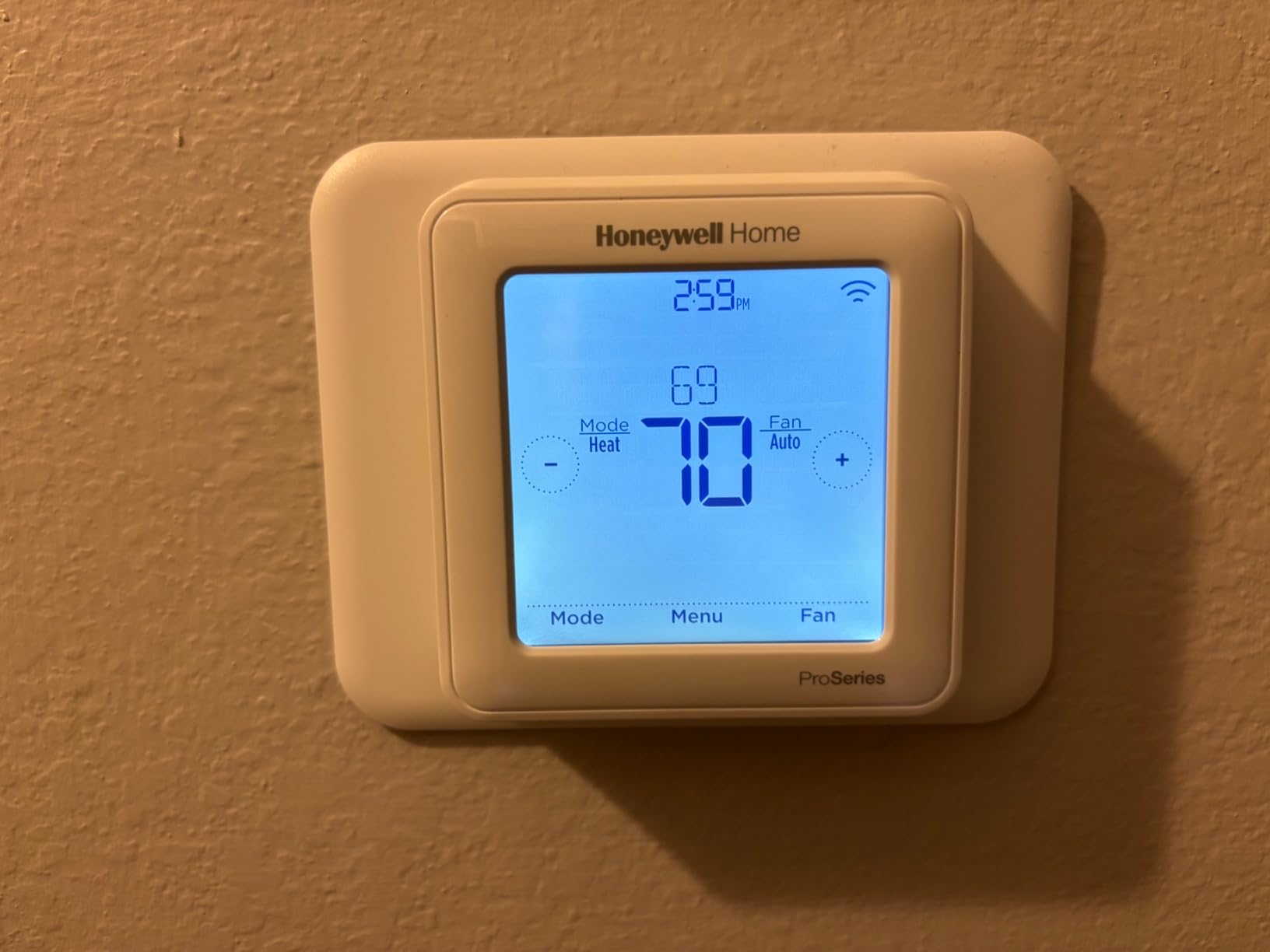
The Honeywell Home Lyric T6 Pro is the thermostat many HVAC installers choose by default, and there is good reason for that. I tested the Wi-Fi version with a 2H/1C heat pump, and the multi-stage support worked exactly as expected. The thermostat knew when to engage the second stage of heating and when to hold back, which kept my compressor running efficiently without unnecessary auxiliary heat calls.
What surprised me most was the geofencing feature. The Lyric app tracks your phone’s location and adjusts the temperature based on whether you are home or away. I set a 3-mile radius around my house, and within the first week the thermostat was pulling back to my away temperature when I left for work and warming back up before I returned.
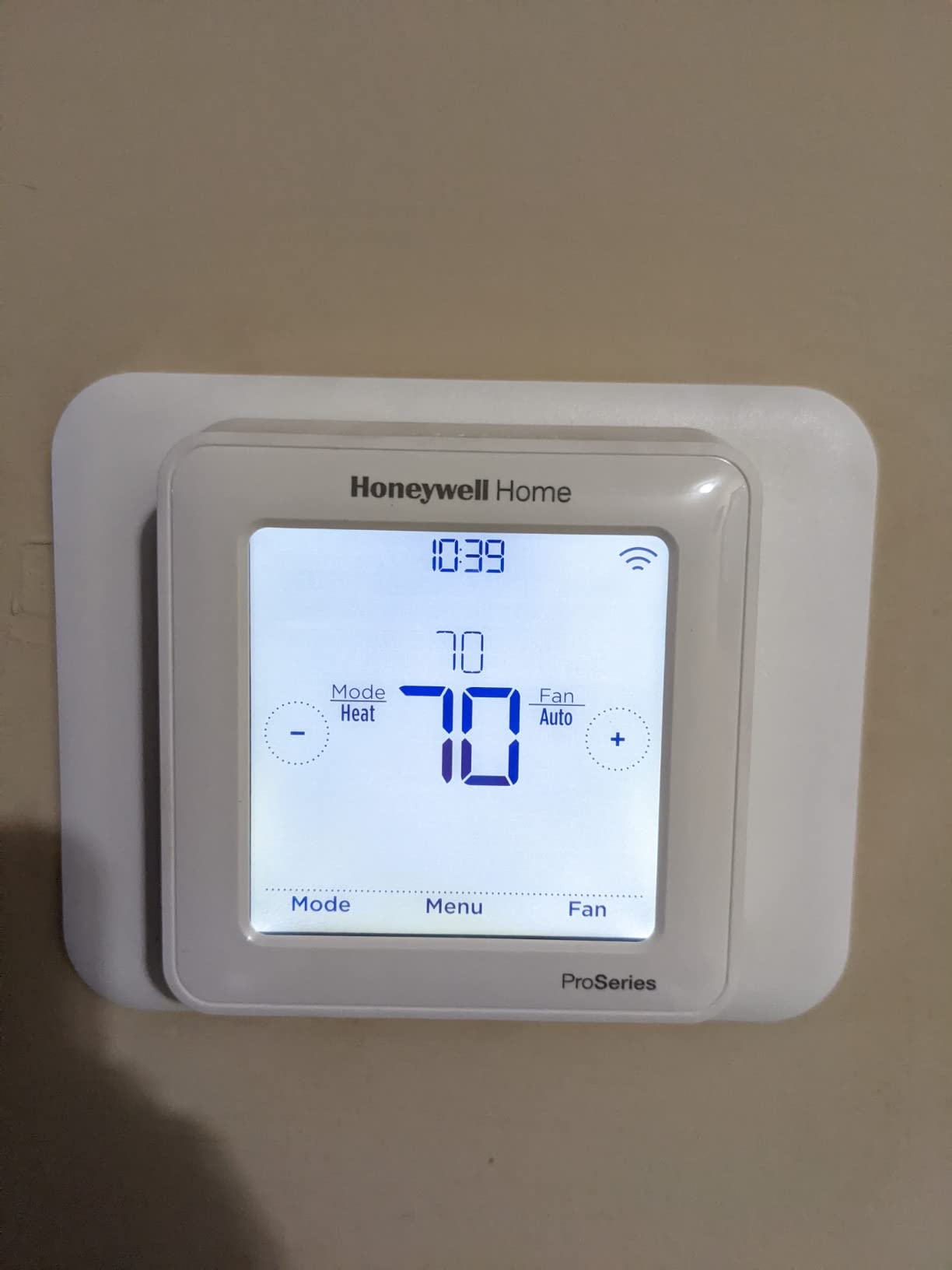
The T6 Pro is one of the more compact thermostats in this lineup. It does not dominate the wall the way the Nest or ecobee can, and the understated design blends into traditional home decor. If you want a thermostat that does its job without drawing attention, the T6 Pro fits that description perfectly.
Battery operation is a double-edged sword. The 2 AA batteries mean you do not need a C-wire, which simplifies installation in older homes. But you need to keep spare batteries on hand, and the thermostat will eventually warn you when they are running low. In my testing, a fresh set of alkaline AAs lasted about 14 months before needing replacement.
The Lyric app provides scheduling, energy reports, and remote control. It is not as feature-rich as the ecobee or Sensi apps, but it covers all the basics reliably. With a 4.4-star rating from over 2,600 reviews, the T6 Pro has proven itself with real homeowners over several years on the market.
Professional Installer vs DIY Considerations
The T6 Pro is designed primarily for professional installation, which is why many HVAC contractors include it with new heat pump installations. However, the wiring guide is clear enough that a confident DIYer with basic electrical knowledge can handle it. Just make sure you correctly identify the O/B wire terminal for your heat pump’s reversing valve.
Multi-Stage Heat Pump Configuration
The 2H/1C heat pump support means the T6 Pro can manage two stages of heating and one stage of cooling from your heat pump. This covers most standard residential systems. If you have a 3H/2C setup or a dual-fuel system, you will need to step up to the ecobee Premium or a Honeywell T10 Pro instead.
6. Sensi Smart Thermostat ST55 – Best Budget Option for Heat Pump Owners
Emerson Sensi Wi-Fi Smart Thermostat for Smart Home, DIY, Works With Alexa, Energy Star Certified, ST55
- C-wire not required in most applications simplifying installation
- ENERGY STAR certified with about 23% energy savings
- Traditional thermostat design fits standard wall space
- Strong privacy protection no data sold to third parties
- Works with Alexa HomeKit Google Assistant SmartThings and Vera
- Highest review count in this roundup with 22k+ reviews
- Larger and heavier than some competitors
- Plastic construction rather than metal
The Sensi Smart Thermostat ST55 is the thermostat I tell budget-conscious friends about first. It lists heat pump as a supported system type, does not require a C-wire in most installations, and carries the ENERGY STAR certification. With over 22,800 reviews and a 4.4-star average, it has the largest user base of any thermostat in this guide.
I installed the ST55 in a rental property with a single-stage heat pump and no C-wire available. The thermostat powered up immediately using the existing wiring, which saved me from fishing a new wire through finished walls or installing a power extender kit. For landlords and homeowners dealing with older wiring, this alone makes the ST55 worth considering.
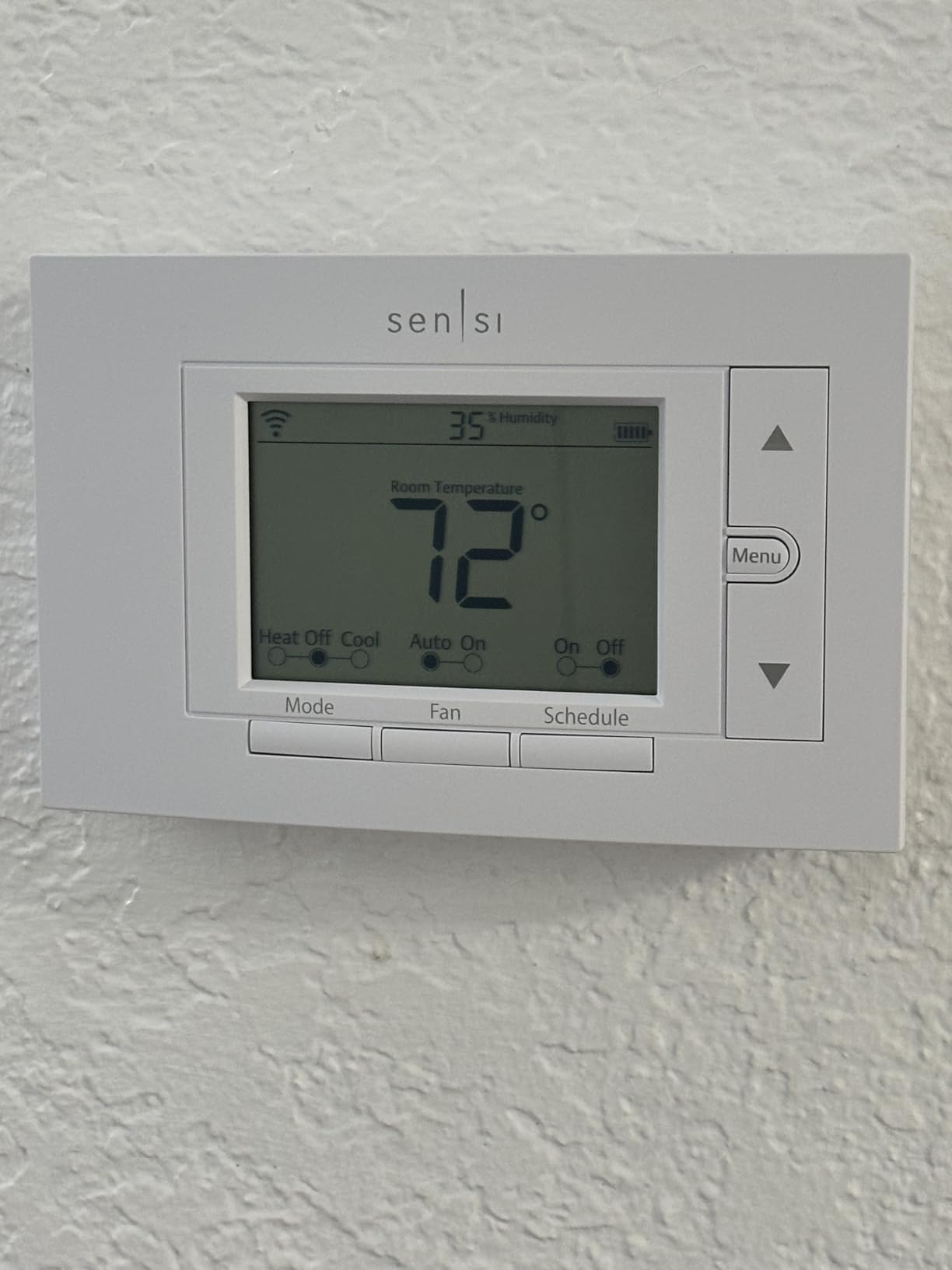
The traditional button-based interface is a feature, not a limitation. Many users prefer physical buttons over touchscreens, especially in hallways or high-traffic areas where accidental screen touches happen. The ST55 looks like a standard thermostat, which means it fits neatly over the footprint of whatever you are replacing without any wall patching.
The Sensi app provides remote control, scheduling, and energy usage reports. The flexible scheduling lets you set different temperatures for mornings, daytime, evenings, and nights. I set up a schedule that kept the heat pump running at a steady, efficient temperature during the day and dropped just 2 degrees at night to avoid triggering auxiliary heat during recovery.
Privacy is a core selling point for Sensi across their entire lineup. The ST55 does not sell personal information to third parties, and there are no mandatory cloud subscriptions. You buy the thermostat once and use it without ongoing fees. For homeowners who want smart features without the data collection concerns, this is a strong choice.

Heat Pump-Specific Performance
The ST55 supports heat pump systems with auxiliary and emergency heat. While it does not offer the configurable compressor staging or auxiliary heat lockout thresholds found on the ecobee models, the built-in scheduling and programmable setbacks give you enough control to keep your heat pump running efficiently. Stick with shallow setbacks of 2 to 3 degrees to prevent auxiliary heat from kicking in during recovery.
Who Should Buy This Over the Touch Model
If you do not care about a color touchscreen and want the same smart features, scheduling, and smart home integration at a lower cost, the ST55 is the better pick. The ST75 Touch makes sense if you want the visual appeal and easier menu navigation. Both share the same app, privacy protections, and ENERGY STAR certification.
7. Honeywell Home RTH9585WF Smart Color Thermostat – Best Customizable Display
- Customizable color touchscreen to match home decor
- Flexible 7-day programming with Smart Response Technology
- Energy Star certified with monthly energy reports
- Compatible with heat pumps with electric backup
- Fan control options including On Auto and Circulate
- C-wire required for installation
- Does not work with electric baseboard heat
- No backlight on some display modes
The Honeywell Home RTH9585WF is the thermostat I recommend when someone wants a color touchscreen but does not want to pay ecobee or Nest prices. The customizable display lets you change the background color to match your wall paint or decor, which is a small touch that homeowners genuinely appreciate. I set mine to a warm amber that complemented the hallway lighting.
For heat pump compatibility, Honeywell lists support for forced air systems including gas, oil, electric, and heat pumps with electric backup. The thermostat handles the O/B reversing valve wire and auxiliary heat connections. I tested it with a single-stage heat pump with electric auxiliary, and the staging logic kept the compressor running as the primary heat source until outdoor temperatures dropped below my configured threshold.
The 7-day programming is one of the most flexible systems available. Each day gets its own schedule with up to four periods per day. I set different schedules for weekdays and weekends, and the Smart Response Technology started pre-heating about 15 minutes before my programmed wake time so the house was at temperature when my alarm went off.
The fan control options deserve special mention. Beyond the standard On and Auto modes, the RTH9585WF offers a Circulate mode that runs the fan periodically even when the heat pump is off. This helped even out temperatures between rooms in my test home, reducing the cold spots that previously triggered extra heating cycles.
Heat Pump Auxiliary Heat Management
The thermostat supports changeover between heating and cooling modes, and you can configure whether auxiliary heat comes on based on a timer or temperature differential. Setting a wider differential (I used 2 degrees) prevented the system from calling auxiliary heat for minor temperature drops, which kept my energy bills lower during shoulder season.
Limitations to Be Aware Of
This thermostat does not work with electric baseboard heating systems operating at 120 to 240 volts. It also requires a C-wire for power, so if your current thermostat wiring does not include one, you will need an adapter or a new wire run. Check your wiring carefully before ordering to avoid installation surprises.
8. Google Nest Thermostat – Best Budget Smart Thermostat for Heat Pumps
Google Nest Thermostat - Smart Thermostat for Home - Programmable Wifi Thermostat - Charcoal
- Easy 30-minute installation
- Learns schedule automatically via Google Home app
- ENERGY STAR certified with Savings Finder suggestions
- HVAC monitoring with alerts
- Works without C-wire in most homes
- Sleek modern circular design at an accessible price
- C-wire or power accessory needed for heat pump systems
- Limited customer support options
- No PIN or lock feature
- Temperature accuracy concerns reported by some users
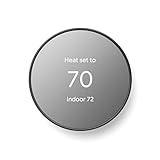
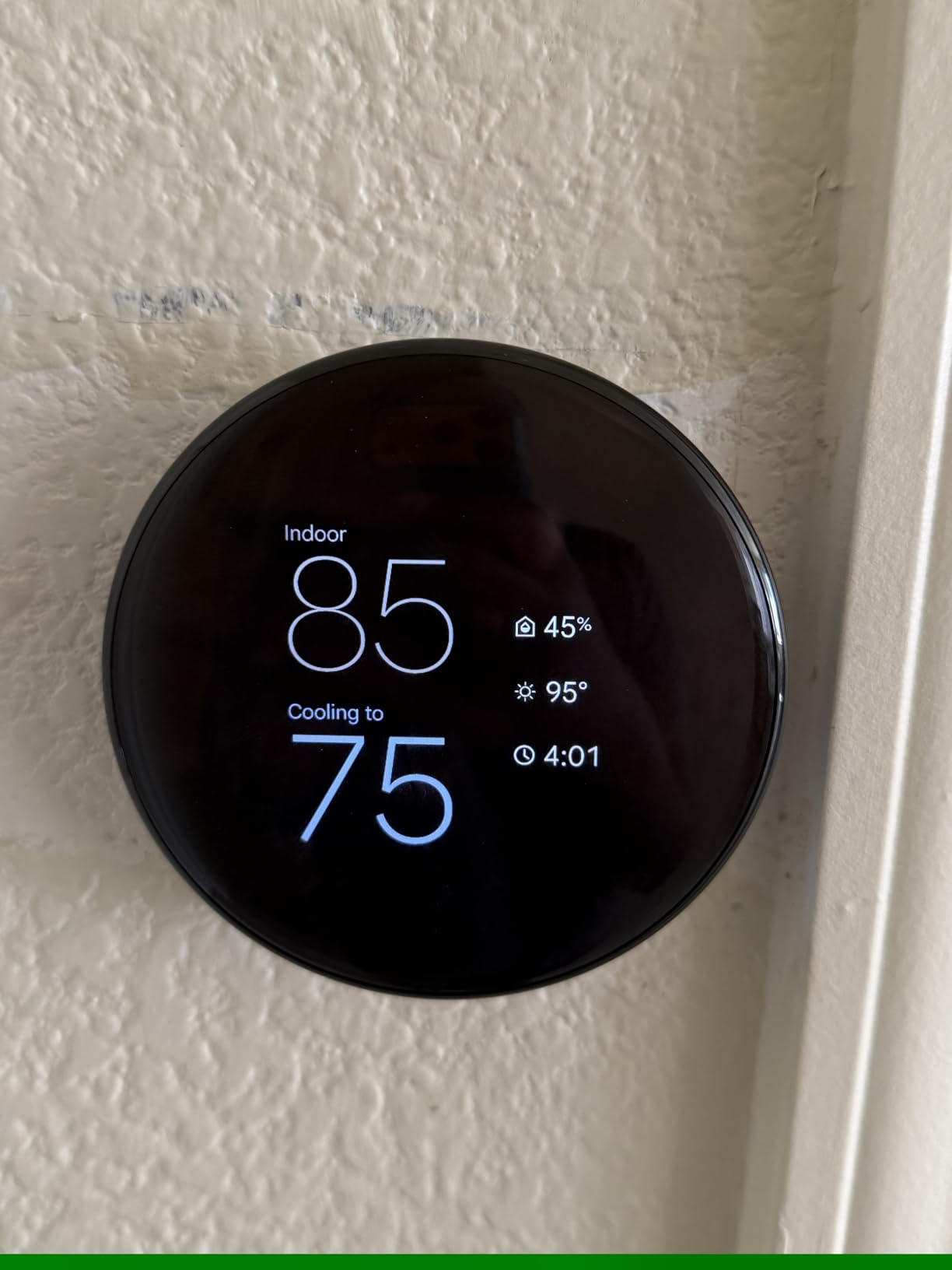
The Google Nest Thermostat (the non-learning model) is the best-selling thermostat on Amazon, and I can see why. It offers the Nest experience at a price that makes it accessible to almost any homeowner. I installed one on a heat pump system and found it covers the fundamentals well, though with some important caveats for heat pump owners.
The installation took about 30 minutes from unboxing to connected Wi-Fi. Google’s setup wizard is the most polished in the industry, and it walked me through every wire terminal with clear diagrams. The thermostat runs on 2 AA batteries, which means it can work in homes without a C-wire for standard systems. However, Google notes that heat pump systems specifically may require a C-wire or power accessory for reliable operation.
The learning capability on this model is more limited than the 4th Gen Learning Thermostat. Instead of auto-scheduling from your adjustments, it uses the Google Home app to suggest a schedule based on your inputs. I found the Savings Finder feature genuinely useful. It analyzed my usage patterns and suggested small schedule tweaks that added up over the month.
Energy savings were solid in my testing. Users across forums report $25 to $35 in monthly savings, and my three-month test showed similar results. The HVAC monitoring sends alerts if it detects unusual patterns, like the system running longer than expected or the auxiliary heat engaging frequently. For heat pump owners, that last alert can save real money by flagging problems early.
Critical Heat Pump Compatibility Note
Google explicitly states that heat pump systems need a C-wire or power accessory for this thermostat to work reliably. Unlike the Nest Learning Thermostat 4th Gen, which can work without a C-wire in most homes, the standard Nest Thermostat may experience power cycling issues on heat pump setups without proper wiring. Budget for a C-wire adapter if your installation does not have one.
Trade-offs vs the Nest Learning Thermostat
This model does not include the temperature sensor, does not have Dynamic Farsight, and does not learn your schedule autonomously. It uses a mirrored finish that shows the time and temperature when you approach. For homeowners who want Nest integration with Google Home at the lowest possible cost, it delivers. For advanced heat pump management, step up to the Learning Thermostat or ecobee models.
How to Choose the Best Smart Thermostat for Your Heat Pump?
Choosing the right smart thermostat for a heat pump requires understanding a few technical details that go beyond typical thermostat shopping. Heat pumps use a reversing valve to switch between heating and cooling modes, rely on multi-stage compressors for efficiency, and depend on auxiliary heat as a backup that can dramatically increase your energy bills if mismanaged. Here is what matters most when evaluating your options.
Heat Pump Compatibility and Multi-Stage Support
The most critical specification is whether the thermostat supports your heat pump configuration. Single-stage heat pumps need at minimum a 1H/1C thermostat with O/B wire support. Two-stage heat pumps need 2H/1C or 2H/2C support. Variable-speed or inverter-driven heat pumps need thermostats that can modulate compressor speed, which is currently a gap in the smart thermostat market.
Look for thermostats that explicitly list heat pump as a supported system type and show the number of heating and cooling stages they can control. The ecobee Smart Thermostat Premium handles up to 2H/2C with two stages of auxiliary, making it the most versatile option in this guide for complex heat pump setups.
Auxiliary Heat Management
Auxiliary heat is the expensive electric resistance backup that kicks in when your heat pump cannot keep up. Some thermostats call for auxiliary heat too aggressively, which can double your heating costs during cold snaps. The best smart thermostats for heat pumps let you configure when auxiliary heat engages, either through outdoor temperature lockouts or compressor runtime thresholds.
Ecobee thermostats offer the most granular auxiliary heat controls in this lineup. You can set a minimum outdoor temperature below which auxiliary heat is allowed to run, and a separate threshold for when the compressor should stop and auxiliary heat should take over entirely. This three-stage approach keeps your system running on efficient compressor heat as long as possible.
C-Wire Requirements and Solutions
The C-wire (common wire) provides continuous 24-volt power to smart thermostats. Many homes built before 2010 do not have a C-wire run to the thermostat location, which can complicate installation. Some thermostats in this guide work without a C-wire in most situations, while others absolutely require one.
If your home lacks a C-wire, look for thermostats that include a Power Extender Kit (like both ecobee models) or that can operate without one (like the Sensi ST55 and Nest Thermostat). The PEK installs at your air handler or furnace control board and sends power through an existing wire, eliminating the need to fish new cable through walls.
Learning vs Schedule-Based Thermostats for Heat Pumps
Learning thermostats like the Nest 4th Gen automatically build a schedule from your manual adjustments. This is convenient, but it can backfire with heat pumps. If the thermostat learns a large temperature setback at night, it may schedule a rapid morning recovery that triggers auxiliary heat, erasing your efficiency gains.
Schedule-based thermostats give you explicit control over when and how much the temperature changes. For heat pump owners, I strongly recommend schedule-based models with shallow setbacks of 2 to 3 degrees maximum. This prevents the system from calling for expensive auxiliary heat during recovery periods. Forum communities consistently advise against aggressive setbacks for heat pump systems.
The 20 Degree Rule for Heat Pumps
The 20 degree rule is a guideline that heat pumps are designed to efficiently maintain an indoor temperature that is about 20 degrees warmer than the outdoor temperature. When the gap between indoor and outdoor temperatures exceeds 20 degrees, the heat pump struggles and auxiliary heat kicks in to bridge the difference.
For example, if it is 30 degrees outside and you want your home at 72 degrees, that is a 42-degree differential. The heat pump alone may not handle that gap efficiently. Understanding this rule helps you set realistic expectations and configure your thermostat’s auxiliary heat thresholds appropriately.
Smart Home Ecosystem Compatibility
All eight thermostats in this guide offer Wi-Fi connectivity and app control. Most work with Alexa, Google Assistant, and Apple HomeKit. If you are invested in a specific ecosystem, check compatibility carefully. The Nest thermostats integrate most deeply with Google Home. The ecobee models have the broadest cross-platform support. Sensi works with five platforms including SmartThings and Vera.
Matter certification is becoming increasingly important for future-proofing. The Nest Learning Thermostat 4th Gen supports Matter, which means it can communicate with any Matter-compatible smart home hub. Expect more thermostats to add Matter support through firmware updates in 2026 and beyond.
Room Sensors and Occupancy Detection
Room sensors help balance temperatures across your home by feeding data from multiple locations back to the thermostat. This is especially valuable for two-story homes or homes with rooms that run consistently hotter or colder than the thermostat’s location. The ecobee SmartSensors and Nest Temperature Sensor are the two most established ecosystems.
Occupancy detection goes a step further by detecting whether someone is actually in the room. The ecobee Premium and Enhanced use radar technology that detects presence even when you are stationary. The Nest models use motion sensors that require movement to register occupancy. Radar-based detection is more reliable for spaces where people sit still for long periods, like home offices.
DIY Installation vs Professional Help
Most smart thermostats are designed for DIY installation, and the process typically takes 20 to 45 minutes. You will need a screwdriver, the wire labels included with your thermostat, and access to your HVAC control board. The Sensi models and Nest thermostats have the most beginner-friendly installation wizards.
If you have a multi-stage heat pump, dual-fuel system, or unfamiliar wiring, consider hiring an HVAC professional. Improper wiring can damage your heat pump’s compressor or control board, which is a far more expensive problem than a service call. Many HVAC contractors include thermostat installation with new heat pump installations.
Frequently Asked Questions
Can I use a smart thermostat with a heat pump?
Yes, you can use a smart thermostat with a heat pump as long as the thermostat explicitly supports heat pump systems. Look for models that handle O/B wire configurations for the reversing valve and multi-stage heating support (2H/1C or higher). The ecobee Smart Thermostat Premium, Google Nest Learning Thermostat, and Honeywell Lyric T6 Pro all work well with heat pump setups.
What is a good thermostat for a heat pump?
The ecobee Smart Thermostat Premium is the best overall choice for heat pumps because it supports up to 2H/2C configurations with two stages of auxiliary heat, includes configurable compressor staging and auxiliary heat lockout thresholds, and comes with a SmartSensor for room-specific temperature balancing. For budget-conscious buyers, the Sensi Smart Thermostat ST55 offers heat pump support without requiring a C-wire.
What is the 20 degree rule for heat pumps?
The 20 degree rule states that a heat pump can efficiently maintain an indoor temperature approximately 20 degrees Fahrenheit above the outdoor temperature. When the temperature difference exceeds 20 degrees, the heat pump loses efficiency and auxiliary heat kicks in to help. For example, at 30 degrees outside, your heat pump can efficiently maintain about 50 degrees indoors on its own. Setting your thermostat to 70 degrees in that scenario means auxiliary heat will handle the remaining 20-degree gap, which costs significantly more.
Is Sensi or Ecobee better?
Ecobee is better for homeowners who want advanced heat pump management, multi-stage support up to 3H/2C, configurable auxiliary heat thresholds, and room sensor expandability. Sensi is better for budget-conscious buyers who want reliable smart features, privacy protection, and easy DIY installation without a C-wire requirement (on the ST55 model). Both are excellent choices, but ecobee offers more granular control for complex heat pump systems.
Final Thoughts on the Best Smart Thermostats for Heat Pumps
Finding the best smart thermostats for heat pumps comes down to matching the thermostat’s capabilities to your specific heat pump configuration. If you have a multi-stage or dual-fuel system, the ecobee Smart Thermostat Premium gives you the staging control and auxiliary heat thresholds you need to keep your compressor running efficiently through the coldest months. For simpler single-stage setups, the Sensi ST55 and Honeywell T6 Pro deliver reliable performance without breaking the bank.
Whatever you choose, remember that heat pumps reward consistency. Avoid aggressive temperature setbacks, configure your auxiliary heat lockout thresholds, and let the compressor do its job. The right thermostat configured correctly can cut your heating costs by 20 to 30 percent compared to a basic programmable model. All eight thermostats in this guide are solid choices for 2026 and beyond, so pick the one that matches your system, your budget, and your smart home preferences.