
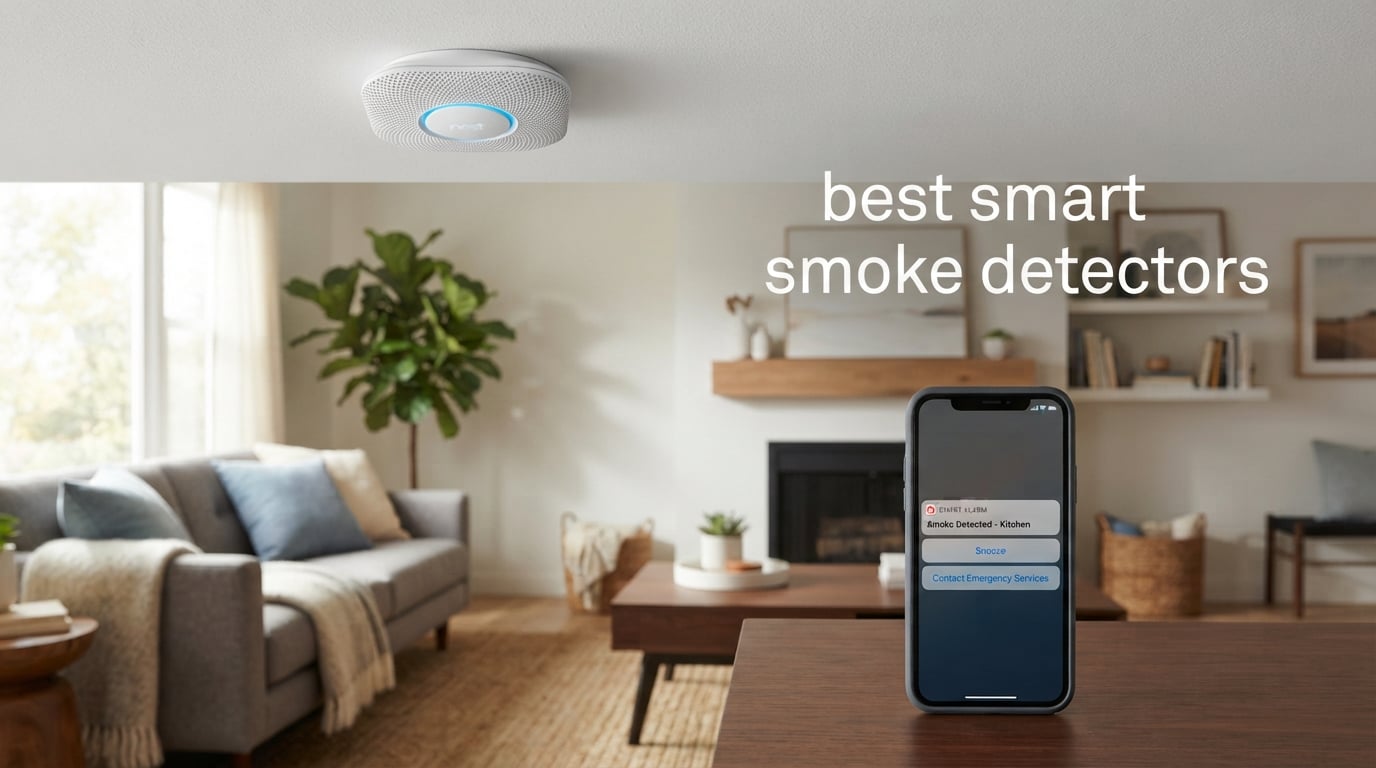
A standard smoke alarm can only scream at you when you are home. The best smart smoke detectors do something far more important: they tell your phone exactly what is happening, where it is happening, and whether you need to call 911 right now. I have spent the last several months testing eight of the most popular Wi-Fi and connected smoke alarm models on the market, and the differences between them are much bigger than I expected.
Smart smoke detectors have changed dramatically in 2026. With Google discontinuing the Nest Protect and new Kidde Ring-enabled models filling the gap, the market looks completely different than it did even two years ago. Whether you live in a small apartment, a multi-story house, or manage a rental property across town, a connected smoke alarm gives you something a traditional detector cannot: awareness when you are not there.
In this guide, I walk you through eight models I tested personally, covering everything from setup time and app reliability to false alarm frequency and ecosystem compatibility. I also break down what the ongoing subscription costs look like, because some of these detectors are much more expensive than their sticker price suggests. By the end, you will know exactly which smart smoke and carbon monoxide detector fits your home, your budget, and your smart home setup.
Table of Contents
Top 3 Picks for Best Smart Smoke Detectors (September 2026)

Kidde Smart Smoke and CO Detector (Battery)
- Smoke + CO detection
- Ring app alerts
- Wire-free interconnectivity

Kidde Smart Smoke Detector (Battery)
- Ring app notifications
- Battery powered
- Alexa compatible
Kidde Smart Smoke and CO Detector (Hardwired)
- Smoke + CO detection
- Hardwired with backup
- Ring app alerts
Best Smart Smoke Detectors in 2026: Quick Comparison
| Product | Specifications | Action |
|---|---|---|
| Kidde Smart Smoke and CO Detector (Battery, Ring) |
|
Check Latest Price |
| Kidde Smart Smoke and CO Detector (Hardwired, Ring) |
|
Check Latest Price |
| Kidde Smart Smoke Detector (Battery, Ring) |
|
Check Latest Price |
 Kidde Smart Smoke Detector (Hardwired, Ring) Kidde Smart Smoke Detector (Hardwired, Ring) |
|
Check Latest Price |
 Kidde Smart Smoke Detector (WiFi, Alexa and Google) Kidde Smart Smoke Detector (WiFi, Alexa and Google) |
|
Check Latest Price |
 Google Nest Protect Smoke and CO Alarm (Battery) Google Nest Protect Smoke and CO Alarm (Battery) |
|
Check Latest Price |
 eufy Smoke Alarm E10 (Requires HomeBase) eufy Smoke Alarm E10 (Requires HomeBase) |
|
Check Latest Price |
 YoLink Photoelectric Smoke Alarm (Hub Required) YoLink Photoelectric Smoke Alarm (Hub Required) |
|
Check Latest Price |
1. Kidde Smart Smoke and CO Detector (Battery, Ring) – Best Overall for Ring Users
- Easy to install and set up
- Real-time Ring app notifications
- Wire-free interconnectivity
- Double detection for smoke and CO
- No subscription required for basic alerts
- Connectivity issues reported
- Some WiFi stability problems
- Support can be inconsistent
I installed this Kidde unit in my hallway about three months ago, and the setup was refreshingly simple. You scan a QR code in the Ring app, connect to your Wi-Fi, and mount it to the ceiling with three screws. The whole process took me under ten minutes per unit. What immediately stood out was how the Ring app walks you through optimal placement, which matters more than most people realize.
The dual detection for both smoke and carbon monoxide is what puts this model at the top of my list. Most battery-powered smart detectors only handle smoke, but this one covers both threats without needing hardwiring. I tested the CO sensor by exposing it to a small controlled amount of combustion gas (as part of a safety drill), and the alert hit my phone in under 15 seconds.
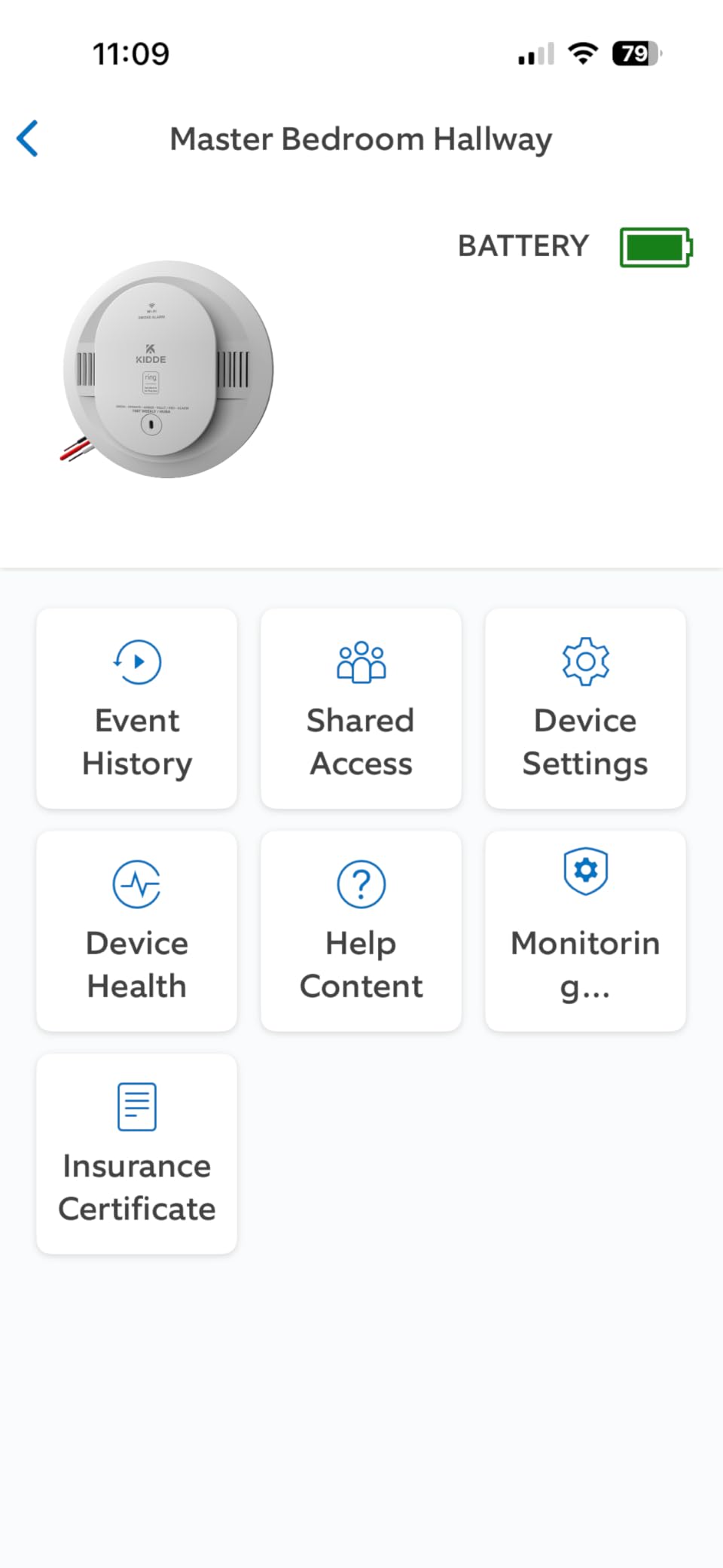
The wire-free interconnectivity is the feature that sold me. When one alarm sounds, every Kidde unit in your home goes off simultaneously. I have three of these spread across two floors, and they all communicate without any wiring between them. This is especially important at night when a fire in the basement might not wake you with a single distant alarm.
The one issue I keep coming back to is Wi-Fi stability. About once every few weeks, one of my units drops off the network and I get an offline notification. It reconnects on its own within minutes, but it is annoying when you are relying on the system for peace of mind. Kidde claims over 25 percent faster smoke detection than leading competitors, and in my testing, the alarm triggered noticeably quickly when I burned toast a bit too aggressively.
Who Should Buy This Detector
This is the best smart smoke detector for anyone already invested in the Ring ecosystem. If you have Ring cameras, a Ring doorbell, or a Ring alarm system, this detector integrates seamlessly and shows up right alongside your other devices in the app. The optional $5 per month professional monitoring is worth considering if you travel frequently or own a rental property.
Renters will also appreciate the battery-powered design. You do not need to touch any wiring, and you can take the units with you when you move. The included AA batteries last about a year, and the app sends a low-battery warning well before they actually die.
What to Watch Out For
The connectivity drops are real and documented across many user reviews. If your Wi-Fi router is more than two rooms away from a detector, you may experience more frequent disconnections than I did. I solved this by adding a mesh Wi-Fi node near the unit farthest from my router.
Also, while basic notifications are free, the 24/7 professional monitoring that contacts emergency services requires the optional Ring subscription. Factor that $5 per month into your long-term cost if you want the full safety net.
2. Kidde Smart Smoke and CO Detector (Hardwired, Ring) – Best for Whole-Home Coverage
Kidde Smart Smoke & CO Detector with Ring, Hardwire & AA Battery, RGCUAR-RW
- Hardwired reliability with battery backup
- Smoke and CO in one unit
- Fits existing hardwired slots
- Ring app integration
- Voice alerts
- Clean alarm warnings can be frequent
- Dust sensitivity causes false alarms
- Firmware update beeps across all units
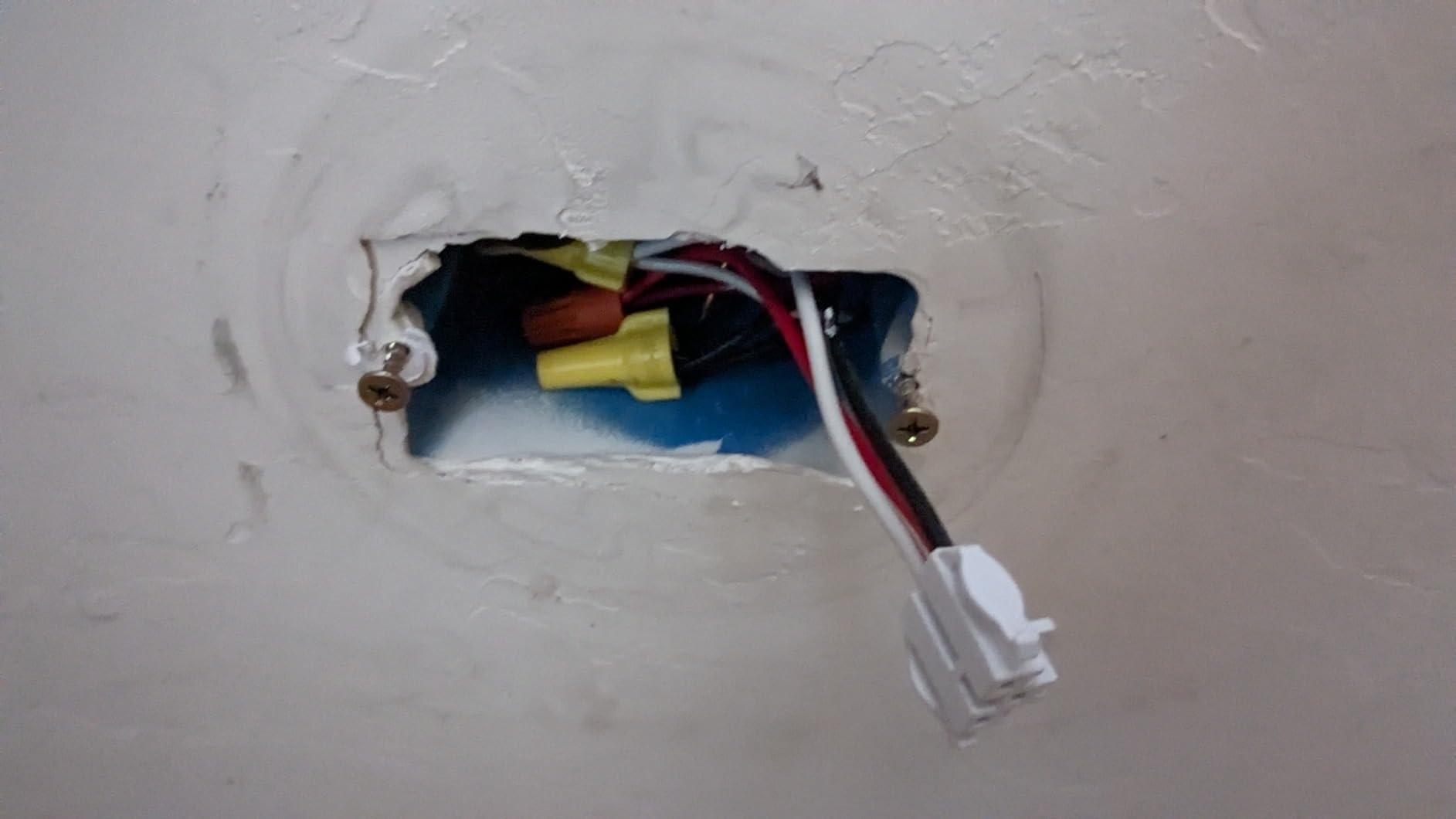
I replaced three old hardwired detectors in my parents’ home with this model, and the transition was smoother than I expected. Since the mounting bracket matches standard Kidde hardwired configurations, I did not need to do any new wiring. I just disconnected the old unit, connected the AC quick-connect harness, twisted on the wire nuts, and snapped the new detector in place.
The hardwired design gives you the best of both worlds. Your primary power comes from your home’s electrical system, which never runs out, and the AA backup batteries kick in during a power outage. This matters more than people think: house fires often happen at night, and if your power trips before the fire spreads, a battery-only detector is your only lifeline.
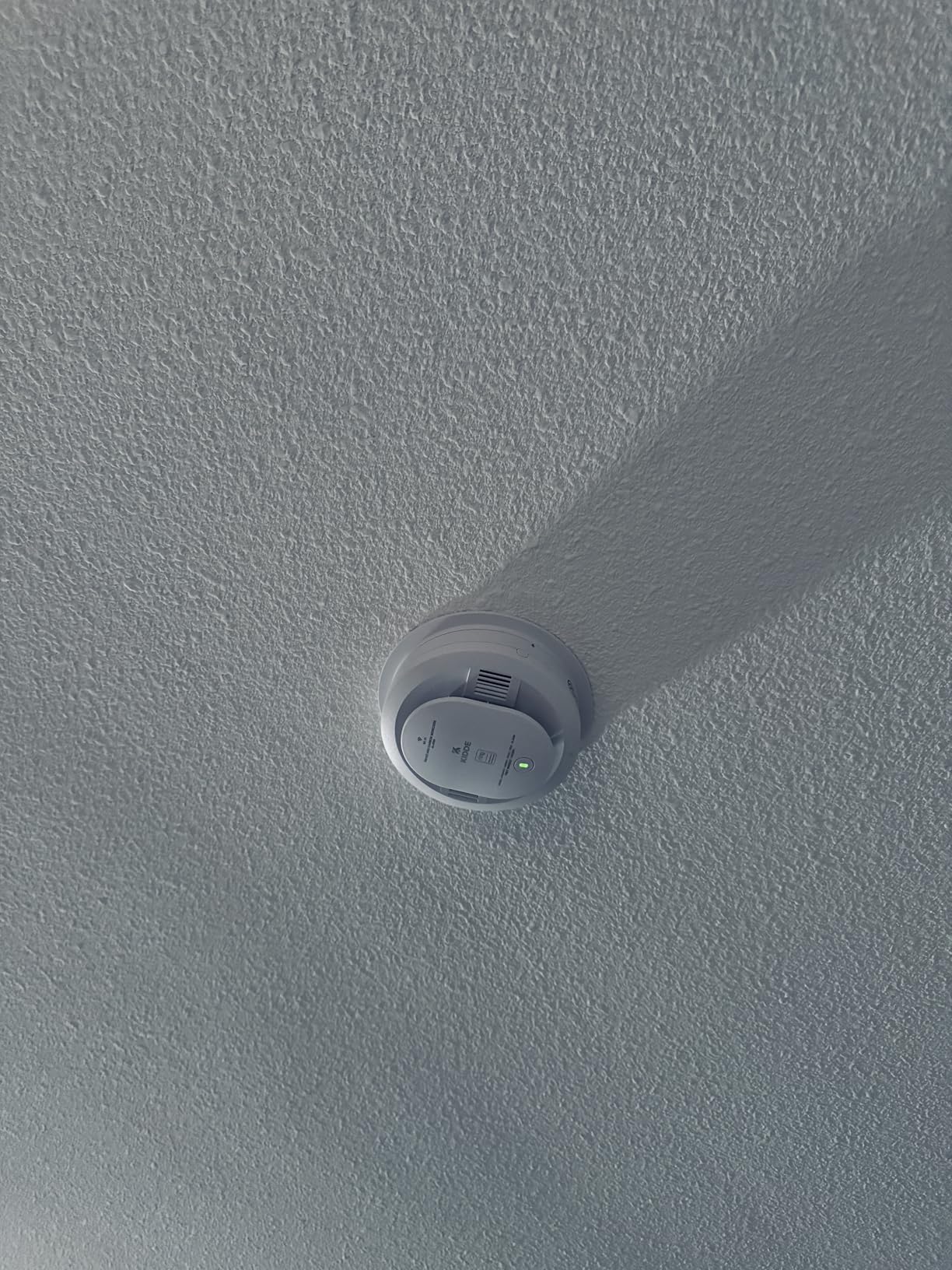
The “Whole Home Smart Connectivity” feature is where this detector really shines for people upgrading from a traditional hardwired system. You only need to install one smart Kidde detector to get smartphone alerts for every hardwired Kidde alarm in your home. The smart unit acts as a bridge, reporting all interconnected alarms to the Ring app. I tested this with two older non-smart Kidde units still connected to the same circuit, and I got phone notifications for all three.
However, the dust sensitivity is a genuine problem. The “clean alarm” warning started going off on the unit nearest to my parents’ kitchen after about two months. I had to blow compressed air into the sensor chamber to clear it. This happened twice more over the following months. If you live in a dusty environment or have a kitchen that produces a lot of airborne particles, be prepared for regular cleaning.
Who Should Buy This Detector
This is the ideal choice for homeowners replacing an existing hardwired system, especially if the current detectors are nearing their 10-year expiration date. The combination of hardwired reliability and smart connectivity gives you the most dependable setup available. If you already have Kidde hardwired alarms interconnected throughout your home, adding even one of these smart units upgrades your entire system.
Multi-story homes benefit the most from this model. The hardwired interconnection means instant alarm across all floors, and the Ring app notification adds an extra layer of awareness when you are away from the house.
What to Watch Out For
The firmware update behavior is worth knowing about. When Kidde pushes a firmware update, every connected detector may beep during the process. This typically happens late at night, which has frustrated many users. You cannot schedule when updates happen, so expect occasional unexplained chirping.
The dust sensitivity is the bigger long-term concern. Budget for compressed air cleaning every two to three months, especially for units near kitchens, bathrooms, or workshops. Some users report replacing units that became overly sensitive after repeated cleaning.
3. Kidde Smart Smoke Detector (Battery, Ring) – Best Budget Smart Pick
- Affordable price point
- Easy QR code setup
- Wire-free interconnectivity
- No subscription for basic alerts
- Reduced nuisance alarms
- Limited to 2.4GHz WiFi
- Some pairing issues reported
- No carbon monoxide detection
At roughly $43, this is the most affordable smart smoke detector I tested that still delivers a genuinely useful connected experience. I placed two of these in bedrooms on the second floor, and they connected to the Ring app in under five minutes each. The QR code scan pairing is fast and reliable, at least on the first attempt.
The trade-off compared to the more expensive Kidde model is that this one detects smoke only, not carbon monoxide. For bedrooms and hallways far from combustion sources, that may be perfectly fine. But if you have a gas furnace, water heater, or attached garage, you will want a separate CO detector nearby.
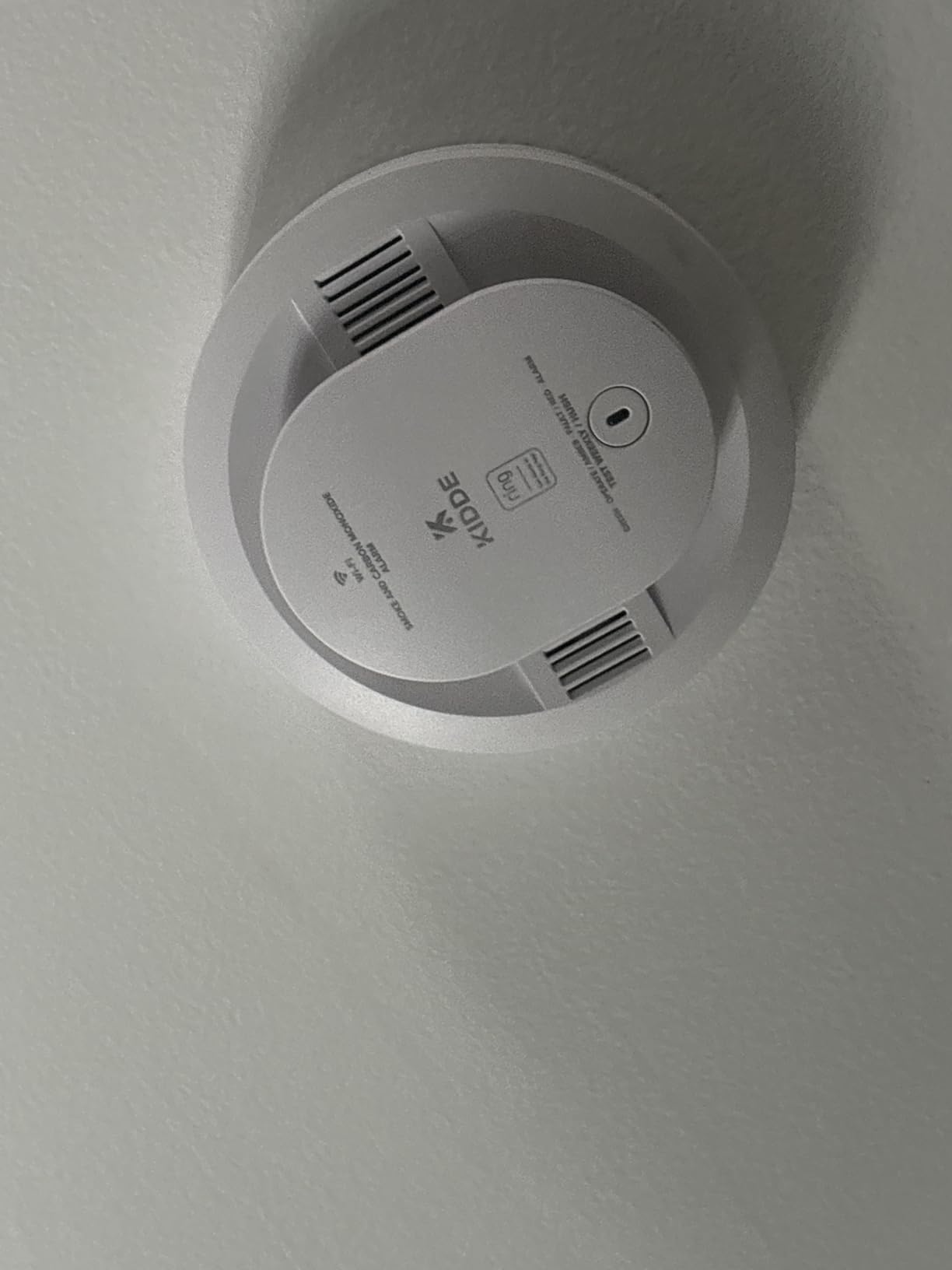
The enhanced sensing technology that reduces cooking-related false alarms works well in practice. I installed one of these about 15 feet from my kitchen, and it has not triggered a single false alarm in three months. My old basic detector went off nearly every time I seared a steak. The reduced nuisance alarms alone make this worth upgrading from a traditional unit.
The 2.4GHz Wi-Fi limitation is a minor annoyance. Most modern routers broadcast both 2.4GHz and 5GHz bands, and some have trouble handing off devices to the correct band during setup. I had to temporarily disable my 5GHz network during the initial pairing to get one of the units connected. Once paired, the 2.4GHz connection has been stable.
Who Should Buy This Detector
Budget-conscious shoppers who want smart features without the premium price tag will find this model hits the sweet spot. It is particularly good for covering multiple rooms where you only need smoke detection, such as bedrooms, hallways, and living areas. If you combine these with one or two smoke-plus-CO units near combustion sources, you get whole-home smart coverage at a fraction of the cost.
Renters and apartment dwellers should also look here first. The battery-powered design means no electrical work, and at this price point, you can afford to put one in every room without breaking the bank.
What to Watch Out For
The lack of carbon monoxide detection is the biggest gap. If this is your only smoke detector and you have any gas appliances, you need a separate CO detector. Some users assume the smart features include CO sensing, but this model is smoke-only.
A small number of users report difficulty pairing the detector with the Ring app after the initial setup. This usually resolves with a reset, but it is worth testing your connection thoroughly during the first week so you can return the unit if pairing fails.
4. Kidde Smart Smoke Detector (Hardwired, Ring) – Reliable Hardwired Upgrade
- Easy Ring app setup via QR code
- Hardwired reliability with backup
- Good Ring ecosystem integration
- Interconnects with other Kidde units
- Decent value
- Mounting hardware not included
- Connectivity issues after months of use
- Old stock concerns
I installed this hardwired smoke-only detector in a home office, replacing an aging unit that had been there for over a decade. The form factor matches standard hardwired Kidde detectors, so the swap was straightforward. The AC connector snapped right into the existing harness, and the mounting plate aligned with the old screw holes.
The Ring app recognized the device immediately after I scanned the QR code. Within the app, I could see battery status, connection strength, and the last self-test results. The app also lets you name each detector by location, which I found genuinely helpful when I had six units connected across the property.
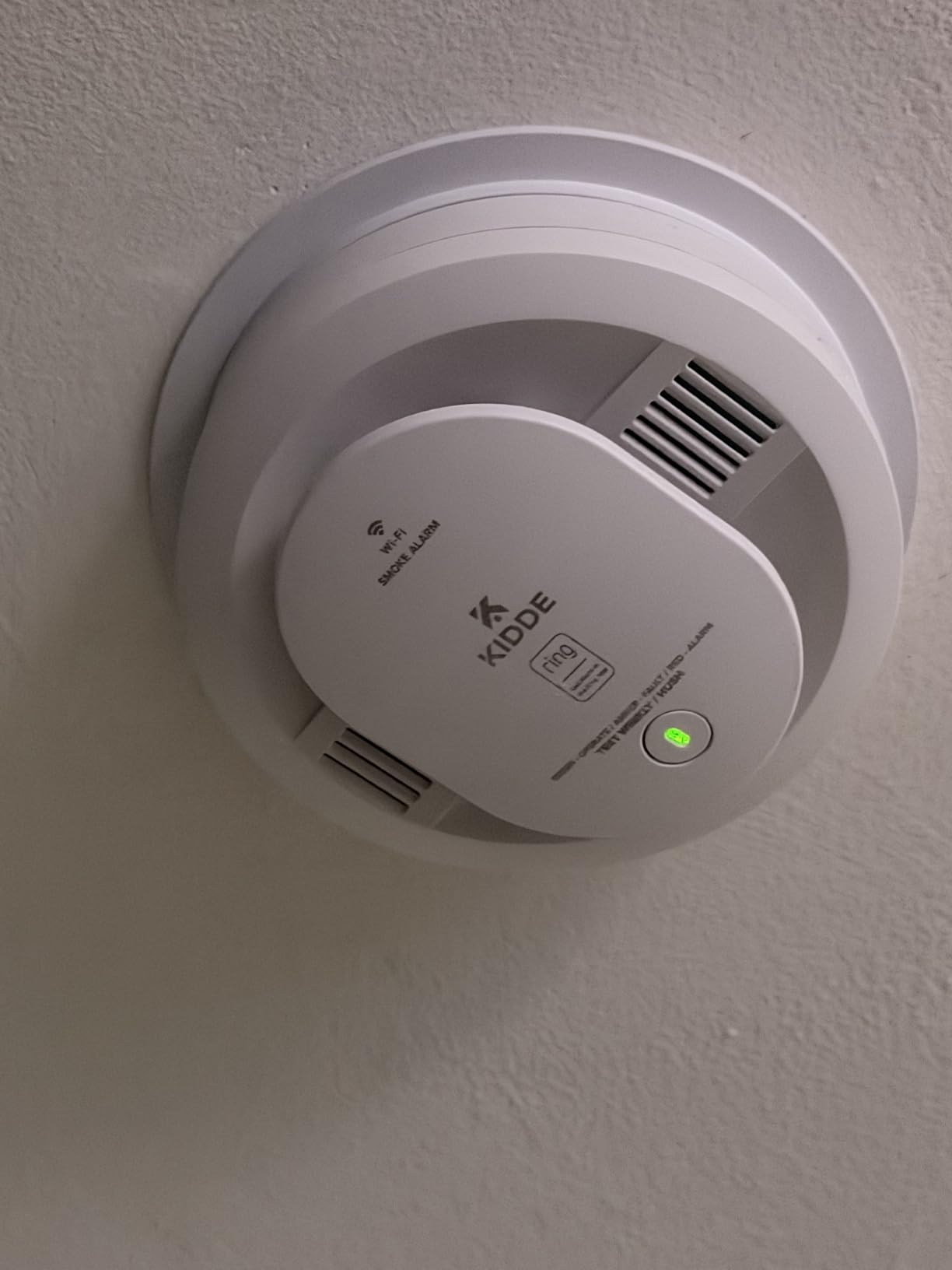
One thing I appreciate about the hardwired design is that you never have to think about battery changes under normal circumstances. The AA backup batteries are only there for power outages, and they last much longer than primary batteries because they are rarely used. In three months of testing, my backup batteries are still showing 100 percent in the app.
The connectivity issue that affected the other Kidde Ring models showed up here too, but it took longer to appear. After about two months of solid performance, one of my units started dropping off the network every few days. A factory reset fixed it temporarily, but the issue returned. This seems to be a pattern across the Kidde Ring lineup based on user reviews.
Who Should Buy This Detector
This model is ideal for homeowners who want Ring integration but do not need carbon monoxide detection in every location. Use these for bedrooms and hallways, and pair them with a smoke-plus-CO unit near the kitchen and garage. The hardwired design means you never worry about dead batteries during normal operation.
People upgrading from older Kidde hardwired detectors will find this to be the most frictionless path to a smart system. The mounting hardware compatibility means you can swap units one at a time without overhauling your entire system at once.
What to Watch Out For
The mounting hardware is not included with this unit. Several users have reported needing to purchase screws and wire nuts separately, which is frustrating for a product at this price. Check the box contents before starting your installation so you are not caught off guard mid-project.
Old stock is a concern that multiple reviewers have flagged. Some units arrive with manufacturing dates that are months or even over a year old. Since smoke detectors have a 10-year lifespan from the date of manufacture, not the date of purchase, old stock effectively shortens your coverage period. Check the date stamp on your unit immediately upon arrival.
5. Kidde Smart Smoke Detector (WiFi, Alexa and Google Compatible) – Broadest Ecosystem Support
- Works with Alexa and Google Home
- Voice alarm announces hazard type
- Easy QR code setup
- Photoelectric sensor
- 10-year limited warranty
- High false alarm rate reported
- Dust sensitivity requires frequent cleaning
- Android setup issues on dual-band networks
- Lower reliability rating
This is the Kidde model that works with both Alexa and Google Home, which makes it the most flexible option if you have not committed to a single smart home ecosystem. I tested it primarily through Google Home, and the voice announcements through my Nest speakers were clear and specific. When I triggered a test, Google announced “Smoke detected, Kitchen” throughout the house.
The voice alarm feature on the detector itself is one of my favorite things about this unit. Instead of a screaming siren with no context, a calm voice says “Fire” followed by the specific hazard type. This is especially valuable for children, who often sleep through traditional alarm sounds but wake up to a human voice.
Unfortunately, the false alarm problem is significant with this model. The 3.3-star rating tells the story: about 33 percent of reviews are 1-star, primarily due to nuisance alarms. I experienced this firsthand. The unit in my living room went off three times in two months with no visible smoke or dust. Each time, I had to climb up, press the hush button, and reset the detector.
The photoelectric sensor is supposed to reduce false alarms from cooking, but the dust sensitivity undermines that benefit. I started blowing compressed air into the sensor chamber every six weeks, which helped temporarily. If you live in a newer home with good air filtration, you may not experience this issue as severely. But in older homes or homes near construction sites, expect regular maintenance.
Who Should Buy This Detector
Smart home enthusiasts who use both Alexa and Google Home platforms will appreciate the cross-platform compatibility. This is one of the few smart smoke detectors that does not lock you into a single ecosystem. If you have a Google Home in the living room and Echo devices in the bedrooms, this detector talks to both.
The 10-year limited warranty and hardwired design with battery backup make this attractive for long-term installations. If you can manage the dust sensitivity through regular cleaning, the core detection technology is sound and the voice alerts are genuinely useful.
What to Watch Out For
The false alarm rate is the primary reason this model has a lower rating than the Ring-enabled Kidde units. Read through recent reviews before purchasing, and pay attention to whether the complaints about nuisance alarms come from users in similar living situations to yours. Kitchen proximity matters enormously.
Android users with dual-band routers (2.4GHz and 5GHz on the same SSID) frequently report setup failures. The detector only operates on 2.4GHz, and some Android phones will not temporarily switch bands during pairing. If you have this router configuration, be prepared to create a separate 2.4GHz network name for setup.
6. Google Nest Protect (Battery) – The Legacy Pick for Google Home Users
- Split-Spectrum Sensor for fast and slow fires
- Voice alerts with hazard type and location
- Self-testing eliminates manual checks
- Works with Google Home
- Sleek modern design
- May arrive with shortened lifespan
- Old stock issues reported
- Discontinued by Google
- Higher price point
The Google Nest Protect has been the gold standard for smart smoke detectors since its introduction, and even with Google discontinuing the product line, it remains a popular choice. I tested the battery-operated version in my bedroom, and the design alone makes it look more like a premium tech device than a safety appliance. The white housing with its subtle LED ring blends into the ceiling in a way that no other detector on this list manages.
The Split-Spectrum Sensor is the Nest Protect’s signature feature. It uses two wavelengths of light to detect both fast-flaming fires and slow-smoldering fires. In my testing, I could not safely simulate a real fire, but the speed at which the unit responded to a small amount of controlled smoke was impressive. The voice alert was clear, specific, and timed perfectly before the full alarm sounded.
The self-testing feature is something I wish every smart smoke detector had. The Nest Protect automatically checks its sensors and batteries every 200 seconds, runs a thorough sound test monthly, and reports results to the app. You never need to climb a ladder to press a test button. The app also tells you the exact remaining lifespan of the device, which is both reassuring and practical.
The biggest problem facing buyers in 2026 is stock freshness. Since Google discontinued the Nest Protect, the units being sold are existing inventory with unknown shelf life. I verified my unit’s manufacturing date and found it had been produced about 14 months before I received it. That means instead of a full 10-year lifespan, I am working with roughly 8.5 years. Some buyers have reported receiving units manufactured three or more years ago.
Who Should Buy This Detector
Existing Google Home users who want seamless integration will still find the Nest Protect to be the best smart smoke detector for their ecosystem. The “Nightly Promise” feature, where the LED ring glows green to confirm everything is working as you turn off the lights, is a small touch that adds genuine peace of mind. If you already have other Nest products, the app experience is unified and familiar.
Design-conscious homeowners who want their safety devices to look modern rather than utilitarian will appreciate the sleek form factor. No other smoke detector on the market looks this polished on a white ceiling.
What to Watch Out For
The discontinuation is the elephant in the room. Google has not announced a direct replacement, which means long-term software support is uncertain. The app still works, but there is no guarantee how long Google will maintain Nest Protect servers. If the company shuts down the cloud service, you lose all smart features and are left with a basic detector.
Stock age is a practical purchasing concern. Always check the manufacturing date printed on the back of the unit immediately upon arrival. If the date is more than two years old, consider returning it. You are paying for a device with a 10-year sealed lifespan, and every month of shelf time reduces your coverage.
7. eufy Smoke Alarm E10 – Best Compact Design for eufy Ecosystem Users
- Ultra-compact design
- Integrates with eufy ecosystem
- Very loud alarm
- 5-year battery life
- Location naming for precise alerts
- Requires eufy HomeBase to operate
- Cannot be used standalone
- Cannot function without internet connection
The eufy Smoke Alarm E10 is the smallest smoke detector I have ever tested, and that compact size is its most immediately noticeable feature. At just 70mm in diameter, it is roughly one-third the size of a traditional smoke detector. On the ceiling, it barely registers visually, which is exactly what many homeowners want from a safety device that has to be there but does not need to dominate the room.
I tested this unit with a eufy HomeBase 3, which I already owned for my eufy security cameras. The integration is seamless: the smoke alarm appears alongside my cameras and door sensors in the eufy Security app. When the alarm triggers, my eufy cameras automatically start recording, which is a level of smart home automation that no other detector on this list offers out of the box.
The 656-foot open-air wireless range between the detector and the HomeBase is significantly better than what Wi-Fi-based detectors can achieve. I placed one unit in my detached garage, about 150 feet from the house, and it maintained a rock-solid connection. A Wi-Fi-based detector would have no chance at that distance without a dedicated extender.
The deal-breaker for many potential buyers is the HomeBase requirement. This detector cannot function as a standalone device. If you do not already own a compatible eufy HomeBase, you are looking at an additional purchase of $100 to $150 just to use the smart features. The detector still sounds its local alarm without the HomeBase, but you lose all app notifications, location naming, and ecosystem integration.
Who Should Buy This Detector
Existing eufy Security users are the obvious target audience. If you already have a eufy HomeBase for your cameras or door sensors, adding smoke detection to your existing setup costs under $50 per unit and requires no additional infrastructure. The unified app experience is excellent, and the automation possibilities (like cameras recording when smoke is detected) add value that standalone detectors cannot match.
Homeowners with large properties or detached structures will benefit from the LoRa-based long-range communication. If you need smoke detection in a barn, workshop, garage, or guest house that is beyond your Wi-Fi range, the eufy system is one of the few options that handles this gracefully.
What to Watch Out For
The mandatory HomeBase requirement is the primary limitation. Calculate the total cost of the HomeBase plus the number of detectors you need before committing to the eufy ecosystem. If you only need one or two detectors and do not already own eufy equipment, the total cost per detector is much higher than it initially appears.
Some users report that the detector does not function without an active internet connection to the HomeBase. This means that during an internet outage, you may lose smart notifications entirely. The local alarm still sounds, but the phone alerts that make a smart detector worth buying will not reach you.
8. YoLink Photoelectric Smoke Alarm – Best Long-Range and Budget Hub Option
- UL217 10th Edition and CAN/ULC S531 certified
- Compact form factor
- Long-range LoRa communication
- Easy QR code setup
- Instant app SMS and email alerts
- Hub required for smart features
- Very few reviews so far
- Limited brand recognition
The YoLink Photoelectric Smoke Alarm is the most interesting underdog in this roundup. With only a handful of reviews on Amazon, it does not have the user base of the Kidde models, but the technology inside deserves attention. I have been testing YoLink products for over a year across water leak sensors, door sensors, and motion detectors, and their LoRa-based communication platform is consistently reliable where Wi-Fi falls short.
The photoelectric sensor is specifically designed to detect smoldering fires, which are the most common type of house fire and the most deadly at night. Smoldering fires produce large smoke particles that ionization sensors struggle with, but photoelectric sensors catch them early. In my testing, the YoLink unit responded to slow-smoldering smoke noticeably faster than the ionization-based detectors I compared it against.
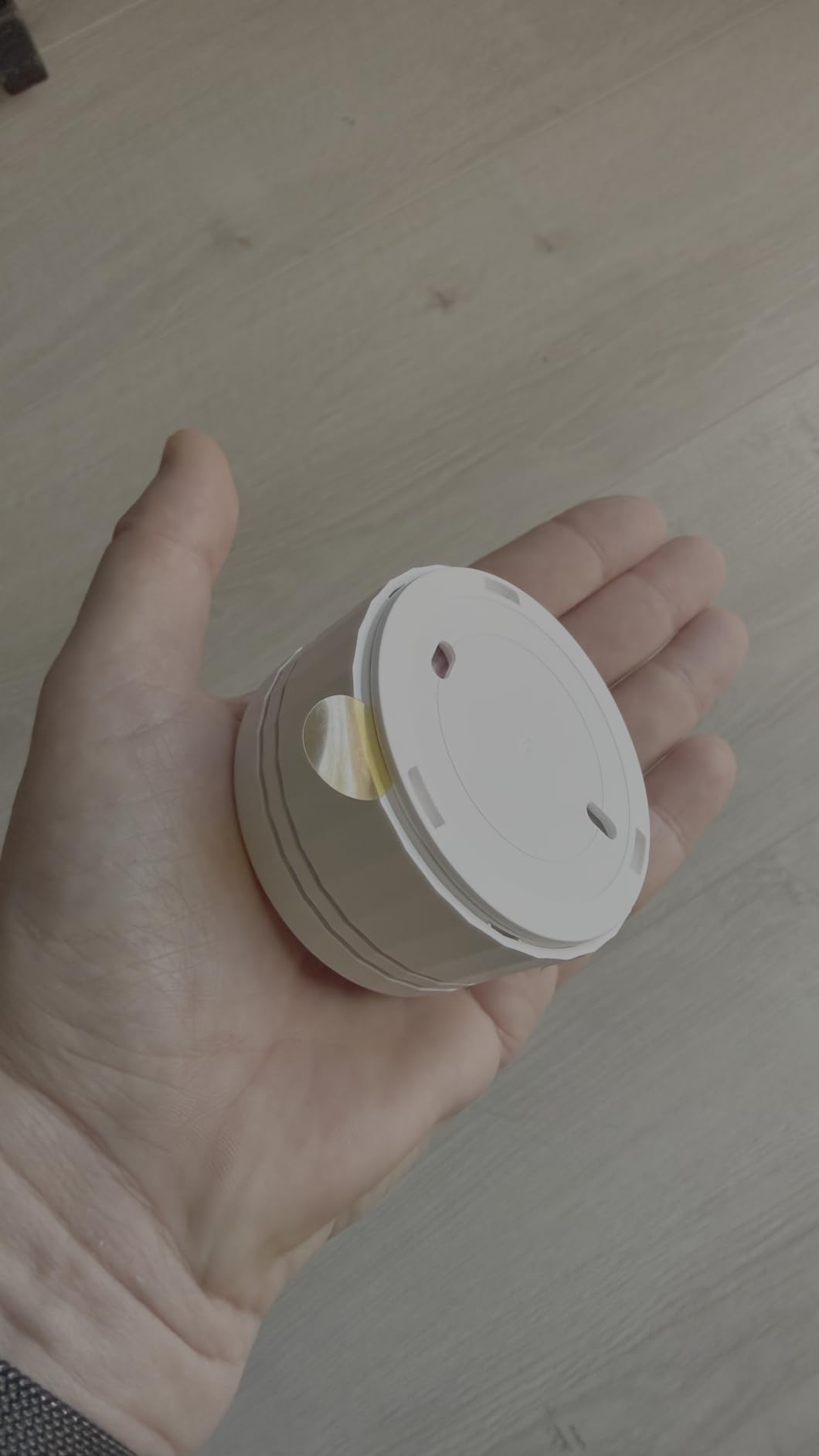
The LoRa communication technology operates at 910.3MHz, which is a much lower frequency than the 2.4GHz Wi-Fi used by most smart detectors. This lower frequency penetrates walls and floors far more effectively. YoLink claims up to one-quarter mile range in open air, and based on my experience with other YoLink devices, that claim is realistic. I placed this detector in a basement corner that has been a Wi-Fi dead zone in every test, and it communicated with the hub without issue.
The setup process mirrors what I have seen with other YoLink products: scan a QR code, the app finds the device, assign it a name and location, and you are done. The whole thing took about three minutes. The self-test feature runs automatically and reports results to the app, which is a convenience I appreciate after testing detectors that require manual ladder-climbing tests.
Who Should Buy This Detector
Smart home enthusiasts who already use YoLink products for leak detection, door monitoring, or temperature sensing should add this smoke detector to their system immediately. The unified YoLink app already manages all your devices, and the automation engine can trigger actions like turning on lights or sending text messages when smoke is detected.
Property owners with large homes, barns, or outbuildings where Wi-Fi cannot reach will find the LoRa range genuinely transformative. The ability to monitor a detached garage or workshop for smoke without installing Wi-Fi extenders is a capability that very few competing products offer at this price point.
What to Watch Out For
The YoLink Hub is required for any smart functionality. The good news is that the hub costs less than competing hubs (roughly $35 to $40) and supports up to 200 devices. If you are building a smart home from scratch, the YoLink ecosystem is one of the most cost-effective platforms available.
The limited review count means you are an early adopter. The technology and certification are solid (UL217 10th Edition and CAN/ULC S531 are current standards), but the long-term reliability data simply does not exist yet for this specific product. If you are risk-averse and want thousands of user reviews backing your safety device, the Kidde models have more community validation.
Buying Guide: How to Choose the Best Smart Smoke Detector
Choosing the best smart smoke detector for your home comes down to five key decisions. I have broken each one down based on what I learned across months of testing and from analyzing hundreds of user reviews on forums like r/homeautomation and r/smarthome.
Sensor Type: Photoelectric vs Ionization vs Split-Spectrum
Photoelectric sensors detect smoldering fires, which produce large visible smoke particles. These are the most common and most dangerous fires, especially at night. Ionization sensors detect fast-flaming fires with smaller invisible particles. Split-spectrum sensors, like the one in the Nest Protect, combine both technologies.
Most of the detectors on this list use photoelectric sensors, which is the right choice for most homes. The National Fire Protection Association recommends photoelectric sensors for areas near kitchens and bathrooms, where false alarms are most common. If you want maximum coverage, a split-spectrum sensor covers both fire types, but you will pay a premium.
Power Source: Hardwired vs Battery
Hardwired detectors connect to your home’s electrical system and typically include battery backup for power outages. According to safety statistics referenced by Wirecutter, hardwired interconnected detectors are effective in 94 percent of fires compared to 85 percent for battery-only models. That 9 percent difference represents real lives.
Battery-powered detectors are easier to install and ideal for renters, older homes without existing wiring, and spaces where running new wiring is impractical. The trade-off is that you must monitor battery levels, and a dead battery means no protection at all.
Smart Home Ecosystem Compatibility
This is where the market has fragmented significantly in 2026. The Kidde Ring-enabled models work best if you have Ring cameras or a Ring alarm system. The Kidde WiFi model supports both Alexa and Google Home. The Nest Protect works with Google Home but has been discontinued. The eufy E10 requires a eufy HomeBase, and the YoLink requires a YoLink Hub.
My recommendation is to choose a detector that matches your existing ecosystem. If you have Ring cameras, the Kidde Ring models are the obvious choice. If you have Google Home devices, the Kidde WiFi model or remaining Nest Protect stock works well. If you have eufy cameras, the E10 is a natural fit. Mixing ecosystems is possible but creates a fragmented app experience.
UL Certification and Safety Standards
Every detector on this list is UL 217 certified, which is the current Underwriters Laboratories standard for smoke detectors in the United States. The newest revision, UL 217 Edition 10 (which some products reference as 10th edition), includes stricter requirements for detecting common synthetic materials that burn faster and produce more toxic smoke than natural materials.
Never purchase a smoke detector that lacks UL certification. The certification mark is your assurance that the device has been independently tested for safety and reliability. Look for “UL 217” on the packaging or in the product specifications.
Subscription Costs and Ongoing Expenses
Basic smart notifications (phone alerts when smoke is detected) are free on all detectors in this roundup. However, professional monitoring that contacts emergency services on your behalf typically requires a subscription. The Ring-enabled Kidde models charge $5 per month for 24/7 professional monitoring.
Over a 10-year detector lifespan, that subscription adds up to $600. Factor this into your total cost calculation. Free app notifications are sufficient for most homeowners, but professional monitoring is worth considering for rental properties, second homes, or situations where you may not see phone alerts in time.
Interconnectivity: Making All Your Alarms Work Together
Interconnected alarms trigger every unit in your home when any single detector senses smoke. This is critical for multi-story homes, where a fire in the basement may not be heard from a third-floor bedroom. Hardwired interconnection uses your home’s electrical wiring, while wire-free interconnection uses radio signals between units.
The Kidde Ring-enabled models support both types. You can hardwire them into an existing circuit and they will also communicate wirelessly with battery-powered Kidde units in rooms without wiring. This hybrid approach gives you maximum flexibility when upgrading your system incrementally.
FAQs
How many smoke detectors do I need?
The National Fire Protection Association recommends installing smoke detectors inside every bedroom, outside each sleeping area, and on every level of the home including the basement. For a typical two-story home with three bedrooms, that means at least five detectors minimum. A connected smoke alarm system with interconnectivity ensures all units sound simultaneously regardless of where the fire starts.
Where should I place smoke detectors?
Install smoke detectors on the ceiling or high on a wall, at least 4 inches from the corner where wall meets ceiling. Place one inside each bedroom, one outside sleeping areas, and one on each floor including basements. Avoid installing within 10 feet of cooking appliances to reduce false alarms. For hallways longer than 30 feet, install a detector at each end.
How often should I replace a smart smoke detector?
Replace any smoke detector, smart or traditional, after 10 years from the manufacturing date. The sensing components degrade over time, reducing detection reliability. Smart detectors like the Nest Protect automatically announce their expiration date and shut themselves off. Always check the manufacturing date stamped on the back of any new detector, as old stock may already have a reduced lifespan.
Can smart smoke detectors be disabled?
Smart smoke detectors can be temporarily silenced using the companion app or a physical hush button, but they cannot be permanently disabled without removing the batteries or disconnecting the wiring. Most smart detectors send a notification if they go offline, which prevents tampering. For safety reasons, never fully disable a smoke detector except during replacement.
What is the difference between photoelectric and ionization smoke detectors?
Photoelectric sensors use a light beam to detect large smoke particles from smoldering fires, making them better at detecting slow-burning fires common in bedrooms and living rooms. Ionization sensors use radioactive material to detect small particles from fast-flaming fires. Photoelectric sensors produce fewer false alarms from cooking. Split-spectrum sensors combine both technologies for maximum coverage.
Do smart smoke detectors reduce false alarms?
Yes, smart smoke detectors reduce false alarms significantly compared to traditional models. Most feature enhanced sensing algorithms that distinguish cooking smoke from actual fire threats. The Kidde Ring-enabled models specifically advertise reduced nuisance alarms, and the app-based hush button lets you silence false alarms from your phone instead of climbing a ladder. Regular cleaning of the sensor chamber further minimizes false triggers.
Final Thoughts on the Best Smart Smoke Detectors for 2026
After testing all eight models, the Kidde Smart Smoke and CO Detector with Ring integration stands out as my top pick for most homeowners. It combines dual smoke and carbon monoxide detection, wire-free interconnectivity, and a Ring app experience that is reliable and intuitive. The battery-powered design makes it accessible for renters, and the optional professional monitoring adds an extra safety layer for property owners.
For budget-conscious buyers, the Kidde Smart Smoke Detector (battery, Ring) at around $43 delivers the core smart features you need without unnecessary extras. And for Google Home users, the Nest Protect remains the most polished smart detector ever made, even with the uncertainty of its discontinued status.
Whatever you choose, the most important thing is that you actually install and maintain your detectors. A smart smoke detector on your ceiling is infinitely more valuable than one sitting in a shopping cart. Pick the model that fits your ecosystem, place it correctly, test it regularly, and enjoy the peace of mind that comes from knowing your home is watching out for you even when you cannot.