
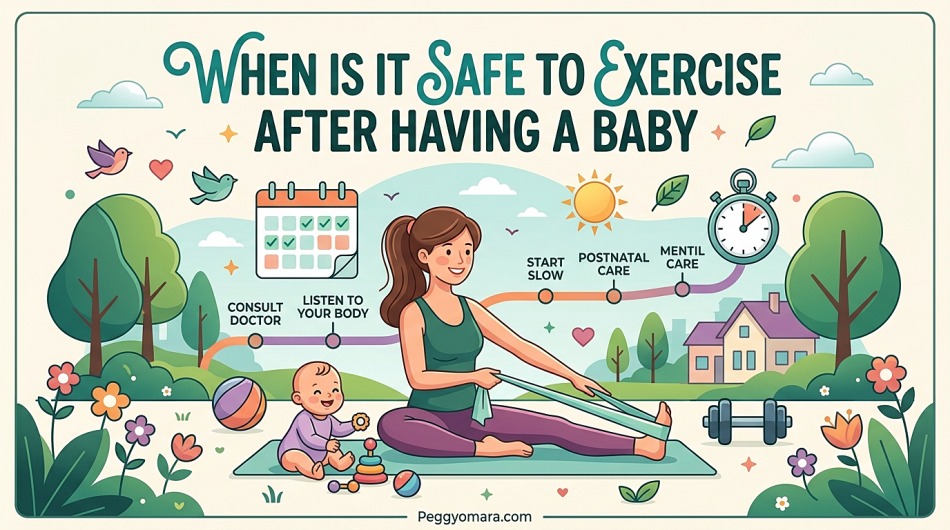
Most new mothers can safely begin gentle postpartum exercise within days of giving birth, but the exact timeline depends heavily on how you delivered and whether there were any complications. If you had an uncomplicated vaginal delivery, light activity like walking and pelvic floor exercises can usually begin as soon as you feel ready, often within the first week. For cesarean births or complicated deliveries involving forceps, vacuum extraction, or significant tearing, you will need to wait longer and get clearance from your healthcare provider at your six-week checkup before progressing to anything beyond gentle movement.
Understanding when is it safe to exercise again after having a baby requires listening to your body and respecting the significant changes it has undergone. Your pelvic floor muscles have been stretched and potentially weakened, your abdominal muscles may have separated, and your cardiovascular fitness has likely decreased. Rushing back into high-impact exercise too quickly can lead to pelvic floor dysfunction, worsening of abdominal separation known as diastasis recti, and prolonged recovery.
In this guide, I will walk you through evidence-based timelines for different delivery types, specific exercises that are safe to start with, warning signs to watch for, and practical strategies for fitting movement into life with a newborn. Our team has consulted medical guidelines from ACOG and the Mayo Clinic, along with real experiences from mothers who have navigated this transition.
Table of Contents
Quick Reference: Postpartum Exercise Timeline
If you need a fast answer, here is the general guidance for when you can resume exercise after birth. Remember that individual situations vary, and your healthcare provider’s advice for your specific circumstances should always take priority.
Uncomplicated Vaginal Birth:
- Days 1-7: Gentle walking, pelvic floor exercises, deep breathing
- Weeks 2-6: Gradual increase in walking duration, gentle stretching
- 6-week checkup: Medical clearance for low-impact exercise
- Weeks 6-12: Low-impact cardio, postpartum yoga, light strength training
- 12+ weeks: Gradual return to high-impact exercise and running
C-Section or Complicated Vaginal Birth:
- Weeks 0-6: Walking only as tolerated, pelvic floor exercises, breathing exercises
- 6-week checkup: Essential medical clearance before any progression
- Weeks 6-12: Gentle low-impact exercise only if cleared
- 12+ weeks: Consideration of high-impact exercise after pelvic floor assessment
Benefits of Postpartum Exercise
Getting moving again after having a baby offers benefits that extend far beyond weight loss. Many new mothers are surprised to discover that exercise improves their energy levels, mood, and ability to handle the physical demands of caring for a newborn.
Physical Recovery Benefits
Regular movement helps your body recover from pregnancy and childbirth more effectively. Walking stimulates circulation, which can reduce swelling and promote healing. Pelvic floor exercises restore strength to muscles that have been stretched and potentially weakened during delivery. Core strengthening, when done correctly, helps bring abdominal muscles back together and supports your lower back during all the lifting and carrying that comes with new motherhood.
Gentle exercise also helps regulate your digestive system, which can be sluggish after pregnancy. Many women find that movement helps reduce postpartum constipation and gas discomfort. Additionally, staying active supports healthy weight management in a sustainable way that respects your body’s recovery timeline.
Mental Health and Emotional Wellbeing
The mental health benefits of postpartum exercise may be even more significant than the physical ones. Studies consistently show that physical activity reduces symptoms of postpartum depression and anxiety. Even a ten-minute walk can shift your mood and provide a mental reset during a challenging day with a newborn.
Exercise releases endorphins, which help counteract the stress hormones that often spike during the demanding early weeks of motherhood. Many mothers report that their daily walk becomes a crucial form of stress relief and the only time they get fresh air and sunshine. The routine of moving your body can also provide a sense of normalcy and control during a time when so much feels uncertain.
Practical Benefits for Motherhood
Building strength and stamina through postpartum exercise helps you meet the physical demands of caring for a baby. You will be lifting an increasingly heavy infant, carrying car seats, pushing strollers, and spending hours in positions that strain your back and shoulders. A strong core and back reduce the risk of injury during these daily activities.
Exercise Timeline After Vaginal Birth
Recovery after an uncomplicated vaginal delivery typically follows a predictable pattern, though every woman’s experience is unique. The key is progressing gradually and paying close attention to how your body responds at each stage.
Days 1-7: Immediate Postpartum Period
In the first week after birth, your focus should be on rest, recovery, and gentle movement only. Even if you feel surprisingly energetic, your body is undergoing significant healing processes. Your uterus is contracting back to its pre-pregnancy size, your perineal area is healing from any tearing or an episiotomy, and your hormone levels are shifting dramatically.
During this period, the only exercise you should do consists of pelvic floor contractions, also known as Kegel exercises, and gentle walking around your home or neighborhood. Start with pelvic floor exercises within the first 24 hours if you can. These subtle internal contractions help activate muscles that may feel disconnected or numb after delivery. Hold each contraction for five to ten seconds, then release completely. Aim for three sets of ten repetitions throughout the day.
Walking can begin as soon as you feel steady on your feet. Start with five to ten minutes at a slow, comfortable pace. Many women find their first walk happens around the hospital ward or in their driveway. Listen to your body and stop if you feel dizzy, experience increased bleeding, or feel any pain in your perineal area.
Weeks 2-6: Early Recovery Phase
During weeks two through six, you can gradually increase your activity level while remaining in the low-impact zone. Continue your daily pelvic floor exercises, which should be becoming easier to feel and control. Add gentle stretching for tight areas like your neck, shoulders, and chest, which often hold tension from nursing and baby-holding positions.
Extend your walks to fifteen or twenty minutes if you feel good. Pay attention to your posture while walking, as your center of gravity and body mechanics are still adjusting. Avoid any exercise that creates downward pressure on your pelvic floor, including traditional abdominal exercises like crunches or sit-ups.
This is the period when many mothers feel frustrated by conflicting advice. Some sources suggest resting completely for six weeks, while others encourage early activity. The truth lies in the middle. Gentle, appropriate movement supports healing, while high-impact or intense exercise can cause problems. Trust how you feel, but err on the side of caution.
The Six-Week Checkup: Your Milestone
The six-week postpartum checkup with your obstetrician or midwife serves as a crucial checkpoint for exercise progression. During this appointment, your provider will assess your healing, check your pelvic floor function, and examine your abdominal muscles for separation. Based on this assessment, you will receive clearance to begin or continue various types of exercise.
Many mothers experience anxiety about this appointment, worried they will be told they are not healing properly. Remember that this checkup exists to protect your long-term health and ensure you are ready for increased activity. If your provider recommends waiting longer before certain exercises, follow that guidance even if you feel ready.
Weeks 6-12: Building Back Your Fitness
Once you have medical clearance, you can begin adding more structured exercise to your routine. This phase focuses on rebuilding core strength, restoring cardiovascular fitness, and preparing your body for eventual high-impact activities if that is your goal.
Good exercise choices during this phase include postpartum yoga classes, Pilates focused on core restoration, swimming once lochia has completely stopped, stationary cycling, and continued walking with intervals of increased pace. Strength training can begin with very light weights and focus on proper form rather than heavy loads.
Continue avoiding traditional crunches, sit-ups, planks held for extended periods, and any exercise that causes your abdomen to dome or cone outward. These movements can worsen diastasis recti. Instead, focus on deep abdominal activation exercises like abdominal bracing and pelvic tilts.
Weeks 12 and Beyond: Return to Higher Impact
Most women with uncomplicated vaginal deliveries can consider returning to running, jumping, and higher-intensity exercise after the twelve-week mark. However, this timeline assumes you have been progressively building strength and have no symptoms of pelvic floor dysfunction.
Before returning to high-impact exercise, you should be able to walk briskly for thirty minutes without pain or leaking, perform a single-leg balance for ten seconds on each side, and complete ten single-leg sit-to-stands with good form. If you cannot perform these baseline movements, your body is not ready for running or jumping.
Exercise Timeline After C-Section
Cesarean delivery is major abdominal surgery, and your recovery timeline will necessarily be longer and more gradual than after vaginal birth. Your body must heal from the surgical incision through multiple layers of tissue, and your abdominal muscles have been moved and manipulated during the procedure.
Weeks 0-6: Initial Healing Phase
The first six weeks after a C-section are dedicated to healing your incision and allowing your uterus to return to its normal size. During this period, you should avoid lifting anything heavier than your baby, which includes avoiding carrying heavy laundry baskets, older children, or large grocery bags. You also should not drive until you can perform an emergency stop without pain, which typically takes two to four weeks.
Walking is your primary and only exercise during this phase. Start with short walks within your home, gradually working up to ten to fifteen minutes outside by week two or three if you feel ready. Walking stimulates circulation, which helps prevent blood clots and promotes incision healing. It also helps prevent the constipation that often follows surgery and pain medication use.
Pelvic floor exercises should begin as soon as you feel able, usually within the first few days. Even though you did not deliver vaginally, pregnancy itself places significant pressure on your pelvic floor muscles. Activating these muscles early supports your recovery and prevents future issues with incontinence or prolapse.
Breathing exercises are particularly important after C-section. Deep diaphragmatic breathing helps reactivate your core muscles, reduces the risk of pneumonia, and promotes relaxation. Place your hands on your ribs and breathe deeply, feeling your ribs expand outward. Exhale slowly and completely. Practice this for five minutes several times daily.
Weeks 6-12: Gradual Progression After Clearance
Your six-week checkup is absolutely essential after a C-section. Your provider needs to examine your incision for proper healing, check for signs of infection or hernia, and assess your overall recovery before clearing you for increased activity. Do not attempt to progress your exercise before this appointment.
Once cleared, you can begin gentle core restoration exercises that focus on deep abdominal muscles rather than surface crunches. Pelvic tilts, heel slides, and dead bugs performed with excellent form are appropriate starting points. Continue avoiding any movement that creates downward pressure on your abdomen or causes your incision to pull painfully.
Low-impact cardio options like walking, swimming once cleared, and stationary cycling can be gradually increased. Start with twenty-minute sessions and increase duration before increasing intensity. Pay close attention to how your incision feels during and after exercise. Some pulling sensation is normal, but sharp pain indicates you need to back off.
Weeks 12 and Beyond: Returning to Full Activity
Most C-section mothers need twelve weeks or longer before returning to high-impact exercise and running. The surgical incision may appear healed on the surface, but the deeper layers of fascia and muscle continue strengthening for months. Rushing this process increases your risk of incisional hernia and long-term core weakness.
Before running or high-impact exercise, you should meet these readiness criteria: no pain or pulling at your incision site during daily activities, ability to walk briskly for thirty minutes without symptoms, successful completion of a core strength assessment, and clearance from your healthcare provider. Many C-section mothers benefit from working with a pelvic floor physical therapist before returning to high-impact activities.
Exercise After Complicated Deliveries
Some deliveries involve additional complications that extend the recovery timeline and require modified exercise approaches. If you experienced any of these situations, your return to exercise will need to be even more gradual and closely monitored.
Forceps or Vacuum-Assisted Delivery
Assisted deliveries using forceps or vacuum extraction often result in more significant perineal trauma, including third or fourth-degree tears that extend into the rectal muscles. These injuries require longer healing times and create additional considerations for exercise return.
If you had an assisted delivery, treat your initial recovery more conservatively than a standard vaginal birth. Even if you feel energetic, the deeper tissue layers of your perineum need twelve to sixteen weeks to fully heal. Walking is appropriate when you feel ready, but avoid any exercise that creates pressure on your pelvic floor, including squatting with weights, until you have pelvic floor physical therapy clearance.
Many women who delivered with forceps or vacuum report lingering pelvic floor weakness, including urinary incontinence and a sensation of pelvic pressure or heaviness. These symptoms indicate your pelvic floor needs professional rehabilitation before high-impact exercise. Working with a pelvic floor physical therapist is strongly recommended.
Significant Perineal Tearing or Episiotomy
Second-degree tears that extend into muscle and third or fourth-degree tears require careful management. The scar tissue from these injuries can create tightness and weakness that affects your ability to activate your pelvic floor muscles properly.
Focus heavily on pelvic floor exercises in the early weeks, but perform them gently. You may find that the injured area feels numb or disconnected at first. This is normal and improves with time and practice. Perineal massage after the initial healing period can help reduce scar tissue tightness and improve muscle function.
Wait until at least twelve weeks before attempting high-impact exercise, and longer if you still have any incontinence or pelvic pressure. The scar tissue needs time to fully mature and strengthen.
Postpartum Hemorrhage or Infection
If you experienced heavy bleeding after delivery or developed an infection like endometritis or a wound infection, your recovery timeline extends significantly. Blood loss leaves you anemic and fatigued, making even gentle exercise feel exhausting. Infection requires your body’s full energy resources to fight.
Focus on rest and nutrition during your initial recovery. Walking can begin when you feel steady, but keep sessions very short at first. You may need eight to twelve weeks before you feel ready for structured exercise. Have your iron levels checked if fatigue persists beyond the early weeks.
Safe Exercises to Start With
Certain exercises form the foundation of safe postpartum fitness. Mastering these movements before progressing to more challenging activities protects your pelvic floor and helps restore proper core function.
Pelvic Floor Exercises (Kegels)
Pelvic floor exercises should be your first priority after birth. These internal muscles support your bladder, uterus, and bowel, and they undergo significant stretching during pregnancy and delivery. Activating and strengthening them prevents incontinence and pelvic organ prolapse.
To perform a pelvic floor contraction, imagine stopping the flow of urine and simultaneously stopping gas. You should feel a lifting sensation inside your pelvis, not a bearing down. Hold this contraction for five to ten seconds while breathing normally, then release completely for ten seconds. The release is just as important as the contraction. Tight pelvic floor muscles that cannot relax create their own set of problems.
Perform three sets of ten repetitions daily, spacing them throughout the day. You can do pelvic floor exercises in any position, though lying down is often easiest at first. As they become easier, practice them while sitting, standing, and eventually during movement like walking.
Deep Breathing and Core Activation
Deep diaphragmatic breathing reconnects your breath with your core muscles. Lie on your back with your knees bent and hands resting on your ribs. Breathe deeply through your nose, feeling your ribs expand outward and your belly gently rise. Exhale slowly through your mouth, feeling your ribs close and your deep abdominal muscles gently draw inward.
This exercise begins activating your transverse abdominis, the deep corset-like muscle that stabilizes your core. Proper breathing also reduces stress and promotes relaxation, which supports healing. Practice for five minutes daily.
Pelvic Tilts
Pelvic tilts gently mobilize your lower back and activate your deep core muscles. Lie on your back with knees bent and feet flat. Gently flatten your lower back into the floor by tilting your pelvis backward, then release to a neutral position. Avoid pressing aggressively or creating a large arch.
Perform ten to fifteen slow repetitions, focusing on controlled movement rather than range of motion. Stop if you feel any pain in your back or abdomen.
Gentle Walking Progression
Walking is the ideal postpartum cardio exercise. It is low-impact, can be done with your baby in a stroller or carrier, and requires no special equipment. Start with five to ten minutes at a comfortable pace where you can maintain a conversation.
Increase your walking time by five minutes every few days if you feel good. By six weeks, aim for thirty-minute walks most days of the week. If pushing a stroller, maintain good posture with your shoulders back and core gently engaged. The added resistance of the stroller actually provides beneficial strength training.
Postpartum Yoga and Pilates
Postpartum-specific yoga and Pilates classes offer structured guidance for safe movement. Look for classes taught by instructors with postnatal training who understand diastasis recti and pelvic floor considerations. Avoid general classes that include intense core work or inversions.
Many postpartum yoga classes welcome babies, allowing you to exercise without finding childcare. The combination of movement, breathing, and community support benefits both your physical and mental health.
Warning Signs to Stop Exercising
Your body sends clear signals when exercise is too much, too soon. Learning to recognize and respect these warning signs prevents injury and setbacks in your recovery.
Immediate Stop Signals
Stop exercising immediately and contact your healthcare provider if you experience any of the following symptoms during or after exercise: bright red vaginal bleeding that increases from your baseline, passing clots larger than a golf ball, severe pelvic or abdominal pain, dizziness or fainting, fever over 100.4 degrees Fahrenheit, or chest pain.
These symptoms could indicate serious complications like hemorrhage, infection, or blood clots that require immediate medical attention. Do not try to push through these warning signs.
Pelvic Floor Dysfunction Symptoms
More subtle signs indicate your pelvic floor is not ready for your current activity level. If you experience urine leakage during exercise, a sensation of heaviness or pressure in your vagina, or visible bulging at your vaginal opening, your pelvic floor is being overloaded.
These symptoms suggest you have progressed too quickly or that your pelvic floor needs professional rehabilitation. Reduce your exercise intensity and consult a pelvic floor physical therapist. Continuing to exercise with these symptoms can lead to permanent pelvic organ prolapse.
Abdominal Separation Warning Signs
Diastasis recti, the separation of your abdominal muscles, requires specific management. Warning signs that your current exercise is worsening this condition include visible doming or coning along the midline of your abdomen when you sit up or perform core exercises, a persistent gap or soft spot in your abdominal midline, or lower back pain during daily activities.
If you observe these signs, stop any traditional abdominal exercise immediately and focus only on deep core activation exercises. Consider working with a physical therapist who specializes in postpartum recovery.
Practical Tips for Busy New Moms
Finding time and energy to exercise with a newborn presents real challenges. These practical strategies from mothers who have been through this transition can help you maintain consistency without adding stress to an already demanding time.
Exercise With Your Baby
Instead of viewing your baby as an obstacle to exercise, include them in your movement. Stroller walking or jogging is the most popular option, allowing you to get outside while your baby naps in the fresh air. Baby-wearing walks keep your little one close while adding gentle resistance training. Many mothers find their baby sleeps better after outdoor movement.
Postpartum yoga and fitness classes designed for moms and babies allow you to exercise without arranging childcare. These classes often include movements where you hold, lift, or interact with your baby, making them part of your workout. Search for mommy-and-me classes in your community.
At home, you can perform bodyweight exercises during your baby’s tummy time or while they play on a mat nearby. Ten-minute movement sessions scattered throughout the day provide significant benefits when longer sessions feel impossible.
Overcoming Motivation Challenges
Sleep deprivation destroys motivation for exercise. When you are running on two-hour stretches of sleep, the idea of working out feels absurd. During these periods, lower your expectations. A five-minute walk around your block counts as success. Simply putting on comfortable clothes and stepping outside provides mental health benefits even without structured exercise.
Mom guilt about taking time for yourself is real and valid, but remember that caring for yourself enables you to care for your baby. A thirty-minute break for exercise often leaves you more patient, energetic, and present with your child. Remind yourself that you are modeling healthy behavior for your growing family.
Find an exercise buddy, either in person or virtually, to maintain accountability. Texting a friend after you complete a walk or joining an online postpartum fitness community provides external motivation when your internal reserves run low.
Partner and Family Support
Enlist your partner or family members to create protected time for your exercise. Whether that means watching the baby while you attend a class or taking over household tasks so you can fit in a walk, their support matters. Communicate clearly about how important this time is for your physical and mental health.
Consider trading childcare with another new mother so you can both exercise. She watches both babies while you work out, then you return the favor. This arrangement provides social connection along with exercise time.
When is it Safe to Exercise Again After Having a Baby: Frequently Asked Questions
What is the 3-3-3 rule for exercise?
The 3-3-3 rule is a guideline for postpartum exercise progression. It suggests three minutes of activity followed by three minutes of rest, repeated three times. This approach prevents overexertion while gradually rebuilding fitness. Some sources also use 3-3-3 to represent three weeks of gentle walking, three weeks of low-impact exercise, and three weeks of building intensity, though timelines should always be personalized based on delivery type and medical clearance.
What is the 5-5-5 rule after birth?
The 5-5-5 rule refers to guidelines for postpartum recovery and exercise readiness. It often represents five days of complete rest, five weeks of gentle movement only, and five months before returning to pre-pregnancy exercise intensity. Another interpretation suggests five minutes of pelvic floor exercises daily, five days per week of gentle walking for five weeks. These are general frameworks that should be adapted to individual circumstances and medical advice.
How to flatten your belly after giving birth?
Flattening your belly after birth requires patience and the right approach. Focus first on deep core activation exercises like pelvic tilts and abdominal bracing rather than crunches. Address diastasis recti if present, as this separation prevents a flat appearance. Maintain good posture throughout the day, drawing your belly button gently toward your spine. Gradual return to cardio exercise helps reduce overall body fat. Most importantly, remember that your belly housed a baby for nine months and needs time to recover. Some loose skin and softness are normal permanent changes.
How soon is too soon for postpartum exercise?
High-impact exercise before six weeks postpartum is generally too soon for vaginal deliveries and potentially risky for C-section recoveries. Before six weeks, your uterus is still healing, your pelvic floor is recovering from the strain of pregnancy and delivery, and your ligaments remain loose from pregnancy hormones. Attempting running, jumping, heavy lifting, or intense core work during this period increases risks of pelvic floor dysfunction, prolonged bleeding, and injury. However, gentle walking and pelvic floor exercises are safe to begin days after an uncomplicated delivery when you feel ready.
When can a postpartum mom actually start exercise?
A postpartum mom can start gentle exercise like pelvic floor exercises and short walks within days after an uncomplicated vaginal delivery, as soon as she feels ready. After a C-section, walking can typically begin within one to two weeks once feeling steady. More structured exercise requires waiting for the six-week medical clearance. High-impact exercise like running should typically wait until twelve weeks postpartum at minimum, assuming gradual progression and no symptoms of pelvic floor dysfunction. Individual timelines vary based on delivery complications, fitness level before pregnancy, and how the body responds at each stage.
Conclusion
Understanding when is it safe to exercise again after having a baby empowers you to rebuild your fitness while protecting your long-term health. The answer depends on your unique delivery experience. Uncomplicated vaginal births allow gentle movement within days, while C-sections and complicated deliveries require patience and medical guidance through the six-week and twelve-week milestones.
The most important principle throughout your postpartum fitness journey is listening to your body over rigid timelines. Your body grew and delivered a human being, an extraordinary feat that deserves respect and recovery time. Progress gradually, prioritize pelvic floor health over rapid weight loss, and seek professional support when symptoms like leakage or abdominal separation appear.
Remember that exercise after having a baby serves more purposes than physical fitness. Movement supports your mental health, provides precious moments of solitude and fresh air, and builds the strength you need for the physical demands of motherhood. Start small, be consistent rather than intense, and trust that with patience, you will regain strength and vitality in 2026.