
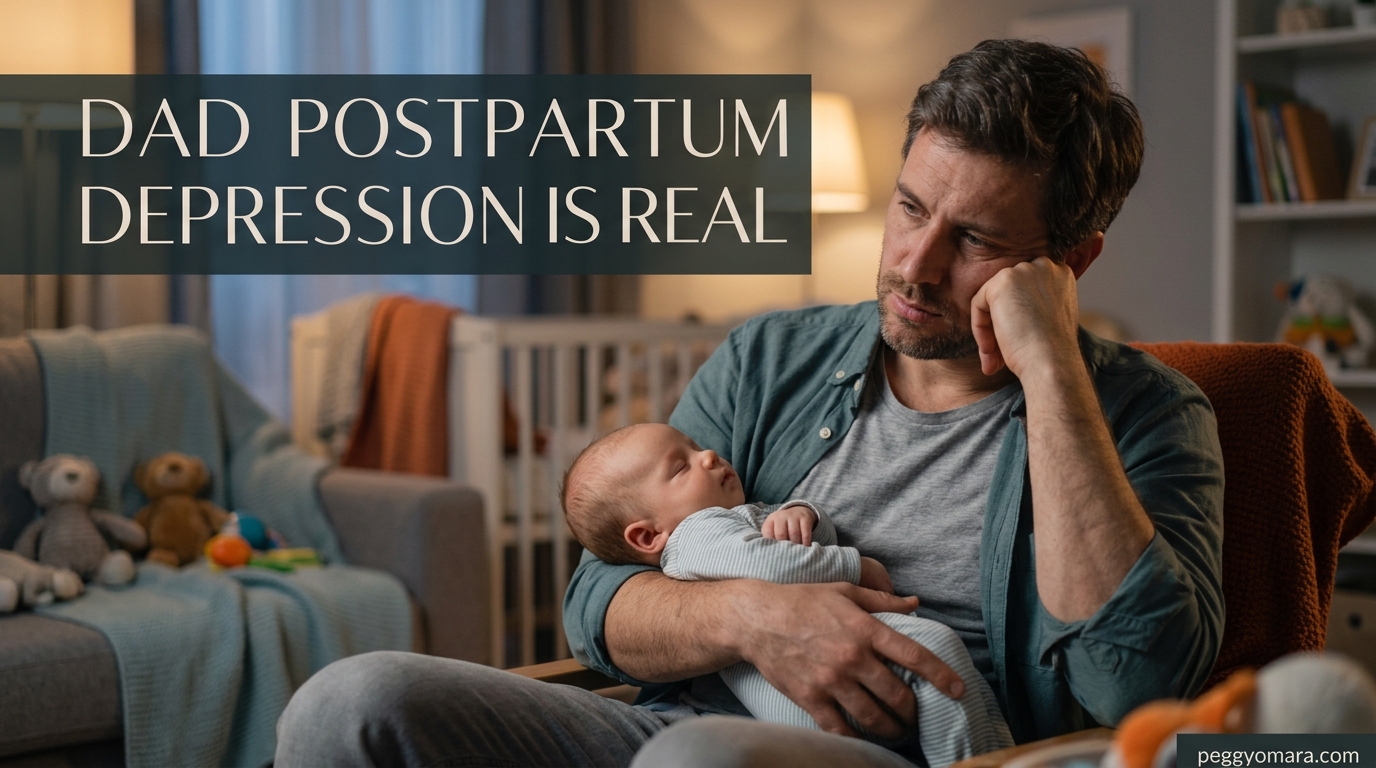
When my brother became a father three years ago, nobody in our family saw his depression coming. He seemed fine on the surface—going to work, helping with the baby, doing all the things new dads are supposed to do. But beneath that mask of competence, he was drowning. That is the reality of dad postpartum depression: it hides in plain sight because we are not looking for it the right way.
Yes, postpartum depression in dads is very real. Research from the National Institutes of Health shows approximately 8 to 10 percent of new fathers experience paternal postpartum depression. The condition typically peaks 3 to 6 months after birth but can develop anytime during the first year. Many families miss it entirely because the symptoms in men look nothing like what we expect depression to look like.
Our team spent months reviewing research, speaking with mental health professionals who specialize in paternal mental health, and reading countless stories from fathers who went through this. What we learned shocked us. Not only is dad postpartum depression more common than most people realize, but it often goes untreated because men, their partners, and even healthcare providers fail to recognize the warning signs.
In this guide, you will learn why dad postpartum depression hides in plain sight, what symptoms actually look like in men (hint: it is rarely sadness), and how families can catch it early. Whether you are a new dad wondering if what you are feeling is normal, or a partner worried about the father of your child, this information could change everything.
Table of Contents
What Is Dad Postpartum Depression?
Dad postpartum depression, also called paternal postpartum depression (PPPD) or paternal perinatal depression (PPND), is a clinical depression that affects new fathers during the postpartum period. Unlike the temporary “baby blues” that many new parents experience, PPPD is a persistent condition that interferes with daily functioning and requires intervention to resolve.
The statistics are sobering. About 1 in 10 new dads develop postpartum depression, with some studies showing rates as high as 25% when their partner also has depression. The condition is most likely to emerge between 3 and 6 months after the baby’s birth, though it can appear anytime in the first year. Some fathers even experience symptoms during their partner’s pregnancy, a condition known as paternal prenatal depression.
What makes this condition particularly insidious is how misunderstood it remains. Medical research has only recently begun taking paternal mental health seriously. For decades, postpartum depression was viewed as exclusively a maternal issue. That oversight left generations of struggling fathers without recognition or support.
The Hormonal Reality: Men’s Bodies Change Too
We tend to think of postpartum depression as purely psychological, but biology plays a significant role. New fathers experience measurable hormonal shifts that mirror their partner’s changes in surprising ways.
Testosterone levels drop significantly in new fathers—sometimes by as much as 30 to 50 percent in the first three weeks after birth. This decline, while temporary, can contribute to fatigue, mood changes, and decreased motivation. At the same time, levels of prolactin (the hormone associated with bonding and caregiving) and cortisol (the stress hormone) increase in men during early fatherhood.
These hormonal fluctuations do not cause depression on their own. But for men with other risk factors—such as a history of depression, sleep deprivation, or relationship stress—the biological changes can tip the scales toward clinical depression. Understanding that men experience real physiological changes helps destigmatize what too many dads dismiss as “just being weak.”
Why Most Families Do Not See It Coming?
The core premise of this article is not just a headline—it is the lived experience of thousands of families every year. Dad postpartum depression hides because our culture trains us to look for depression in women, not men. When we think “postpartum depression,” we picture a crying mother, not an irritable father who works late every night.
Cultural expectations create a perfect hiding place for paternal depression. Men are socialized to be strong, stoic providers who handle stress without complaint. A new father expressing emotional struggle often faces subtle (or not-so-subtle) messages to “man up” or focus on supporting his partner instead. This pressure to perform competence prevents many dads from acknowledging their own pain.
The provider role creates additional camouflage. When a new dad throws himself into work, leaving before the baby wakes and returning after bedtime, everyone sees a dedicated breadwinner. Nobody sees the father who cannot bear to be home because he feels disconnected from his child and overwhelmed by the demands of parenthood. Workaholism becomes socially acceptable depression.
The Screening Gap at Pediatric Visits
One of the most significant systemic failures is the lack of paternal screening during pediatric appointments. New mothers routinely complete depression screening tools like the Edinburgh Postnatal Depression Scale at their six-week and follow-up appointments. New fathers rarely get asked about their mental health at all.
The American Academy of Pediatrics now recommends that pediatricians screen fathers for depression, but implementation remains inconsistent. Most well-child visits focus entirely on the baby and mother. Dads often attend these appointments, standing silently in the corner while the medical team directs every question toward their partner. The opportunity to catch early warning signs slips away unnoticed.
How Male Depression Looks Different
The biggest reason families miss dad postpartum depression is that it does not look like depression—at least not the version we have been taught to recognize. Men and women often experience depression through completely different emotional languages.
Where women with postpartum depression typically express sadness, tearfulness, and self-doubt, men more commonly show irritability, anger, and withdrawal. A depressed mother might cry while holding her baby. A depressed father might snap at his toddler for spilling juice, then retreat to the garage for hours. Both are suffering. Only one looks like what we expect depression to look like.
This difference in symptom presentation means partners often misinterpret the signs. When a new dad becomes short-tempered or distant, his partner may assume he is unhappy with the relationship, stressed about work, or simply not cut out for fatherhood. The real explanation—clinical depression requiring treatment—rarely enters the conversation.
Signs and Symptoms Specific to Men
Recognizing dad postpartum depression requires learning a different symptom vocabulary. If you are concerned about yourself or the father of your child, look for these male-specific warning signs:
1. Irritability and anger outbursts. Small frustrations trigger disproportionate rage. The dad who used to be patient now explodes over minor inconveniences. This “postpartum rage” often shocks both the man experiencing it and his family.
2. Emotional withdrawal and isolation. He stops engaging with family life. Dinner conversations become one-word answers. He retreats to another room immediately after work. Physical affection decreases. He seems emotionally unavailable even when physically present.
3. Workaholism and avoidance. He begins working longer hours than necessary, volunteering for extra shifts, or taking on projects that keep him away from home. The office becomes a refuge from the overwhelming feelings associated with fatherhood.
4. Increased substance use. Drinking more alcohol than usual, using marijuana to “unwind” every night, or relying on other substances to cope with stress. This self-medication often escalates gradually until it becomes a daily habit.
5. Physical complaints without clear cause. Headaches, stomach problems, muscle tension, and unexplained aches become frequent. Many men express depression somatically rather than emotionally, visiting doctors for physical symptoms that have psychological roots.
6. Risky or impulsive behavior. Reckless driving, gambling, extramarital attention, or other uncharacteristic thrill-seeking. These behaviors often represent attempts to feel something other than numbness.
7. Disconnection from the baby. Avoiding opportunities to hold, feed, or bond with the child. Expressing indifference about the baby’s milestones. Feeling like an outsider in the mother-infant relationship rather than an integral parent.
8. Persistent negativity and cynicism. A bleak outlook that goes beyond normal new-parent overwhelm. Comments like “This is never going to get better” or “I do not see the point of anything anymore.” Hopelessness about the future.
Normal New Dad Stress vs. Clinical Depression
Not every overwhelmed father has clinical depression. The transition to parenthood is inherently stressful, and some degree of anxiety, exhaustion, and identity adjustment is normal. Here is how to tell the difference:
Normal stress: Comes and goes depending on circumstances (bad nights of sleep, work deadlines, baby being fussy). You can still enjoy moments with your baby and look forward to things. Symptoms improve when you get rest or support. You feel like yourself most of the time, just tired.
Clinical depression: Persists regardless of circumstances, lasting most of the day, nearly every day, for two weeks or longer. Nothing seems enjoyable anymore. Rest does not help—you wake up feeling just as heavy. You feel fundamentally changed, like the “old you” has disappeared and will never return.
The two-week duration threshold is key. If symptoms persist beyond two weeks and interfere with work, relationships, or daily functioning, professional evaluation is warranted. Trust your instincts—if something feels seriously wrong, it probably is.
Causes and Risk Factors in 2026
Dad postpartum depression rarely has a single cause. Instead, multiple factors converge to create vulnerability. Understanding these risk factors helps identify who is most likely to develop PPPD and why.
The Strongest Predictor: Your Partner’s Mental Health
The single most powerful predictor of paternal postpartum depression is maternal postpartum depression. When a mother experiences PPD, her partner has up to a 50% chance of developing depression as well. This correlation is stronger than almost any other risk factor.
The connection makes intuitive sense. Watching your partner suffer is emotionally devastating. The relationship strain of one depressed parent inevitably affects the other. Additionally, when both parents are struggling, the support system that normally buffers stress collapses. Each partner is too depleted to help the other recover.
If your partner has been diagnosed with postpartum depression, this is not a time to ignore your own mental health. Couples who address both parents’ wellbeing simultaneously have better outcomes than those who focus exclusively on the mother’s recovery.
Personal History of Depression or Anxiety
Men with a previous history of depression, anxiety, or other mental health conditions face significantly elevated risk for PPPD. The hormonal changes, sleep disruption, and identity transition of new fatherhood can reactivate vulnerabilities that seemed dormant.
Having a history of depression does not mean you will definitely develop PPPD. But it does mean you should be proactive about prevention and early intervention. Tell your doctor about your history before the baby arrives. Know the warning signs. Have a plan for what you will do if symptoms emerge.
Sleep Deprivation and Exhaustion
New parents expect sleep loss, but the reality often exceeds what anyone prepared for. Chronic sleep deprivation is a form of torture for good reason—it fundamentally breaks down mental health. After weeks or months of fragmented sleep, the brain’s emotional regulation systems fail.
Dads often get even less sleep support than moms. Cultural assumptions that men do not need as much rest, or that they should handle night duties without complaint, leave many fathers severely sleep-deprived. If you are getting fewer than six hours of sleep per night for an extended period, your mental health will suffer regardless of how tough you are.
Relationship Strain and Co-Parenting Stress
The transition to parenthood tests even the strongest relationships. Disagreements about parenting approaches, resentment over unequal workload distribution, and decreased intimacy create a perfect storm for depression. Many men report feeling like a third wheel in the mother-baby bond, uncertain of their role or value.
Financial pressure compounds these stresses. The provider role weighs heavily on many new fathers, especially if money is tight or job security feels uncertain. The combination of financial anxiety and relationship strain pushes many men toward depression even without other risk factors.
Social Isolation and Lack of Support
New mothers typically have built-in support networks—maternity groups, mom friends, family attention focused on their wellbeing. New fathers often lack equivalent resources. Male friends without children may drift away. Colleagues focus on work performance rather than personal adjustment. The father stands alone while everyone asks how the mother is doing.
This isolation is dangerous. Social connection is one of the strongest protective factors against depression. Men who maintain supportive friendships and feel part of a community weather the transition to fatherhood far better than those who face it alone.
Treatment Options and Support
The good news about dad postpartum depression is that it is highly treatable. With appropriate intervention, most fathers experience significant improvement within two to three months and full recovery within six to twelve months. The key is seeking help rather than waiting for the condition to resolve on its own—it rarely does.
Psychotherapy: Talking Through the Transition
Multiple forms of therapy effectively treat paternal postpartum depression. Cognitive behavioral therapy (CBT) helps men identify and change negative thought patterns that fuel depression. Interpersonal therapy focuses on relationship dynamics and role transitions. Both approaches have strong research support for treating PPPD.
Some therapists specialize in perinatal mental health and understand the unique challenges new fathers face. Working with a therapist who “gets it” makes a significant difference. Online therapy options have expanded access dramatically, allowing new dads to get support without leaving home or explaining absences to employers.
Medication When Needed
Antidepressant medications may be recommended for moderate to severe depression, or when therapy alone is not sufficient. Selective serotonin reuptake inhibitors (SSRIs) are the most commonly prescribed class and have a strong safety record.
Many men resist medication due to stigma or concerns about side effects. However, untreated depression also has serious consequences for work performance, relationships, and physical health. A psychiatrist can discuss whether medication is appropriate and address any concerns about starting treatment.
Support Groups and Peer Connection
Finding other fathers who understand what you are going through provides powerful healing. Support groups specifically for dads with postpartum depression exist in many communities and online. Hearing another father describe the exact feelings you have been hiding normalizes your experience and reduces shame.
Organizations like Postpartum Support International offer resources, hotlines, and group meetings for fathers. Online communities such as Reddit’s r/daddit provide peer support for those not ready for in-person meetings. Connecting with other dads who have recovered offers hope that you will feel like yourself again.
The Foundation of Self-Care
Basic self-care sounds almost insulting as advice for serious depression, but the fundamentals matter enormously. Sleep, nutrition, physical activity, and brief periods of personal time are not luxuries—they are mental health necessities.
Prioritize sleep aggressively. If that means sleeping in a different room for a while, hiring overnight help, or trading off night duties with your partner, do it. Exercise, even just a daily walk, significantly improves mood. Eat regular meals rather than surviving on vending machine snacks. These basics provide the physical foundation your brain needs to recover.
How Partners and Families Can Help
If you are worried about the father of your child, your role in recognizing and addressing postpartum depression is critical. Most dads do not recognize their own symptoms until someone else points them out. Here is how to help effectively.
Recognize the Signs That Differ from Typical Stress
Do not wait for him to become sad or express hopelessness. Watch for the male-specific symptoms described earlier: increased irritability, withdrawal from family, excessive work hours, substance use, and physical complaints. If these patterns persist for two weeks or longer, something is wrong beyond normal adjustment stress.
Trust your intuition. If something feels off about his behavior, even if you cannot name exactly what, pay attention. Partners often notice changes before the depressed person recognizes them in themselves.
How to Start the Conversation
Broaching the topic of depression requires care. Accusations or demands will backfire. Instead, use “I” statements that express concern without judgment.
Try: “I have noticed you seem really stressed lately, and I am worried about you. How are you really doing?” Or: “You do not seem like yourself. I miss how we used to laugh together. Can we talk about what is going on?”
Avoid: “You are depressed and need help” (too direct, may provoke defensiveness) or “You never spend time with us anymore” (sounds like an attack). The goal is opening a door, not forcing a diagnosis.
Give Him Permission to Struggle
Many fathers hide depression because they believe they must be strong for their family. Explicitly give permission for him to not be okay. Say things like: “I know this is really hard. It is okay to admit you are struggling. That does not make you weak—it makes you human.”
Normalize seeking help by presenting it as a responsible choice. “Talking to a therapist is just taking care of yourself so you can take care of us. It is no different than seeing a doctor for a broken arm.” Reframe help-seeking as strength and self-responsibility rather than weakness.
Practical Support Strategies
Depression makes basic tasks feel overwhelming. Offer concrete help rather than open-ended questions. Instead of “Let me know if you need anything,” try “I am taking the baby to my mom’s for two hours so you can nap.” Remove the burden of decision-making that paralyzes depressed minds.
Protect his sleep when possible. Take over night feedings sometimes, even if you are also tired. Sleep deprivation worsens depression faster than almost any other factor. A few nights of decent rest can significantly improve his ability to cope.
Encourage (but do not force) small steps toward reconnection. A short walk with the baby, a quick game of catch, or a casual dinner out can break the isolation cycle. Do not expect immediate enthusiasm—depression anhedonia means nothing feels enjoyable at first. But the activity still matters for recovery.
Take Care of Your Own Mental Health Too
You cannot pour from an empty cup. Supporting a depressed partner while caring for a newborn is extraordinarily demanding. If your own mental health deteriorates, you will both suffer. Ensure you have your own support system, whether that is friends, family, a therapist, or support groups.
If both parents are struggling with depression—a surprisingly common situation—seek professional help immediately. Dual parental depression requires coordinated treatment and additional support resources. Do not try to handle this alone.
Warning Signs That Need Immediate Attention
Most dad postpartum depression, while serious, is not an emergency. However, certain symptoms require immediate intervention:
Any mention of wanting to hurt himself, the baby, or others. Any suicidal thoughts or expressions of hopelessness about the future. Significant substance abuse that impairs functioning. Complete inability to care for himself or the baby. If any of these are present, seek emergency help through a crisis hotline, emergency room, or mental health crisis team.
Prevention Strategies for Expecting and New Fathers
While not all depression is preventable, expecting fathers can significantly reduce their risk by taking proactive steps before and immediately after the baby’s arrival.
Before the baby arrives: Discuss expectations openly with your partner. How will you divide nighttime duties? What does “equal parenting” look like to each of you? What are your fears about fatherhood? Having these conversations before sleep deprivation sets in prevents resentment later.
Know your risk factors: If you have a history of depression, your partner is at risk for PPD, or you lack strong social support, acknowledge these vulnerabilities. Talk to your doctor before the birth about a postpartum mental health plan. Some therapists offer pre-birth counseling specifically to prevent paternal depression.
Plan for sleep: Sleep deprivation is the single most preventable risk factor. Make a concrete plan for how you will both get adequate rest. Consider hiring postpartum doula support, enlisting family help, or adjusting work schedules temporarily. Protecting sleep is protecting your mental health.
Maintain your relationship: Schedule regular check-ins with your partner during the newborn period. Even five minutes of genuine conversation about something other than the baby maintains your connection. Address small resentments before they become large ones.
Build your support network: Join a dads group before the baby arrives, or connect with other expecting fathers. Having peers who are going through the same transition provides invaluable perspective. You are not alone in this, even when it feels like you are.
FAQ: Common Questions About Dad Postpartum Depression
Is postpartum depression real for dads?
Yes, postpartum depression in dads is very real and medically recognized. Research shows approximately 8 to 10 percent of new fathers experience paternal postpartum depression, with symptoms typically peaking 3 to 6 months after birth but potentially developing anytime in the first year. The condition is also called paternal postpartum depression (PPPD) or paternal perinatal depression (PPND).
What does postpartum depression look like for dads?
In men, postpartum depression often looks different than in women. Rather than sadness and crying, dads may experience irritability and anger, withdrawal from family, working excessively, substance use, physical symptoms like headaches and stomach issues, and risky behaviors. Male depression frequently presents through behavioral changes rather than emotional expression, which is why it often goes unrecognized.
How long does male postpartum depression last?
Without treatment, paternal postpartum depression can last several months to over a year. The highest risk period is 3 to 6 months postpartum, but symptoms can develop anytime in the first year. With proper treatment including therapy, medication when needed, and lifestyle changes, many dads see significant improvement within 2 to 3 months and full recovery within 6 to 12 months.
Can dads get postpartum rage?
Yes, anger and irritability are common symptoms of postpartum depression in men. Unlike women who may show sadness, dads often experience depression as increased anger, frustration, or postpartum rage characterized by sudden outbursts that feel out of character. This anger may be directed at partners, other drivers, work colleagues, or even the baby. Recognizing these anger episodes as potential depression symptoms rather than character flaws is essential for getting appropriate help.
When does PPD go away?
Postpartum depression does not typically resolve on its own without intervention. While mild cases of baby blues resolve within two weeks, clinical depression persists and often worsens without treatment. With professional help including therapy, possible medication, and self-care strategies, most fathers experience significant improvement within 2 to 3 months. Seeking help early leads to faster recovery.
What is the strongest predictor of paternal postpartum depression?
A partner’s depression is the strongest predictor of paternal postpartum depression. Up to 50% of men whose partners experience postpartum depression also develop depression themselves. Other key predictors include personal history of depression, severe sleep deprivation, relationship strain, financial stress, and lack of social support. Knowing these risk factors allows for early monitoring and intervention.
What does postpartum depression feel like?
Postpartum depression feels like persistent emotional distress that does not lift with rest or improved circumstances. Dads describe feeling trapped, overwhelmed, disconnected from their baby, guilty for not feeling joyful, and unable to look beyond the difficult present moment. Physical symptoms like exhaustion, headaches, and body aches often accompany the emotional weight. Many fathers report feeling like they have lost themselves and will never feel normal again.
Is it normal for a father to want to disappear during postpartum stress?
While not normal in a healthy sense, wanting to escape or disappear is a documented symptom of paternal postpartum depression. Many fathers report intentionally avoiding their child and partner to suppress negative emotions, followed by intense guilt about these feelings. Working excessively, withdrawing to another room, or fantasizing about leaving are signs that professional help is needed. These thoughts do not make someone a bad father—they indicate a treatable medical condition.
Conclusion: You Are Not Alone, and There Is a Path Forward
Dad postpartum depression is real. It affects 1 in 10 new fathers. And yes, most families do not see it coming because we have been taught to look for sadness in women, not anger and withdrawal in men. But now you know what to look for—the irritability that masks despair, the workaholism that hides avoidance, the physical complaints that express what words cannot.
If you are a father struggling right now, hear this clearly: you are not weak. You are not failing. You are experiencing a treatable medical condition that happens to millions of men during one of life’s most challenging transitions. Seeking help is not admitting defeat—it is taking responsibility for your wellbeing so you can be the father your child needs.
If you are a partner or family member worried about a dad in your life, trust your observations. Start the conversation with compassion. Give him permission to not be okay. And ensure you are caring for yourself through this process.
The silence around paternal postpartum depression has lasted too long. Every time a father speaks honestly about his struggle, every time a partner recognizes the signs early, every time a family seeks help instead of suffering in isolation, we break that silence. Your family does not have to be caught off guard. You can see it coming now—and you can do something about it.
If you or someone you love may be experiencing dad postpartum depression, reach out today. Talk to a doctor. Contact Postpartum Support International at 1-800-944-4773. Join an online support group. Take the first step. Recovery is not only possible—it is likely, with the right support. You will feel like yourself again. And your family will get the whole father they deserve.