
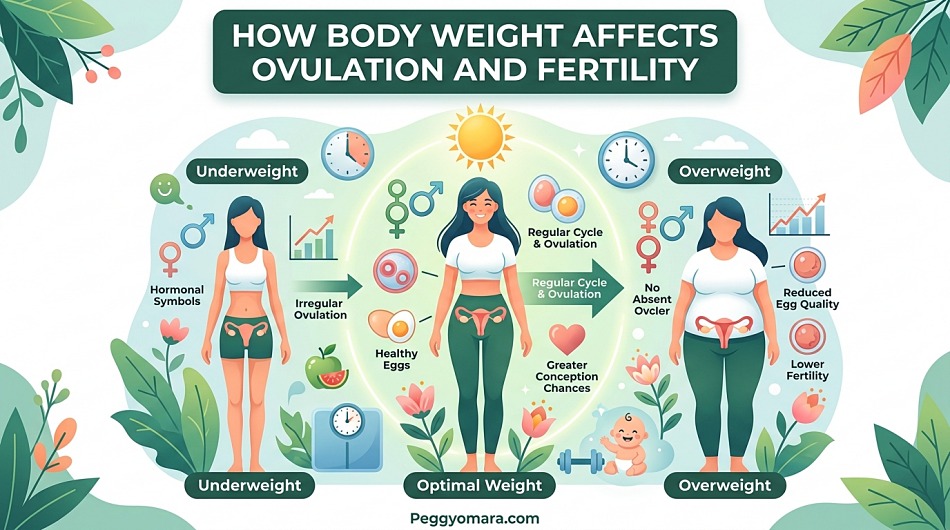
Your body weight plays a significant role in your reproductive health. Both being overweight and underweight can disrupt the delicate hormonal balance needed for regular ovulation and conception.
Body weight affects ovulation and fertility by altering hormone production. Excess fat tissue produces estrogen, which can prevent ovulation by mimicking pregnancy hormones. Too little body fat reduces estrogen below the threshold needed for regular menstrual cycles. Research shows that women with a BMI over 30 have a 20% lower IVF success rate compared to those in the healthy weight range.
Understanding this connection empowers you to make informed decisions about your preconception health. Let me explain exactly how weight impacts your fertility and what you can do about it.
Table of Contents
Understanding BMI and Healthy Weight Ranges for Conception
Body Mass Index (BMI) is the standard tool doctors use to assess whether your weight falls within a healthy range. BMI is calculated by dividing your weight in kilograms by your height in meters squared.
While BMI has limitations—it does not account for muscle mass or body composition—it remains the primary metric used in fertility research and clinical settings. Here is how the categories break down:
| BMI Range | Classification | Fertility Impact |
|---|---|---|
| Below 18.5 | Underweight | Higher risk of irregular ovulation |
| 18.5 – 24.9 | Healthy weight | Optimal for conception |
| 25.0 – 29.9 | Overweight | May affect ovulation in some women |
| 30.0 and above | Obese | Increased risk of ovulatory issues |
The healthy BMI range of 18.5 to 24.9 represents the weight zone where most women experience regular ovulation. However, fertility exists on a spectrum, and many women outside this range conceive without difficulty.
Your individual biology matters more than a number on a chart. Some women ovulate regularly at higher BMIs, while others experience irregular cycles even within the healthy weight range.
How Being Overweight or Obese Affects Ovulation
Excess body weight impacts fertility through multiple biological pathways. When I reviewed the research from Monash University and NIH studies, the hormonal mechanisms became clear.
The Estrogen Connection
Adipose tissue—what we call body fat—produces estrogen. In healthy amounts, this supports your cycle. But when you carry excess weight, your fat cells produce too much estrogen.
This excess estrogen tricks your body into thinking it is already pregnant. Your brain reduces production of follicle stimulating hormone (FSH) and luteinizing hormone (LH), the two hormones that trigger egg release.
The result is anovulation—months where no egg is released at all. Studies show that 30-47% of women with obesity experience irregular menstrual cycles compared to 15-20% of women in the healthy weight range.
Insulin Resistance and Hormone Disruption
Overweight women often develop insulin resistance, where cells stop responding properly to insulin. Your pancreas produces more insulin to compensate.
High insulin levels decrease sex hormone-binding globulin (SHBG), a protein that binds to hormones in your blood. With less SHBG available, free testosterone and estrogen levels rise, further disrupting ovulation.
This hormonal cascade creates a challenging environment for conception. Even when ovulation does occur, egg quality may be compromised.
Impact on IVF Success
The statistics on fertility treatment are particularly telling. According to research published in fertility journals, compared to women at healthy weights:
Women who are overweight (BMI 25-29.9) have a 9% lower chance of live birth with IVF. Women who are obese (BMI 30+) face a 20% reduction in IVF success rates.
These are not minor differences. They represent real outcomes for thousands of women undergoing treatment each year.
How Being Underweight Disrupts Fertility
Too little body fat creates the opposite problem but similar outcome—disrupted ovulation. When your body fat percentage drops too low, your brain perceives a state of starvation.
The Hypothalamic Response
Your hypothalamus, the brain region controlling reproduction, essentially shuts down ovulation to conserve energy. It stops sending signals to your ovaries, a condition called hypothalamic amenorrhea.
Women with BMI below 18.5 frequently experience irregular periods or lose them entirely. Even women at BMI 19-20 may struggle if they have low body fat combined with high activity levels.
Insufficient Estrogen Production
With inadequate fat tissue, your body cannot produce enough estrogen to build a thick uterine lining or trigger ovulation. Estrogen levels drop, causing irregular or absent cycles.
Beyond fertility concerns, low estrogen affects bone density, cardiovascular health, and mood. The effects extend far beyond difficulty conceiving.
Athletes and Active Women
I have noticed in forums that many active women struggle with this connection. Marathon runners, competitive athletes, and women with intense exercise routines often face fertility challenges despite appearing healthy.
The combination of low body fat and high energy expenditure signals danger to your reproductive system. Gaining even 5-10 pounds can restore cycles for many women.
The Connection Between PCOS, Weight, and Ovulation
Polycystic ovary syndrome (PCOS) represents one of the most common connections between weight and fertility challenges. This metabolic condition affects 6-12% of women of reproductive age.
The Weight-PCOS Relationship
PCOS and weight have a complicated bidirectional relationship. PCOS makes weight gain easier due to insulin resistance. Excess weight worsens PCOS symptoms, including irregular ovulation.
Women with PCOS often have higher androgen levels, irregular cycles, and may not ovulate consistently. Many also struggle with weight management due to metabolic differences.
Weight Loss as Treatment
Here is the encouraging finding from research: modest weight loss significantly improves PCOS-related fertility issues. Losing just 5-10% of body weight can restore regular ovulation in 30-40% of women with PCOS.
A woman weighing 200 pounds who loses 10-20 pounds may see her cycles return naturally. This is one of the most effective first-line treatments for PCOS-related infertility.
Not Just About Weight
It is crucial to note that PCOS affects women at all weights. Lean PCOS is a real condition affecting women with normal BMI. If you have PCOS symptoms but normal weight, do not dismiss your concerns.
Weight and Fertility Treatment Success Rates
When natural conception does not happen, many women turn to assisted reproductive technology. Weight significantly impacts these outcomes too.
IVF Statistics by BMI
The numbers tell a clear story. A comprehensive analysis of IVF outcomes shows progressive decline in success rates as BMI increases:
| BMI Category | IVF Live Birth Rate Reduction |
|---|---|
| Healthy weight (18.5-24.9) | Baseline (no reduction) |
| Overweight (25-29.9) | 9% lower success |
| Obese (30+) | 20% lower success |
These statistics represent averages across thousands of cycles. Individual experiences vary, but the trend is consistent across clinics worldwide.
Weight Limits at Fertility Clinics
Some fertility clinics implement BMI cutoffs, typically between 35-40. These policies reflect safety concerns about anesthesia during egg retrieval and surgical delivery risks.
If you face this barrier, do not lose hope. Weight management programs specifically designed for fertility can help you reach clinic requirements. Many clinics also offer counseling resources.
How Long After Weight Changes Does Fertility Improve?
One of the most common questions I see in fertility forums concerns timing. Women want to know how quickly weight changes translate to improved ovulation.
The Timeline for Weight Loss
Research suggests that fertility improvements begin within weeks to months of weight changes. Studies tracking women with PCOS found that ovulation returned within 3-6 months for many participants losing 5-10% of body weight.
Some women report cycle changes even sooner—within 4-8 weeks of starting a weight management program. The body responds quickly to metabolic improvements.
Gaining Weight for Recovery
For underweight women, the timeline can be even faster. Gaining 5-10 pounds often restores periods within 1-3 months. I have read accounts from women who had cycles return within weeks of increasing their caloric intake.
Temporary Ovulation Weight Gain
Many women report gaining 3-8 pounds during their luteal phase (after ovulation). This temporary water weight and bloating resolves with menstruation.
This is different from body weight affecting ovulation—it is ovulation affecting your weight. Do not confuse this normal fluctuation with a need for weight loss.
The Emotional Side of Weight and Fertility Conversations
Through my research, I noticed a significant gap in medical content about the emotional impact of weight-related fertility discussions. Forum posts reveal real pain that deserves acknowledgment.
When Doctors Miss the Mark
Reddit discussions in fertility communities show women feeling dismissed when doctors immediately blame weight for conception difficulties. While weight matters, it is rarely the only factor.
Women share stories of doctors making hurtful comments, assuming weight is the problem without testing for other issues, and creating shame rather than support.
If you have experienced this, your feelings are valid. Weight is one factor among many. Age, sperm quality, tubal factors, endometriosis, thyroid issues, and unexplained infertility all play roles.
Success Stories at Every Size
Important research shows that overweight and obese women do conceive—both naturally and with assistance. One study found that 70% of women with BMI over 30 conceived spontaneously within three years without medical intervention.
Your weight affects probability, not possibility. Many plus-sized women have healthy pregnancies and healthy babies.
Finding Supportive Care
If your current provider makes you feel judged about weight, you have options. Seek a reproductive endocrinologist who addresses weight as one factor while also investigating other potential causes.
The best fertility doctors combine honest conversations about health optimization with compassionate, patient-centered care.
Evidence-Based Steps for Healthy Weight Before Pregnancy
If you are considering pregnancy and want to optimize your weight, research supports specific approaches. The goal is sustainable health improvement, not crash dieting.
Target a 5-10% Weight Loss
For overweight women, losing just 5-10% of body weight significantly improves fertility markers. A 180-pound woman losing 9-18 pounds may see cycle improvements.
This modest goal is achievable and sustainable. It does not require extreme measures or reaching an ideal weight.
Nutrition for Fertility
Research supports a Mediterranean-style eating pattern for fertility. Focus on whole grains, vegetables, fruits, legumes, nuts, and olive oil. Include moderate amounts of fish and limit red meat.
Key nutrients include folate (leafy greens, legumes), omega-3 fatty acids (fatty fish, walnuts), and iron (lean meats, spinach). Avoid trans fats and limit refined carbohydrates.
For underweight women, increase caloric intake with nutrient-dense foods. Add healthy fats like avocados, nuts, and olive oil. Include protein with each meal.
Physical Activity Guidelines
Moderate exercise supports fertility for most women. Aim for 150 minutes of moderate activity weekly—walking, swimming, cycling. Add strength training twice weekly.
Be cautious with excessive high-intensity exercise if you are trying to conceive. More than 60 minutes of intense daily exercise can disrupt ovulation, especially at lower body weights.
When to Seek Medical Help
Consult a healthcare provider if you have been trying to conceive for 12 months without success (6 months if you are over 35). Seek help sooner if you have irregular periods, PCOS, or known fertility concerns.
A reproductive endocrinologist can evaluate all factors affecting your fertility, not just weight. They can also provide medically supervised weight management if needed.
Frequently Asked Questions
Does body weight affect fertility when trying to conceive?
Yes, body weight affects fertility for both women and men. In women, being significantly overweight or underweight can disrupt hormonal balance and prevent regular ovulation. Research shows that women with obesity have a 20% lower IVF success rate compared to those at healthy weights. However, many women outside the ideal BMI range conceive successfully every day.
At what weight is it harder to conceive?
Fertility challenges become more common with BMI over 30 (obese) or under 18.5 (underweight). Women with BMI 25-29.9 (overweight) may experience some fertility impact, particularly if they also have PCOS or insulin resistance. The risk increases progressively with higher BMI categories. However, weight is just one factor among many that affect conception.
What are the top 3 causes of female infertility?
The three most common causes of female infertility are: 1) Ovulatory disorders (including PCOS and hormonal imbalances), 2) Tubal factor infertility (blocked or damaged fallopian tubes), and 3) Endometriosis (uterine tissue growing outside the uterus). Age-related egg quality decline is also a major factor, particularly for women over 35.
Can losing weight restore ovulation?
Yes, losing weight can restore ovulation for many women. Research shows that losing just 5-10% of body weight can help 30-40% of women with PCOS regain regular cycles. The timeline varies, but many women see improvements within 3-6 months of weight loss. Even modest weight changes can significantly improve hormonal balance and fertility markers.
Is it normal to gain weight during ovulation?
Yes, temporary weight gain of 3-8 pounds during ovulation and the luteal phase is completely normal. This results from hormonal changes causing water retention and bloating. The weight typically resolves with menstruation. This temporary fluctuation is different from body weight affecting ovulation—it is actually ovulation affecting your weight temporarily.
Conclusion
Understanding how body weight affects ovulation and your chances of conceiving empowers you to make informed health decisions. The connection is real—excess fat tissue produces estrogen that can prevent ovulation, while insufficient body fat disrupts the hormonal signals needed for regular cycles.
Research consistently shows that women in the healthy BMI range of 18.5-24.9 have the highest fertility rates. However, fertility exists on a spectrum, and many women successfully conceive outside this range. Weight matters, but it is never the only factor.
If you are planning pregnancy, consider reaching a healthy weight through sustainable changes. Even a 5-10% weight adjustment can significantly improve ovulation for many women. Focus on nutrient-dense foods, moderate exercise, and stress management.
Remember that your fertility journey is unique. Work with healthcare providers who address weight compassionately while investigating all potential factors. With the right support and information, you can optimize your reproductive health for the best possible outcome.