
The AMH test has become one of the most discussed tools in fertility assessment over the past decade. Many women arrive at their doctor’s office asking for this specific blood test, hoping it will reveal everything about their ability to conceive.
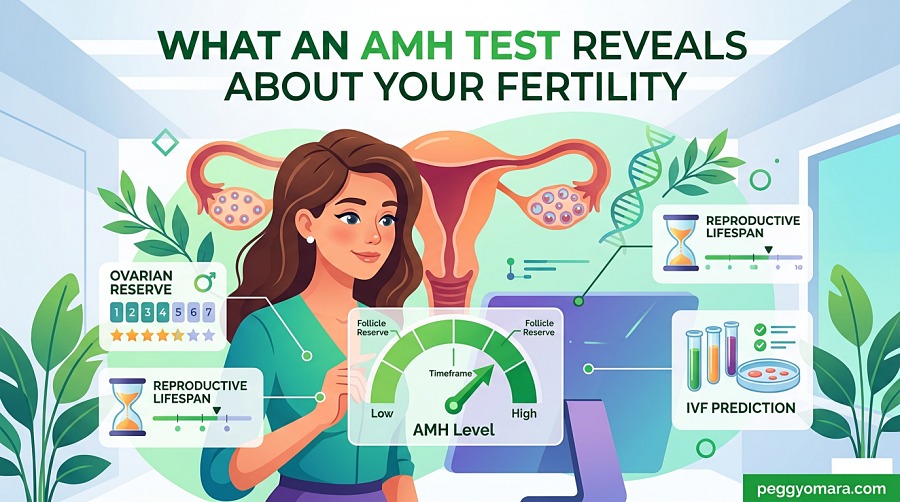
An AMH test reveals critical information about your ovarian reserve, or how many eggs you have remaining. It can help predict how you might respond to fertility medications and whether conditions like PCOS may be affecting your reproductive health.
However, what an AMH test reveals about your fertility comes with significant limitations. The test cannot tell you about egg quality, predict your chances of natural conception, or diagnose infertility on its own.
In this guide, we’ll walk you through exactly what this blood test can and cannot tell you. We want you to leave with realistic expectations and a clear understanding of how this one piece fits into your larger fertility picture.
Table of Contents
Quick Facts: What to Know About AMH Testing
Before we dive deeper, here are the essential facts you need to understand about AMH testing:
What AMH measures: The hormone level reflects your remaining egg supply, also called ovarian reserve. Higher numbers generally mean more eggs remaining.
What AMH cannot measure: Egg quality, structural fertility issues, or your actual ability to get pregnant naturally are not revealed by this test.
Testing is simple: A basic blood draw that can happen any day of your menstrual cycle. No fasting or special timing required.
Results vary by age: A “good” AMH level for a 25-year-old looks very different from a healthy reading at 40.
What Is AMH?
AMH stands for Anti-Mullerian Hormone, a substance produced by the granulosa cells inside your ovarian follicles. These follicles are the tiny sacs in your ovaries that house your developing eggs.
The hormone takes its name from its role in fetal development, where it prevents the formation of male reproductive structures in female fetuses. After birth, AMH continues to be produced throughout your reproductive years.
Your AMH levels correlate directly with your antral follicle count, which doctors can see on an ultrasound. More follicles producing AMH means higher hormone levels detected in your blood.
The test has gained popularity because it offers a snapshot of your remaining egg supply that remains relatively stable throughout your menstrual cycle. Unlike FSH (follicle stimulating hormone), which fluctuates dramatically, AMH gives a consistent reading regardless of cycle day.
AMH testing emerged as a standard fertility assessment tool in the early 2000s. Today it serves as one component of a comprehensive fertility workup, alongside other hormone tests and imaging.
What an AMH Test Reveals About Your Fertility
Understanding the capabilities of this test helps you interpret results appropriately. Here are five key things AMH testing can tell you about your reproductive health.
Your Estimated Egg Count and Ovarian Reserve
The primary purpose of AMH testing is estimating how many eggs remain in your ovaries. This measurement, called ovarian reserve, declines naturally as you age.
Higher AMH levels typically indicate a larger remaining egg supply. Lower levels suggest fewer eggs remain, which is normal and expected as women move through their thirties and forties.
Doctors use this information to set realistic expectations about fertility timelines. If you’re 32 with an AMH level typical of someone in their early twenties, you likely have more time to pursue pregnancy or fertility preservation.
PCOS Indicators
Elevated AMH levels can signal polycystic ovary syndrome, commonly called PCOS. Women with this condition often have two to three times the normal number of small ovarian follicles.
Because each of these follicles produces AMH, women with PCOS frequently show hormone levels above 4.0 ng/mL even in their thirties. This elevated reading can help confirm a PCOS diagnosis when combined with other symptoms.
However, not every woman with high AMH has PCOS. Your doctor will consider this result alongside other factors like irregular periods, acne, or insulin resistance before making a diagnosis.
IVF and Fertility Treatment Response
Fertility specialists rely heavily on AMH levels when designing IVF protocols. The test helps predict how many eggs you might produce during ovarian stimulation.
Women with higher AMH levels typically respond more robustly to fertility medications. They may produce 15 to 20 eggs per cycle, while those with lower levels might yield 5 to 8 eggs.
This prediction matters because IVF success rates correlate with egg quantity. More eggs retrieved means more opportunities for fertilization and embryo development.
AMH also guides decisions about egg freezing. Women with strong ovarian reserve readings may need only one freezing cycle to bank sufficient eggs, while others might plan for multiple cycles.
Menopause Timing Indicators
AMH levels offer clues about how close you might be to menopause, though they cannot pinpoint the exact timing. As ovarian reserve depletes, AMH drops toward undetectable levels.
Women approaching perimenopause often show AMH levels below 0.2 ng/mL. Extremely low or undetectable levels in your forties suggest menopause may arrive within a few years.
This information helps women make informed decisions about family planning timelines. If you’re 38 with declining AMH, you might choose to start trying for pregnancy sooner rather than later.
Premature Ovarian Insufficiency Screening
Young women with unexpectedly low AMH levels may warrant investigation for premature ovarian insufficiency. This condition, sometimes called early menopause, affects about 1% of women under 40.
POI diagnosis requires persistently low AMH combined with elevated FSH levels and absent or irregular periods. Catching this condition early helps women explore fertility preservation options while eggs may still remain.
What an AMH Test Cannot Tell You
The limitations of AMH testing are equally important to understand. Many women experience confusion or distress because they expect this single blood test to reveal their complete fertility picture.
Egg Quality and Genetic Health
The most significant limitation is that AMH reveals quantity, not quality. You could have excellent AMH levels indicating thousands of remaining eggs, but those eggs may carry chromosomal abnormalities.
Egg quality correlates most strongly with age rather than hormone levels. A 40-year-old woman with high AMH still faces age-related egg quality decline that a 30-year-old with lower AMH does not.
No blood test currently exists that can assess the genetic health of your eggs. This important factor only becomes apparent through IVF with genetic testing or through pregnancy outcomes.
Your Actual Ability to Conceive
Perhaps the most common misconception is that AMH predicts whether you can get pregnant naturally. It does not. Women with very low AMH conceive naturally every day, while others with excellent levels struggle.
Research published in the Journal of the American Medical Association found that AMH levels did not predict time to conception in women aged 30 to 44. Low AMH did not mean lower odds of getting pregnant within six months or a year.
Fertility involves multiple factors beyond egg count. Ovulation regularity, fallopian tube patency, uterine health, and partner sperm quality all play essential roles.
Structural Fertility Issues
AMH testing provides no information about physical blockages or structural problems. Blocked fallopian tubes, uterine fibroids, or endometriosis cannot be detected through this blood test.
These structural issues can significantly impact fertility regardless of your ovarian reserve. A woman with perfect AMH levels may still struggle to conceive if her tubes are blocked.
Comprehensive fertility evaluation requires imaging like hysterosalpingogram or transvaginal ultrasound alongside hormone testing.
Partner Fertility Factors
AMH testing reveals only female-side fertility factors. Male factor infertility contributes to approximately 40% of all infertility cases.
Sperm count, motility, and morphology require separate testing through semen analysis. A comprehensive fertility workup always includes evaluation of both partners.
Miscarriage Risk
While some research suggests very low AMH may correlate with slightly higher miscarriage rates, the test alone cannot predict pregnancy loss risk. Many women with low AMH carry pregnancies to term without complications.
Miscarriage risk relates more strongly to age and egg quality than to AMH levels specifically.
Normal AMH Levels by Age
Understanding what constitutes a “normal” AMH level requires age context. A reading that looks excellent at 40 might indicate PCOS at 25.
AMH is measured in nanograms per milliliter (ng/mL) in the United States, or picomoles per liter (pmol/L) in some international settings. The conversion is approximately 1 ng/mL = 7.14 pmol/L.
Here are typical AMH ranges by age based on clinical data:
| Age Range | Typical AMH Range (ng/mL) | General Interpretation |
|---|---|---|
| Under 25 | 1.5 – 4.0 ng/mL | Strong ovarian reserve |
| 25 – 30 | 1.0 – 3.0 ng/mL | Normal for age |
| 30 – 35 | 0.7 – 2.5 ng/mL | Normal decline expected |
| 35 – 40 | 0.3 – 1.5 ng/mL | Accelerated decline typical |
| Over 40 | Below 0.5 ng/mL common | Perimenopause approaching |
These ranges represent population averages, not strict cutoffs. Individual variation is substantial, and slightly lower or higher readings may still fall within normal variation.
Understanding Low AMH
AMH levels below 1.0 ng/mL generally indicate diminished ovarian reserve. This finding becomes more common after age 35 and is expected by the early forties.
Low AMH does not mean you are infertile. Many women with AMH below 0.5 conceive naturally and carry healthy pregnancies. The test indicates quantity concerns, not a definitive barrier to pregnancy.
If you receive a low result, your doctor may recommend pursuing pregnancy sooner if you’re ready, or exploring fertility preservation options if you’re not.
Understanding High AMH
AMH levels above 4.0 ng/mL in women over 30, or above 3.5 in younger women, may indicate PCOS or simply a naturally robust egg supply. Context matters significantly in interpreting high readings.
Women with PCOS often benefit from high AMH when pursuing fertility treatments, as they typically produce many eggs during IVF. However, they may also face challenges with egg maturation and hormonal imbalance.
How the AMH Test Works
The testing process is straightforward and requires minimal preparation. Understanding what to expect helps reduce anxiety about the procedure.
The Blood Draw
AMH testing requires a simple venous blood draw from your arm. A healthcare provider will clean the area, insert a small needle, and collect one or two vials of blood.
The entire procedure takes less than five minutes. You may feel a brief pinch when the needle enters, but most people experience no significant discomfort.
Unlike many fertility tests, AMH can be drawn at any point in your menstrual cycle. Levels remain stable throughout the month, so you don’t need to schedule around your period.
At-Home Testing Options
Several companies now offer at-home AMH testing kits. These typically involve a finger-prick blood collection that you mail to a laboratory for analysis.
At-home tests can provide a reasonable estimate of your levels, though clinical testing remains more accurate. If you receive concerning at-home results, confirm them with a laboratory blood draw before making major decisions.
Cost for at-home testing ranges from $70 to $150, while clinical testing may cost $50 to $200 depending on your location and insurance coverage.
Results Timeline
Results typically return within one to three business days. Some laboratories offer online portals where you can view results directly, while others send reports to your physician.
When reviewing results, look for both the numerical value and the reference range provided by the specific laboratory. Different labs use slightly different testing methods, so reference ranges may vary.
Factors That Affect AMH Levels
Several factors beyond age can influence your AMH readings. Understanding these helps you interpret results in context.
Hormonal Contraception
Birth control pills, hormonal IUDs, implants, and injections can temporarily suppress AMH levels. Some studies show reductions of 20-30% in women using combined oral contraceptives.
This suppression is reversible. Most women see AMH return to baseline within three to six months of discontinuing hormonal contraception.
If you’re considering AMH testing specifically for fertility planning, schedule it after taking a break from hormonal birth control for several months if possible.
Pregnancy and Postpartum
AMH levels typically drop during pregnancy and remain lower throughout breastfeeding. This temporary suppression reflects the hormonal environment of pregnancy, not permanent ovarian reserve loss.
Levels generally return to baseline within six to twelve months after delivery or weaning.
Medical Treatments
Chemotherapy and radiation therapy can significantly reduce ovarian reserve and AMH levels. Some women experience complete ovarian failure after cancer treatment.
Ovarian surgery, particularly procedures that remove ovarian tissue or cysts, may also lower AMH by reducing the number of follicle-producing cells.
Smoking and Lifestyle
Cigarette smoking accelerates ovarian aging and is associated with lower AMH levels at any given age. Women who smoke typically show AMH readings equivalent to women one to two years older.
Research on other lifestyle factors like diet, exercise, and stress remains inconclusive. No definitive evidence shows that specific diets or supplements can significantly raise AMH levels.
Frequently Asked Questions About AMH Testing
What is a good AMH for a 35 year old?
For a 35-year-old woman, AMH levels between 0.5 and 2.5 ng/mL generally fall within the normal range. The median AMH for women at age 35 is approximately 1.0 to 1.5 ng/mL. Levels above 0.3 ng/mL are still considered compatible with fertility, though lower levels suggest pursuing pregnancy sooner rather than later.
What AMH to get pregnant at 40?
Women at age 40 can conceive with a wide range of AMH levels, from undetectable up to 2.0 ng/mL or higher. The average AMH for a 40-year-old is approximately 0.3 to 0.5 ng/mL. While lower levels indicate fewer remaining eggs, they do not prevent natural conception. Age affects egg quality more significantly than AMH at this stage.
At what age are 90% of your eggs gone?
By age 30, women have lost approximately 90% of the eggs they were born with. You begin life with roughly 1-2 million eggs, and by your late twenties, about 100,000 to 150,000 remain. The rate of egg loss accelerates after age 35, and by menopause, only a few hundred eggs remain, most of which are no longer viable.
What level of AMH indicates infertility?
No specific AMH level definitively indicates infertility. AMH measures ovarian reserve, not the ability to conceive. Women with AMH below 0.1 ng/mL have conceived naturally, while others with levels above 3.0 ng/mL have experienced infertility. Diagnosis of infertility requires evaluation of multiple factors over time, not a single blood test result.
Can I get pregnant with low AMH?
Yes, absolutely. Many women with low AMH conceive naturally and have healthy pregnancies. Research shows that AMH levels do not predict time to conception in women trying naturally. While low AMH indicates fewer remaining eggs, it does not mean the remaining eggs are poor quality or that conception is impossible.
Does birth control affect AMH test results?
Yes, hormonal birth control can temporarily suppress AMH levels by 20-30%. Combined oral contraceptives, hormonal IUDs, implants, and injections may all lower readings. This effect is reversible, and AMH typically returns to baseline within three to six months after discontinuing hormonal contraception. For the most accurate assessment, wait several months after stopping birth control before testing.
How accurate is the AMH test?
AMH testing is highly accurate for measuring the hormone level itself, with laboratory precision within 10-15%. However, interpreting what that number means for your fertility is more complex. AMH accurately reflects ovarian reserve but cannot predict egg quality, natural conception probability, or exact timing of menopause. Individual variation means the same AMH level may have different implications for different women.
When should I get my AMH tested?
Consider AMH testing if you’re planning to delay pregnancy and want to understand your timeline, exploring fertility preservation or egg freezing, undergoing fertility treatment evaluation, or experiencing irregular periods that might indicate premature ovarian insufficiency. Women in their early thirties who aren’t ready to conceive often benefit from baseline testing to inform family planning decisions.
Emotional Considerations: Processing Your Results
Receiving AMH results can trigger complex emotions, whether your numbers fall where you expected or surprise you. Many women report anxiety while waiting for results, and unexpected readings can bring grief, confusion, or pressure.
If your AMH comes back lower than anticipated, remember this represents just one factor among many that influence fertility. The test cannot predict your personal outcome. Some women with seemingly dire numbers conceive easily, while others with excellent readings face unexpected challenges.
Consider speaking with a fertility counselor or therapist if results create significant stress. Many fertility clinics offer counseling services, and support groups exist for women navigating similar concerns.
Discuss results with your healthcare provider in the context of your complete health history. They can help you understand what your specific numbers mean for your situation and outline appropriate next steps.
Next Steps After AMH Testing
What you do with AMH results depends on your current life stage, family planning goals, and overall fertility evaluation.
For women in their twenties or early thirties with normal AMH levels, routine monitoring may not be necessary. Focus on maintaining overall health and revisit testing only if your situation changes.
If you’re over 35 with declining AMH and hoping to conceive, consider accelerating your timeline or consulting a fertility specialist. While natural conception remains possible, the window for easiest fertility narrows with age.
Women of any age with very low AMH who want biological children should discuss fertility preservation options sooner rather than later. Egg freezing becomes more challenging as AMH drops.
Regardless of your results, remember that AMH testing reveals only one piece of your fertility puzzle. Comprehensive evaluation and personalized guidance from healthcare providers offer the clearest path forward.
What an AMH Test Reveals About Your Fertility: The Bottom Line
An AMH test provides valuable information about your remaining egg supply and can guide fertility treatment decisions. It reveals your ovarian reserve, potential PCOS indicators, and likely response to IVF medications.
However, what an AMH test reveals about your fertility comes with clear boundaries. It cannot assess egg quality, predict natural conception, identify structural fertility issues, or diagnose infertility on its own.
We encourage you to view this test as one tool among many for understanding your reproductive health. Use results to inform conversations with your healthcare provider, not to define your fertility destiny.
If you’re considering AMH testing, approach it with realistic expectations. The numbers provide useful data points, but they tell only part of your unique fertility story.